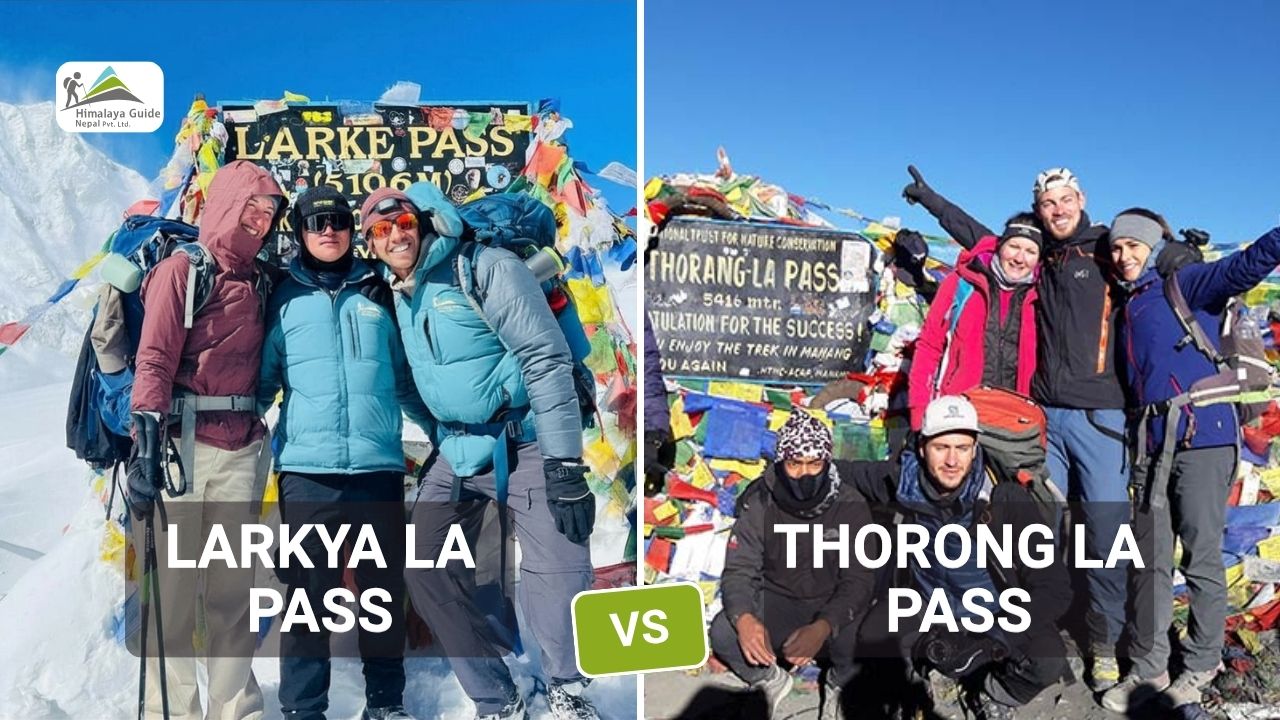
Training And Preparation for Manaslu Circuit Trek
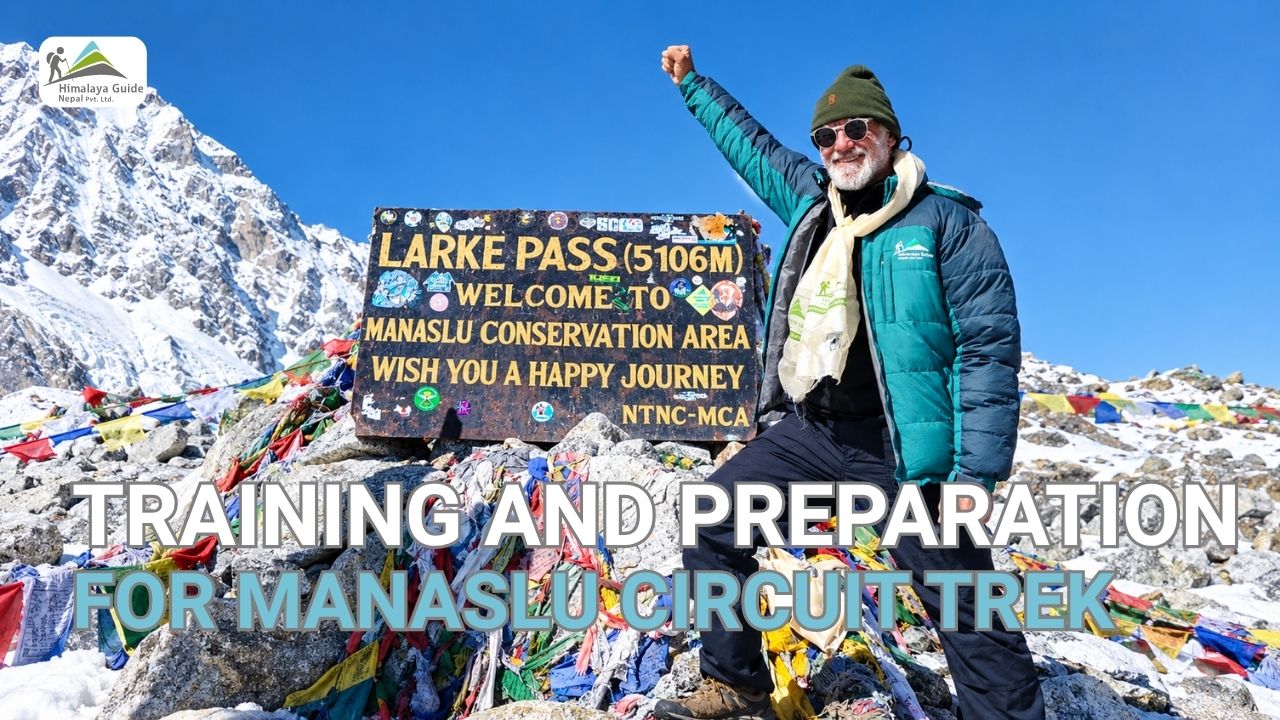
8 Sep 2026 Chandra Gurung
The Manaslu Circuit Trek is among the route that makes you realize how important training and preparation are for any high-altitude adventure. I still remember the long uphill walk and thin mountain air where I almost gave up, but also the satisfaction of reaching Larkya La and being glad I didn’t quit. The main reasons I didn’t give up were my physical training and mental preparation. If you are also planning your Manaslu Circuit Trek in 2026, I would strongly recommend training your body and preparing your mind well.
From my experience on the Manaslu Circuit route, you do not need to be extremely fit to complete the trek, but you do need good strength, strong legs, and the ability to keep walking for several days and several hours in different terrain. Your training should help you build your cardiovascular fitness, strengthen your legs, and get comfortable with long uphill and downhill walks. Likewise, getting used to higher altitude and thin air is also an important part of training and preparation for the Manaslu Circuit Trek.
I also recommend preparing mentally and setting realistic expectations for the remoteness of the Manaslu region. Some days on the trek are physically challenging, while others test your patience with long walking hours, basic accommodation, changing weather, and different landscapes. With realistic expectations, your adventure becomes more predictable and feels less challenging.
How Fit Do You Need to Be for Manaslu?
You need a moderate to good level of physical fitness for the Manaslu Circuit Trek. This means that if you can comfortably spend several hours walking in different terrain, you may be physically prepared for the trek. That said, you should be mentally ready to tackle altitude sickness risks. I realized on the Manaslu Trek route that even a normal walking day felt harder once I got above 3,000 meters.
One thing I learned from the route is that strength matters more than speed. You don’t need to race ahead of a guide and other trekkers. Instead, maintaining a steady, comfortable pace matters more. Training and Preparation for Manaslu Circuit trek requires physical & mental preparation to tackle long walking hours & diverse terrain & remoteness.
Start your preparation at least 6 to 8 weeks before the trek. You don’t necessarily need to hit the gym. Regular walking, stair climbing, light strength training, squats, lunges, and other exercises that strengthen your legs can be effective. Try slowly increasing the length and difficulty of your walks rather than suddenly hitting the Manaslu trail.
So, if you’re wondering whether you are fit enough for the Manaslu Trek, ask yourself a single question: Can I comfortably walk uphill and on uneven terrain for several hours, and can I continue the next day with the same energy? If the answer is yes, you already have good potential to complete the trek.
Additionally, you should be comfortable with:
- Long uphill and downhill walks
- Carrying a daypack for several hours
- Walking multiple days without a full rest day
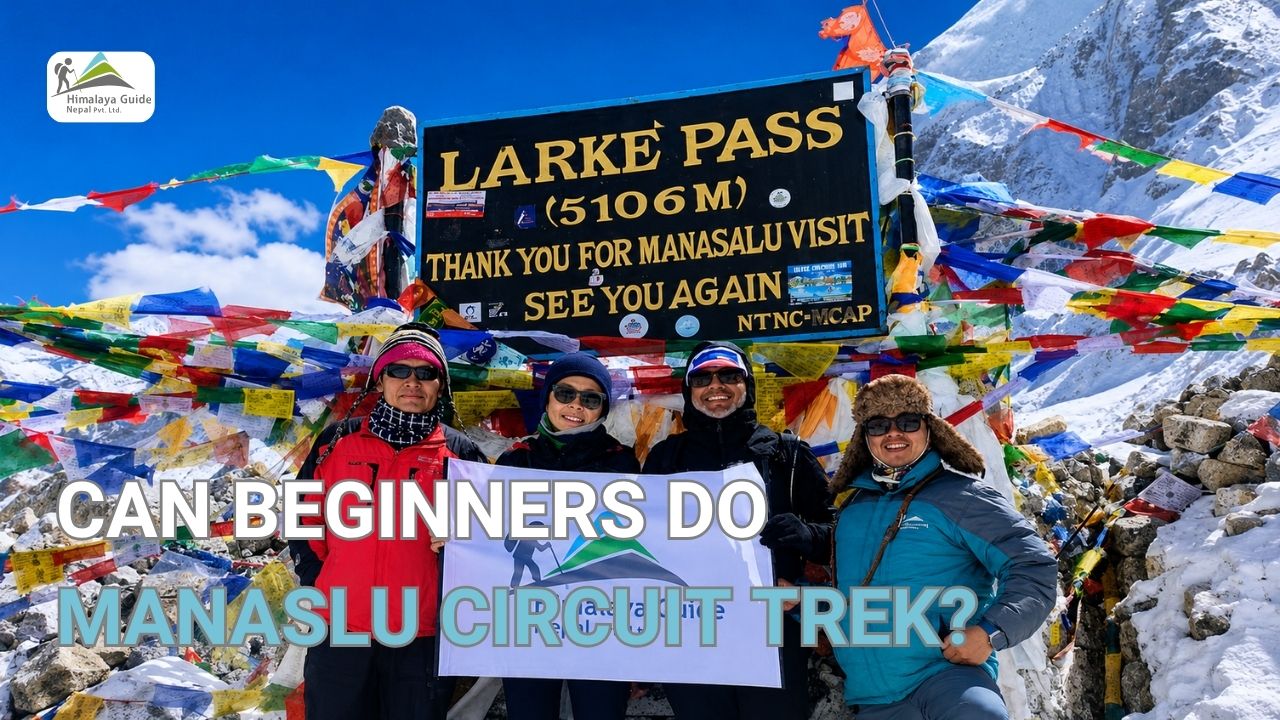
- Walking in high-altitude conditions, especially around Larkya La Pass (5,106 m)
A Realistic Training Plan to Tackle Manaslu Circuit Trek Challenges
Before starting the Manaslu Circuit Trek, you need realistic plans to tackle the journey’s real challenges. From my experience trekking in the Himalayas, including the Manaslu Circuit, the major mistake is starting the trek without preparing my body. That’s why I recommend starting training at least 8 weeks before the trek. If you have more time, a 4-month training plan is even better, especially if you are new to training and exercise.
Here are two realistic ways to prepare and train for the Manaslu Circuit Trek:
| Training Option | Best For | Preparation Time | Main Focus |
| 8-week plan | Already active individuals | 8 weeks | Faster fitness buildup |
| 4-month plan | Beginners or less active individuals | 12-16 weeks | Slower but good improvement in strength and fitness |
Which Plan Fits You?
| Feature | 8-Week Plan | 4-month Plan |
|---|---|---|
| Best for | Already active, less time | General-health baseline, slower build |
| Structure | 4 phases (2 weeks each) | 3 or more phases (4 weeks each), day-by-day schedule |
| Weekly volume | 3–5 sessions, scaling up | 6 days/week structured |
| Peak long hike | 60–90 min sessions, 5 days/week in final phase | 6–8 hour loaded hike (8–10 kg) by Week 9–12 |
| Sedentary starters | Not recommended as-is | Extend to 16–20 weeks by repeating Weeks 1–4 |
| Signature element | Altitude simulation where possible | Back-to-back consecutive hiking days to rehearse trek fatigue |
Quick-Reference Table
| Week Range | Focus Area | Major Activities | Duration | Notes |
| 1-4 | Shape basic fitness and cardiovascular stamina | Jogging, brisk walking, swimming, squats, lunges, planks | 30–45 mins, 3–4 days/week | Start slowly and include a regular exercise habit |
| 5-8 | Shape strength and muscle conditioning | Weight training, hill climbs, yoga, longer hikes | 45–60 mins, 4–5 days/week | Carry a loaded backpack of 3-5 kg |
| 9-12 | Build Strength and altitude training | Long hikes, hill training, stair climbing, backpack walks | 60–90 mins, 5 days/week | Increase your backpack load to 6-8 kg and practice at high elevation if possible |
| 13-16 or more | Final preparation and rest | Mixed sessions, recovery focus, gear practice | 45–60 mins, 3–4 days/week | Practice with your trekking gear. Reduce training in the final 1-2 weeks and let your body rest |
Option 1: 8-12 week Training
This plan is ideal if you already walk, exercise, or hike regularly. But if you are new to those activities, extend the training and preparation for the Manaslu Circuit Trek to 16-20 weeks.
Weeks 1-2: Build a Fitness Base
Build a habit of regular training and let your body get used to exercise. Don’t try to do hard training at the beginning, but you should be consistent.
- Include brisk walking for 30-45 minutes, 4-5 days a week.
- Light jogging, cycling, swimming, lunges, planks, and squats.
- 10 minutes of stretching
- One easy hike if possible
Weeks 3-4: Strength Development
By the third to fourth week, make your training much harder. Hill training is especially useful because the Manaslu trek has many uphill and downhill sections, and preparing beforehand helps. Still, some people skip hill walking, but it’s a big mistake, since flat-ground cardio alone won’t prepare their knees and ankles for descents.
- Walk or climb hills for 45-60 minutes.
- Use stairs if you don’t have hills nearby.
- Continue jogging, cycling, and swimming.
- Add step-ups, lunges, and squats.
- Do one 2-3-hour hike each week.
Week 5-6: Manaslu-Specific Training
By the 5th or 6th week, you should train like you’re on an actual adventure. The purpose of this practice is to train your legs, feet, and shoulders for what it feels like to spend several hours on the trail, like on a Manaslu Circuit adventure.
- Do a 4-6 hour hike once a week.
- Practice hiking by carrying a backpack of around 5-8 kg.
- Practice walking uphill and downhill.
- Add calf raises and core exercises.
- Include stair or hill training.
- Practice walking in your trekking shoes.
Week 7: Long Hike Week
This can be your hardest training and preparation for Manaslu Circuit. This week tests your strength, builds confidence, and strengthens mental support. The week also teaches you not to prove how fast you can walk but to focus on maintaining a steady pace for an entire day.
- One 6-7 hour hike with your loaded backpack.
- One or two shorter hikes of 2-3 hours.
- Light strength training.
- Cycling and swimming for energy restoration.
Week 8-12: Lower Your Training and Prepare for Departure
If you’ve dedicated only 8 weeks to training and preparation for the Manaslu Circuit Trek, this will be your last week. Don’t do your hardest workout this week; the goal is to reach the trek’s starting point fresh, not tired.
- Take shorter walks.
- Do light stretching or yoga.
- Keep some easy strength exercises.
- Get enough sleep.
- Stay hydrated.
- Give your legs time to recover.
Option 2: 4 Month Training
If you are new to exercise, I suggest choosing the 4-month training and preparation plan for the Manaslu Circuit Trek. For this, you need to book your trek at least half a year in advance. This longer training plan gives your body more time to become stronger with slower training and more time to recover.
Month 1: Build Basic Fitness
In the first month, focus on making exercise a regular habit. Just get into a daily exercise habit; no need to carry a heavy backpack yet.
- Active walking for 30-45 minutes, 3-4 times a week.
- Cycling, swimming, and light jogging.
- Squats and lunges.
- Step-ups.
- Planks.
- Easy weekend hikes.
Month 2: Build Stronger Legs
In the second month of training and preparation for the Manaslu Circuit Trek, increase the difficulty slowly to strengthen your legs. The goal is to make uphill walking easier and improve your balance on rough ground.
- Longer Walks.
- Hill Walking and stair climbing.
- 2-3 hour weekend hikes.
- Squats and lunges.
- Step-ups.
- Calf raises.
- Core exercise.
- Start carrying a light backpack.
Month 3: Increase Strength
By the third month, your training and preparation for the Manaslu Circuit Trek become trail-specific.
- 3-5 hour hikes.
- More hill and stair training.
- Backpack training.
- Longer weekend walks.
- Strength training 2-3 times a week.
- Practice walking on rocky or rough sections.
Month 4: Final Trek Preparation
During the final month, try to repeat the training and preparation from months 1-3. You can also use this month to try your trekking shoes, backpack, and other gear. Also, in the final 1-2 weeks, reduce your training and let your body be free and light before the trek.
- 5-7 hour hikes.
- Some back-to-back hiking days.
- Uphill and downhill training.
- Trek with a backpack.
- Light strength training to maintain your fitness.
How To Train For Manaslu Circuit in Different Seasons?
Training and preparation for the Manaslu Circuit Trek depends on which season you’re trekking in. I would prepare differently depending on when I go, because the pathways change in all four seasons: spring, monsoon, autumn, and winter. This helps my training match the conditions I face along the route.
Training and Preparation for Spring (March to May)
Spring is one of my favorite times for the Manaslu Circuit Trek. It is the time when the route becomes greener, with rhododendrons blooming in different colors, and days are warmer. But higher sections can still be cold, and early spring may bring snow around Larkya Pass, so proper training is necessary.

How I suggest training for a spring Manaslu Trek:
- Walk or jog for 30-60 minutes, 4 days a week.
- Add hills, stairs, and step-ups twice a week.
- Do squats, lunges, calf raises, and planks to strengthen your legs and core.
- Take a 2-4 hour hike every weekend.
- Add a 5-8 kg backpack to your longer hikes.
- Include some early-morning walks so your body gets used to colder mornings.
- Practice walking downhill because tired legs are a challenge on the Larkya La to Bhimthang descent.
My spring tip: Don’t assume warmer weather means an easy trek. Still train for cold mornings and possible snowy sections near the high pass, especially if trekking in early spring.
Training and Preparation for Monsoon/Summer (June to August)
Monsoon/summer is the time to train and prepare more seriously for the Manaslu Circuit Trek. The lower parts of the route get wet, and visibility is poor during this season. Since conditions are much more challenging during this season, trekking isn’t recommended without proper preparation.
How I suggest training for a monsoon Manaslu Trek:
- Start with 45-60 minutes of cardio, 4 days a week.
- Add step-ups, lunges, squats, and calf raises.
- Practice single-leg balance and controlled movements to improve stability in muddy pathways.
- Practice walking with your backpack and wearing a rain jacket.
- Train yourself to take shorter and controlled steps.
My monsoon tip: For a monsoon trek, I suggest paying extra attention to balance and foot placement rather than focusing only on building leg strength, because a wet trail can make even an easy walk tiring.
Training and Preparation for Autumn (September to November)
For autumn, I suggest focusing heavily on walking strength. Although it is a popular, preferred trekking season with clearer weather and stable trails, good preparation is still necessary.
How I suggest training for an autumn Manaslu Trek:
- Walk or hike 4-5 days a week.
- Add hill and stair climbing 2 times a week.
- Increase your weekend hikes to 4- 7 hours.
- Practice walking with the backpack you’ll actually use on your journey.
- Include both uphill and downhill walking.
- Try a few longer weekend walks before starting the trek.
- Keep strength training for your legs and core 1-2 times a week.
- Reduce your training during the final 7-10 days so your body is fresh.
My autumn tip: Autumn trekking conditions make Manaslu Circuit look misleadingly easy. I recommend training for a steady pace you can maintain for hours rather than trying to walk fast.
Training and Preparation for Winter (December to February)
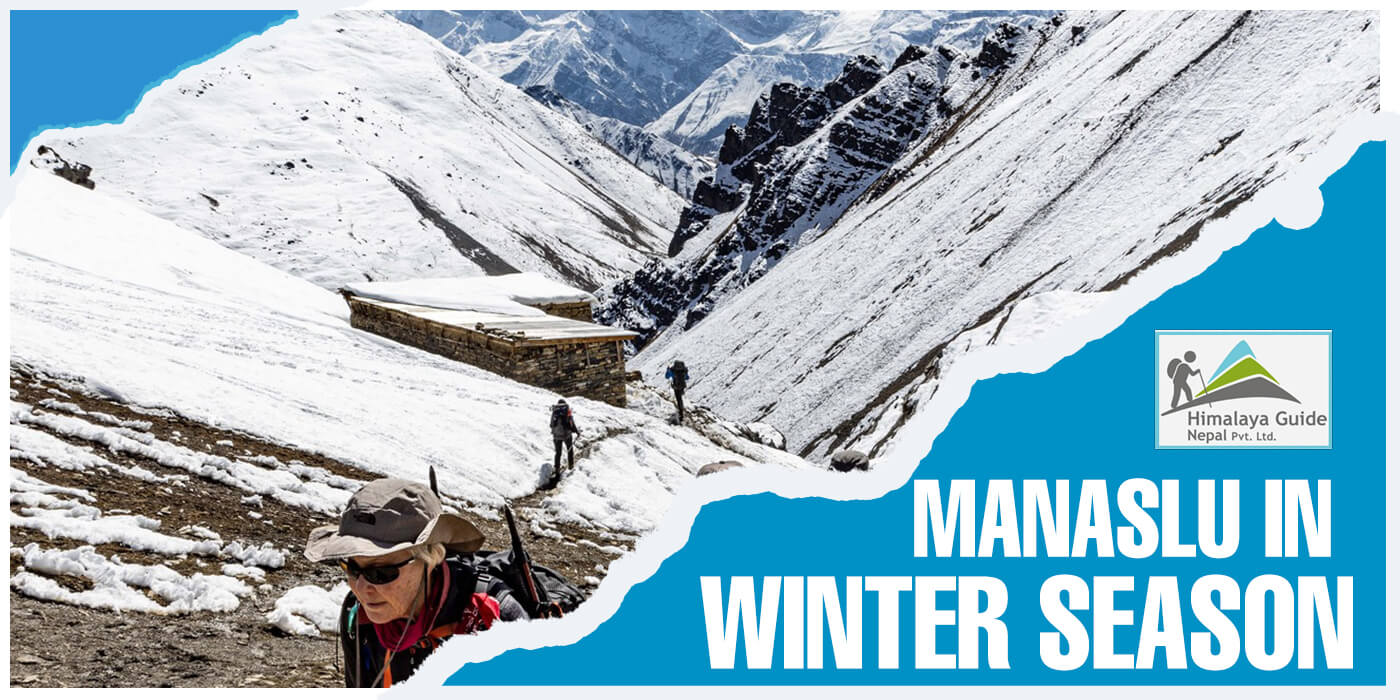
If you’re planning the Manaslu Circuit in winter, I suggest taking your preparation more seriously. Higher sections, especially near the Larkya La area, can be extremely cold, and snow or ice can make the section more difficult. For winter, focus mainly on leg strength, balance, and getting comfortable with your heavier winter gear.
How I suggest training for a winter Manaslu Trek:
- Do 45-60 minutes of walking stairs, cycling, or uphill cardio 4 days a week.
- Strengthen your legs with squats, lunges, step-ups, and calf raises.
- Take longer hikes while carrying your backpack.
- Practice walking slowly on rough sections.
- Walk in your winter boots and make sure they’re comfortable.
- Practice hiking in the gear and clothing you expect to wear in your trek.
- Include balance exercises to improve stability on slippery surfaces.
My winter tip: Winter isn’t the season to worry about speed; it’s when you need to control your steps and have good balance. Still, remember that no level of fitness can make the pass crossing safe, as weather and trail conditions also have to cooperate.
Manaslu Circuit Trek Difficulty & How to Prepare For It
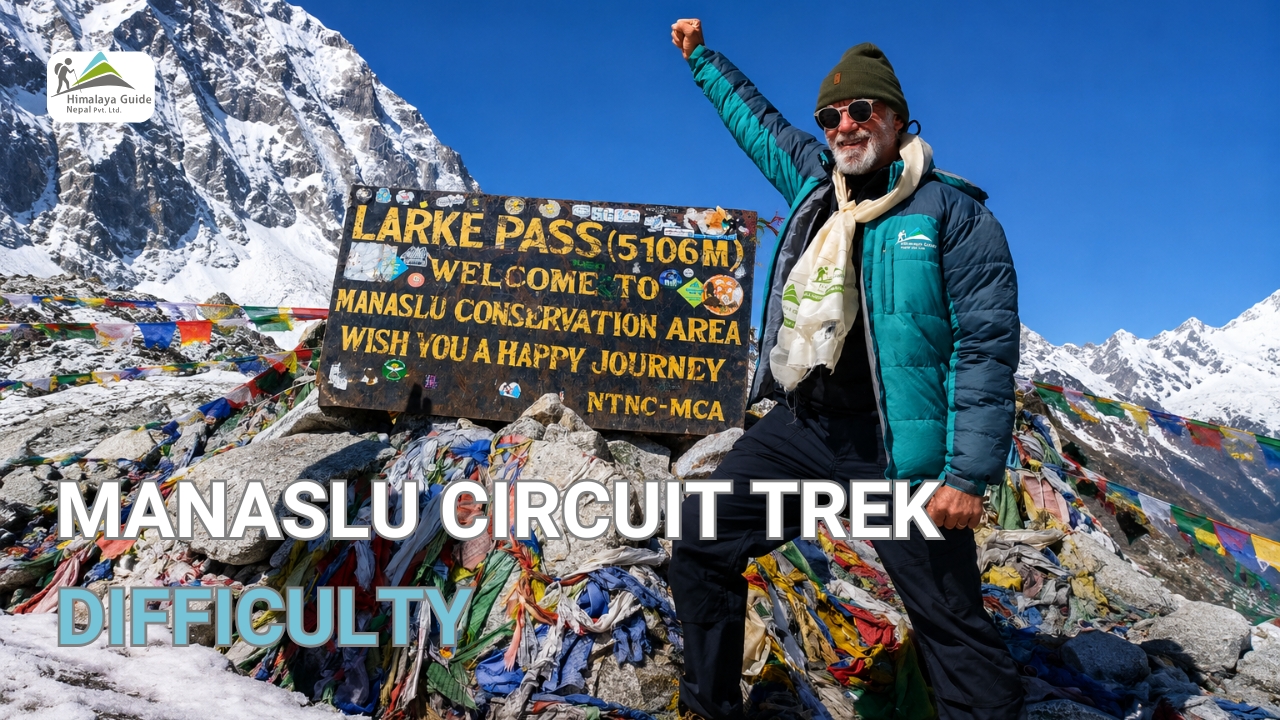
During my Trek, I found the Manaslu Circuit Trek Difficulty moderately to highly challenging, mainly because of the changing terrain, long walking days, significant elevation gain, and the high-altitude crossing of Larkya La Pass. The trek was not difficult because of one particular section; instead, the continuous climbs, steep descents, uneven trails, and increasing altitude gradually added to the challenge.
What I noticed most was how different the trail felt as I gained elevation. The lower sections were relatively warm and green, with forests, villages, and cultivated hillsides. As I moved higher, the landscape gradually changed into a colder and more rugged Himalayan environment. The thinner air, colder temperatures, and increasingly rocky trail made the higher sections feel considerably more demanding
The most challenging part of my trek was crossing Larkya La Pass at around 5,106 meters. The combination of altitude, cold temperatures, a long walking day, and steep sections made the pass crossing physically demanding. However, with proper acclimatization and a steady pace, I found the challenge manageable.
Major Factors That Make Manaslu Circuit Trek Difficult
Based on my experience, several factors contribute to the overall difficulty of the Manaslu Circuit Trek. Understanding these challenges beforehand can make your preparation much easier.
- High altitude: Altitude was one of the biggest challenges I experienced on the Manaslu Circuit. The trek reaches around 5,106 meters at Larkya La Pass, and I could clearly feel the difference in breathing as I gained elevation. The thinner air made even simple uphill sections feel more tiring, which is why proper acclimatization is so important.
- Long walking days: I spent around 5 to 8 hours walking on most trekking days, although some sections took longer depending on the terrain and conditions. After several consecutive days on the trail, even a moderate walking distance could feel tiring. Good stamina made a noticeable difference, particularly during the longer days.
- Steep ascents and descents: The trail included plenty of uphill and downhill sections. Some climbs were gradual and comfortable, while others were steep enough to require frequent breaks. I also found the descents challenging because the rocky and uneven trail put additional pressure on my legs.
- Rugged terrain: Throughout the trek, I walked across rocky paths, stone steps, forest trails, suspension bridges, and uneven sections. The trail became increasingly rugged as I approached the higher elevations. Good trekking shoes and a comfortable walking pace were particularly useful on these sections.
- Larkya La Pass crossing: Crossing Larkya La was undoubtedly one of the hardest parts of my Manaslu Circuit Trek. The altitude and cold made the climb more demanding, and the long walking day required plenty of endurance. Starting early in the morning also helped me complete the pass crossing before the weather conditions became more challenging.
- Changing weather: I experienced noticeable changes in weather as I moved from the lower elevations to the high mountains. Conditions were generally more comfortable at lower elevations, while the higher sections were much colder and more exposed. Rain, snow, strong winds, and sudden temperature changes can make the trail more difficult depending on the season.
How I Prepared for the Manaslu Circuit Trek
Good preparation made a significant difference during my Manaslu Circuit Trek. I did not need to be an athlete, but having good endurance and being comfortable with long walking days helped me handle the demanding sections much better.
I Built My Cardiovascular Endurance
Before starting the trek, I focused on activities that improved my stamina, including walking, hiking, jogging, cycling, and stair climbing. Long-distance walking was particularly useful because it helped me get used to spending several hours on my feet.
I gradually increased the duration of my walks instead of suddenly doing difficult hikes just before the trek. This helped my body adjust to longer periods of physical activity and made the consecutive trekking days easier to handle.
I Trained for Uphill and Downhill Walking
Because the Manaslu Circuit includes frequent climbs and descents, I also included uphill and downhill walking in my preparation. Stair climbing and hiking on inclined terrain helped strengthen my legs and prepare me for the steeper sections.
I found that stronger thighs, calves, and glutes helped considerably during the long climbs and descents. This type of training is particularly useful if you are not accustomed to walking on mountainous terrain.
I Strengthened My Legs and Core
I also included basic strength exercises such as squats, lunges, step-ups, calf raises, and planks in my preparation. I did not focus on lifting heavy weights; instead, I concentrated on building the functional strength and endurance needed for long trekking days.
This preparation helped me maintain a more comfortable pace, particularly when walking uphill with a backpack.
I Prepared for High Altitude
Altitude was something I took seriously throughout the trek. I followed a gradual itinerary and allowed my body enough time to adjust as I gained elevation.
I also familiarized myself with the symptoms of altitude sickness before starting the trek. Knowing what to look for helped me pay closer attention to how I was feeling at higher elevations. I found that maintaining a steady pace, staying hydrated, taking adequate rest, and avoiding unnecessary exertion were particularly important.
I Practiced Walking With a Backpack
Before the trek, I practiced walking while carrying the backpack I planned to use. I started with a lighter load and gradually increased it during my training.
This helped me understand how my body responded to carrying weight for several hours. It also gave me enough time to adjust my backpack and make sure my trekking shoes and other equipment were comfortable before starting the journey.
I Chose the Right Trekking Gear
Having appropriate trekking gear made the trek much more comfortable for me. A pair of good trekking shoes with reliable grip was particularly useful on the rocky and uneven sections.
I also carried warm layers for the higher elevations, along with a warm jacket, gloves, hat, trekking poles, sleeping bag, and other essential trekking equipment. The right gear became even more important as the temperature dropped near the higher sections of the route.
I Prepared Myself for Long Trekking Days
Physical preparation was only one part of getting ready for the Manaslu Circuit. I also had to prepare myself mentally for long walking days, basic accommodation, changing weather, and limited facilities along some sections of the route.
Some days felt easier than expected, while others were tiring because of the altitude and terrain. I found that maintaining a steady pace and focusing on reaching the next destination rather than rushing to finish the day made the trek much more enjoyable.
I Maintained a Comfortable Pace
One of the most useful things I learned during the trek was not to rush. Walking too quickly, particularly at higher elevations, only increased my fatigue.
I maintained a slow and steady pace, took breaks when needed, and listened to my body. This became particularly important as I approached Larkya La Pass, where the combination of altitude and terrain made every step more demanding.
Essential Gear To Prepare Well For Trek To Manaslu Circuit
Having the right gear made a huge difference during my Manaslu Circuit Trek. The trail took me through warm lower hills, dense forests, remote villages, rocky terrain, and cold high-altitude landscapes, so I needed to prepare for a wide range of conditions. What worked well at the lower elevations was not always enough for the colder sections near Larkya La Pass.
I found that packing for the Manaslu Circuit is less about carrying everything possible and more about choosing practical, lightweight, and weather-appropriate gear. Since I had to walk for several hours each day, carrying unnecessary weight quickly became tiring. At the same time, leaving out essential cold-weather or trekking equipment could make the higher sections uncomfortable.
Here is the essential gear I recommend preparing before starting the Manaslu Circuit Trek, based on what I found useful along the route.
Trekking Shoes
A good pair of trekking shoes was one of the most important things I carried. The Manaslu Circuit trail includes rocky paths, stone steps, muddy sections, and uneven terrain, so I needed shoes that provided good grip and ankle support.
I also made sure to use my trekking shoes before the journey rather than taking a completely new pair on the trek. This helped me avoid discomfort and blisters during the long walking days.
Warm Clothing and Layers
The temperature changed significantly as I gained elevation, so layering became very useful. I could remove a layer when walking in the warmer lower sections and add more clothing as the temperature dropped.
I recommend carrying thermal innerwear, fleece or warm mid-layers, a down or insulated jacket, a waterproof or windproof outer layer, warm trousers, gloves, and a warm hat. These became particularly important during the colder mornings, evenings, and higher sections of the trek.
Sleeping Bag
A good sleeping bag was another essential item for me, especially at higher elevations. The nights became considerably colder as I approached Larkya La Pass, and the accommodation in the higher villages was basic.
I recommend carrying a sleeping bag suitable for the season and expected temperatures. Even when blankets were available at teahouses, having my own warm sleeping bag gave me additional comfort during the colder nights.
Trekking Poles
I found trekking poles particularly useful on the Manaslu Circuit because of the frequent uphill and downhill sections. They helped reduce pressure on my knees during descents and provided additional stability on rocky or uneven trails.
They were especially helpful during the long descent after crossing Larkya La Pass, when my legs were already tired from the climb and pass crossing.
Backpack and Rain Cover
I used a comfortable backpack with enough space for my essential clothing, water, snacks, personal items, and other trekking gear. A properly fitted backpack made a big difference because I had to carry it for several hours every day.
I also recommend carrying a rain cover even if you are trekking during a generally dry season. Weather can change quickly in the mountains, and protecting your backpack and belongings from rain or snow is always useful.
Water Bottle and Hydration System
Staying hydrated became increasingly important as I gained elevation. I carried a reusable water bottle and made sure to drink regularly throughout the day rather than waiting until I felt thirsty.
A hydration bladder can also be useful because it allows you to drink while walking without repeatedly stopping to take out your bottle. I also carried a suitable water purification method so I could safely manage drinking water along the route.
Sunglasses and Sunscreen
The sunlight felt much stronger at higher elevations, particularly when the surrounding landscape was exposed and snowy. Sunglasses helped protect my eyes from strong sunlight, while sunscreen protected my exposed skin.
I recommend carrying sunglasses with good UV protection, sunscreen, lip balm with SPF, and a hat. These are small items, but they became very useful during long days outdoors.
Headlamp
A headlamp was another useful item I carried during the trek. Some mornings started early, particularly when preparing for the Larkya La Pass crossing, so having a reliable light made it easier to move around before sunrise.
I recommend carrying spare batteries or making sure your rechargeable headlamp is fully charged before heading into the higher sections.
Personal First-Aid Kit
I also carried a small personal first-aid kit with basic medicines and supplies. Having these items with me meant I could deal with minor problems such as blisters, small cuts, headaches, or muscle soreness without depending entirely on finding supplies along the route.
I kept the kit compact and included only the essentials so it would not add unnecessary weight to my backpack.
Trekking Socks and Gloves
Good trekking socks helped keep my feet comfortable during the long walking days. I carried several pairs so that I always had a dry pair available.
Warm gloves became increasingly important as I gained elevation. I recommend carrying both a lighter pair for regular walking and a warmer pair for colder mornings and higher-altitude sections.
Toiletries and Personal Essentials
I kept my toiletries simple because carrying too many personal items only added weight. My basic kit included a toothbrush, toothpaste, biodegradable soap, toilet paper, hand sanitizer, moisturizer, lip balm, and other small personal necessities.
Toilet paper and hand sanitizer were particularly useful because facilities become more basic as you move into the remote sections of the Manaslu Circuit.
Power Bank and Charging Essentials
I carried a power bank because access to electricity can become more limited and expensive as you move into higher and more remote areas. Having backup power allowed me to keep my phone, camera, and other electronic devices charged.
If you plan to take plenty of photographs, I recommend giving extra attention to your charging arrangements because you may spend long periods away from reliable electricity.
Snacks and Energy Food
I also carried a few lightweight snacks for the longer walking days. Although food is available at teahouses along the route, having something quick to eat while walking was useful when I needed an extra energy boost.
Energy bars, nuts, chocolate, dried fruit, and similar lightweight snacks are easy to carry and can be useful during long climbs, particularly before reaching higher destinations.
Documents and Essential Items
Finally, I kept my important documents and essential items safely stored and easily accessible. Depending on the trekking arrangements, you may need your passport, permits, insurance documents, emergency contact information, and some cash.
I recommend keeping these items protected from moisture and carrying some extra cash because card and ATM facilities can be limited along the Manaslu Circuit.
FAQs About Training & Preparation for Manaslu Circuit Trek
Q: How many weeks or months should I train before the Manaslu Circuit Trek?
A: Train for at least 4- 12 weeks, or 4 months, before the Manaslu Circuit Trek. If you exercise regularly, 4- 12 weeks of training is enough, but if you’re new to exercise and physical training, 4 months of training is recommended.
Q: What if I don’t have access to hills or mountains for training?
A: If you don’t have access to hills or mountains for training, you can still prepare by using stairs, a treadmill, inclines, step-ups, and long walks. Focus on leg strength, then use a backpack as your fitness improves.
Q: Does being physically fit prevent altitude sickness during the trek to Manaslu Circuit?
A: No, physical fitness does not prevent altitude sickness during the Manaslu Circuit Trek. Altitude sickness risk isn’t related to fitness because even elite athletes and marathon runners can develop acute mountain sickness (AMS).
Q: What’s the minimum fitness level needed for Manaslu Circuit Trek if I’m short on training time?
A: The minimum fitness level for the Manaslu Circuit Trek is a moderate-to-good cardiovascular base. If you’re short on training time, make sure you can walk 5- 8 hours on hilly/rough sections for several days, with good leg strength for steep climbs and descents.
Q: How is training for Manaslu different from training for Everest Base Camp?
A: Compared to Everest Base Camp training, Manaslu training requires more stamina and sustained hill strength because the Manaslu Circuit takes you through more remote and rough sections, along with high mountain passes. On the other hand, EBC is more straightforward, with more developed routes and teahouses.
Q: What should I do in my final week before departure for the Manaslu Circuit Trek?
A: In your final week before the Manaslu Circuit Trek, don’t try new exercises; focus on staying fresh and prepared. Keep walks light to moderate, avoid hard workouts, and most importantly, prioritize sleep and hydration.