Tsum Valley Trek Difficulty Guide
25 Sep 2026 Dinesh Gurung
The Tsum Valley trek difficulty is moderate. You walk 12 days, cover about 120 to 125 km, and spend 5 to 8 hours a day on the trail. The highest point of Tsum Valley Trek is Mu Gompa at 3,700 m, which is low for Nepal. The hard part is not altitude. It is doing the same steep ups and downs day after day, in a valley with no road out.
Most trekkers judge a trek by its highest point. By that measure this one looks easy, because Mu Gompa sits at 3,700 m. Everest Base Camp is 1,600 m higher, and Larkya La on the Manaslu Circuit is 1,400 m higher.
The rating still comes out as moderate, and it is earned. You start at about 870 m and climb to 3,700 m over six days, then walk all the way back down the same trail.
Tsum Valley Trek Difficulty Rating & Facts
| Fact | Detail |
|---|---|
| Difficulty rating | Moderate |
| Trip length | 12 days |
| Days walking | 9 |
| Total distance | About 120 to 125 km |
| Walking hours | 5 to 8 hours most days |
| Start altitude | Machha Khola, about 870 m |
| Highest point | Mu Gompa, 3,700 m |
| Highest sleeping point | Nile, 3,361 m |
| Route type | Out and back, same trail both ways |
| Passes crossed | None |
| Accommodation | Simple lodges |
| Guide | Required by law |
| Region | Manaslu, Gorkha district |
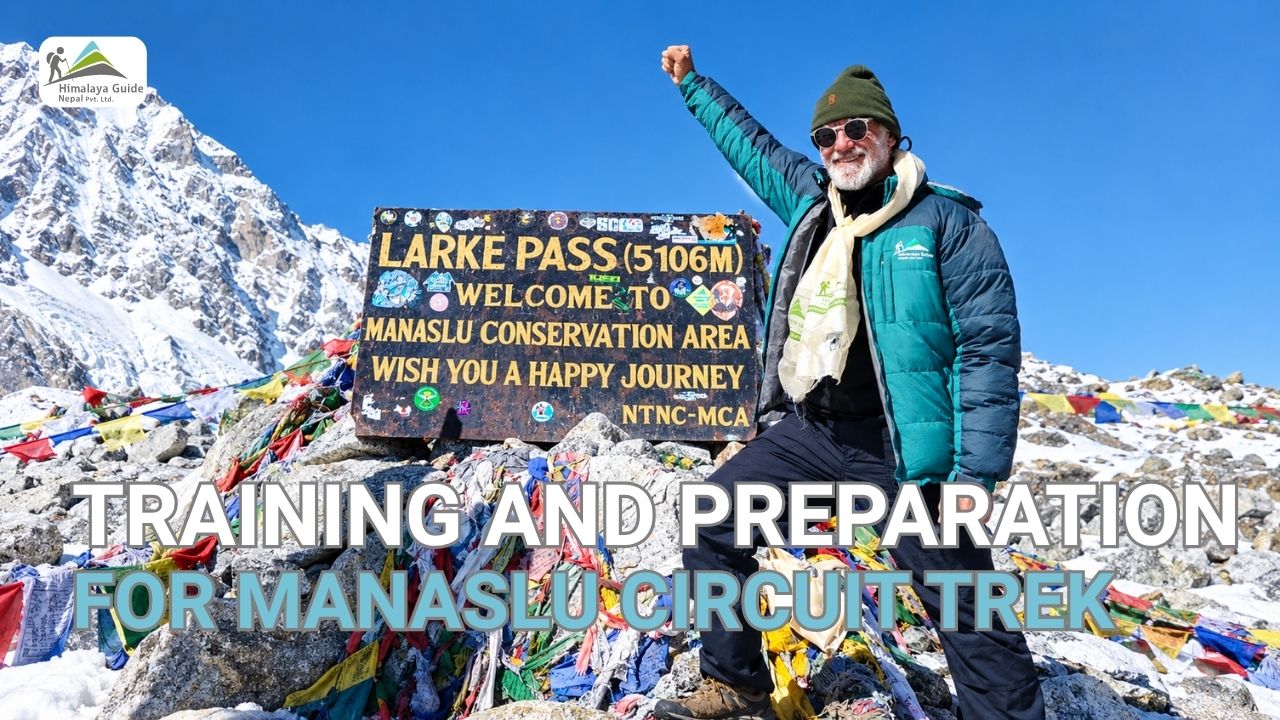
Compare that with the Manaslu Circuit trek, which crosses Larkya La at 5,106 m and is rated strenuous. This trek asks less of your lungs and more of your legs and patience.
Why Tsum Valley Trek Feels Harder?
The altitude in Tsum Valley stays under 3,700 m, so serious altitude sickness is less common than on Everest or Manaslu routes. First, the trail almost never flattens out. You climb through river gorges, drop to suspension bridges, then climb again. Elevation gain and loss repeat all day. Second, the days are long. Nine walking days with several at 6 to 8 hours is really tough, which makes the Tsum Valley trek a bit difficult.
Daily Walking Hours During Tsum Valley

This chart shows the walking hours for each day on the trail. Day 7, the climb to Nile, is the longest.
| Day | Route | Hours | Notes |
|---|---|---|---|
| 3 | Machha Khola to Jagat | 5-6 | 15 km, steep stone stairs near the end |
| 4 | Jagat to Lokpa | 6-7 | Permit checks, then the Tsum gateway |
| 5 | Lokpa to Chumling | 4-5 | 9 km, no lunch stop on the way |
| 6 | Chumling to Chhekampara | 6-7 | Long climb to the valley’s biggest village |
| 7 | Chhekampara to Nile | 7-8 | The longest day of the trek |
| 8 | Mu Gompa and back to Nile | 4-5 | 9 km, the high point at 3,700 m |
| 9 | Chhule to Dumje | 4-5 | Long descent, hard on knees |
| 10 | Dumje to Philim | 6-7 | Gorges and cantilever bridges |
| 11 | Philim to Machha Khola | 6-7 | Last full walking day |
. There is no rest day on our 12 day itinerary. Your legs get no full day off between Day 3 and Day 11.
Tsum Valley Altitude Gain & Loss

| Night | Place | Altitude |
|---|---|---|
| Day 3 | Jagat | 1,400 m |
| Day 4 | Lokpa | 2,240 m |
| Day 5 | Chumling | 2,386 m |
| Day 6 | Chhekampara | 3,031 m |
| Day 7 | Nile | 3,361 m |
| Day 8 | Mu Gompa visit, sleep at Nile | 3,700 m high point |
| Day 9 | Dumje | 2,460 m |
| Day 10 | Philim | 1,570 m |
The trail from Chumling to Chhekampara is 645 m up in one day, above 2,000 m. That is the day people start to feel short of breath.
Same Trail While Heading Back from Mu Gompa
Most popular Nepal treks are loops. You walk in, cross a pass, and come out somewhere new. This one does not work that way.
You reach Mu Gompa, turn around, and walk back along the same trail. Every climb you did on the way in, you do again on the way out, on legs with seven or eight days of walking in them.
That has two effects. Physically, the return days are still 5 to 7 hours long. Mentally, there is no new scenery pulling you forward.
Fitness Required for Tsum Valley Trail
For the Tsum Valley trek, you need to walk for five or six hours, then get up and do it again for nine days.
A marathon runner who has never hiked with a pack can struggle here. A regular weekend hiker who knows their pace often does very well.
Question for Yourself
Ask yourself three questions before booking:
- Can you hike 5 to 6 hours on uneven ground with a daypack and still feel fine at the end?
- Have you done at least one trek of 3 or more days in a row?
- Do you have any heart, lung or blood pressure condition that your doctor has not cleared for altitude?
If the first two are no, that is not a reason to cancel. It is a reason to start training now.
Four Week Training Plan
Start 6 to 8 weeks before you fly, not 2 weeks.
| Week | Focus | What to do |
|---|---|---|
| 1-2 | Base endurance | 30 to 45 minutes brisk walking or cycling daily |
| 2-3 | Hill work | Hikes with 400 to 600 m of climbing, 2 to 3 times a week |
| 3-4 | Back to back days | Two 5 hour hikes on consecutive days |
| 3-4 | Downhill strength | Stair descents and slow squats, twice a week |
Knee and Downhill Training
Half of this trek is descent, and most trekkers only train for climbing. Days 9, 10 and 11 drop you about 2,100 m in three days.
Two weeks of downhill training changes how those days feel. Walk down stairs slowly, do step-downs off a box, and hike hills with poles.
Bring two trekking poles and use them from Day 3, not from the day your knees start hurting.
Hardest Days on Trail
Three days stand out in the Tsum Valley trek difficulty, and none of them is the highest day.
| Day | Route | Why it is hard |
|---|---|---|
| 6 | Chumling to Chhekampara | 645 m of climbing with only simple food at Gho |
| 7 | Chhekampara to Nile | 7 to 8 hours, the longest day, after five days of walking |
| 9 | Chhule to Dumje | Long descent on tired legs, same trail as before |
Day 7 catches most people out. On paper it looks like a normal day, but it comes after a week of climbing, and the legs are already tired.
Tsum Valley Trek After 40
Your body at 50 recovers more slowly than it did at 25 and feels descents more in the knees. That does not rule out this trek. It changes how you plan it.
Walk slower than you think you need to from Day 3. The trek is 12 days long, so starting fast costs you later.
Sleep, Food and Water
Sleep gets lighter above 3,000 m, and you may wake several times a night at Chhekampara and Nile.
Drink 3 to 4 litres a day and purify all of it. Dehydration makes tiredness and headaches worse at altitude.
Eat more than you feel like eating, especially in the evening. Dal bhat is the best choice because you get refills and the energy lasts through a 7 hour day.
Medicines and Health Checks
Many trekkers over 40 take daily medicine for blood pressure, cholesterol or sleep. Some matter more at altitude than at home.
Talk to your own doctor before you fly, and bring a printed list of what you take. Your guide should know too.
We do not advise on medicines. That is between you and your doctor. But our guides carry a first aid kit and an oximeter and check oxygen levels each evening.
Permits and Guide Rules at Tsum Valley
Tsum Valley sits inside a restricted area, so you cannot trek it independently. Permits must be arranged by a registered agency in Nepal, and a licensed guide is required by law.
| Permit | Cost | Notes |
|---|---|---|
| Tsum Valley Restricted Area Permit | USD 40 per week (Sep to Nov), USD 30 per week (Dec to Aug), then USD 7 per extra day | Covers Lokpa to Mu Gompa, checked at the Lokpa police post |
| Manaslu Conservation Area Permit | NPR 3,000 (about USD 25), NPR 1,000 for SAARC nationals | One time fee, checked at Jagat and Philim |
| Chum Nubri Rural Municipality fee | NPR 1,000 (about USD 8) | Local government fee, paid at Jagat |
One rule changed recently. On 22 March 2026 Nepal’s Department of Immigration removed the minimum two trekker rule for restricted areas, including Tsum Valley. You can now get the permit as a single trekker.
A TIMS card is not needed here, because the restricted area permit replaces it. The licensed guide rule has not changed, so you still trek with a guide from a registered company.
We handle all of this paperwork for every booking on our Tsum Valley trek. You send your passport copy and photos, and your guide carries the originals at every checkpoint.
Tsum vs Manaslu Circuit Comparision
| Feature | Tsum Valley | Manaslu Circuit |
|---|---|---|
| Difficulty | Moderate | Strenuous |
| Highest point | 3,700 m (Mu Gompa) | 5,106 m (Larkya La) |
| Length | 12 days | 14 days |
| Nights above 4,000 m | None | Yes, including Dharamsala |
| Pass day | None | One long pass day, 8 to 10 hours |
| Main challenge | Repetition and remoteness | Altitude and the pass |
| Route | Out and back | Full circuit |
If you want culture, quiet trails and no high pass, Tsum Valley fits. If you want the pass and the higher altitude, look at the Manaslu Circuit trek.
Experienced trekkers often do both in one trip. That is our Manaslu Tsum Valley trek, a 19 day route rated strenuous, which crosses Larkya La after the Tsum side valley.
Season Changes the Difficulty
The month you pick changes the Tsum Valley trek difficulty as much as your fitness does. Autumn and spring are the two sensible windows.
| Season | Months | Chumling (2,386 m) | Mu Gompa (3,700 m) | Trail |
|---|---|---|---|---|
| Spring | Mar to May | 15°C day, 5°C night | 8°C day, -4°C night | Dry, rhododendrons in flower |
| Autumn | Sep to Nov | 16°C day, 6°C night | 10°C day, -3°C night | Dry, clearest views |
| Winter | Dec to Feb | 8°C day, -2°C night | 0°C day, -10°C night | Snow and ice, some lodges shut |
| Monsoon | Jun to Aug | Warm and wet | Wet | Mud, leeches, landslide risk |
Autumn gives you the firmest trail and the sharpest mountain views. Spring runs a close second and is warmer in the lower valley.
Winter adds real difficulty. Snow on the higher sections, short daylight, freezing nights and closed lodges all stack up. Monsoon brings mud, leeches and landslide risk on the lower section between Machha Khola and Jagat.
Porters, Packs and Pacing
How much you carry changes this trek more than any training plan. A 12 kg pack over nine days is a different experience from a 6 kg daypack.
Keep your pack to 8 to 10 kg if you carry your own gear. Take warm layers, a first aid kit, water purification and your own medicine, and leave the rest in Kathmandu.
Hiring a porter is the single best decision trekkers can make on this route. Porters are not included in our standard price, but we arrange them on request.
When to Turn Back
Most trekkers feel mild tiredness or a light headache on the climb to Chhekampara and Nile. Rest, food and water usually fix it.
Some signs mean you go down instead of up. Tell your guide straight away if any of these appear.
| Sign | What to do |
|---|---|
| Headache that gets worse after rest and water | Stop climbing, tell your guide |
| Vomiting or no appetite at dinner | Rest, do not go higher |
| Breathless while sitting still | Descend now |
| Wet cough or a rattle in the chest | Descend now |
| Stumbling or confusion | Descend now |
Going down means walking back toward Chumling or lower, and your guide makes that call. On a 12 day trek, one lower night often lets you continue. Pushing on rarely ends well.
Tsum Valley Difficulty FAQs
Q: Is the Tsum Valley trek hard for beginners?
A: It is doable but demanding. The Tsum Valley trek difficulty sits in the nine walking days in a row, with no rest day, which is a lot for a first trek. If you have never done a multi-day hike, train for 8 weeks first or add an extra night.
Q: Can I do Tsum Valley trek at 60?
A: Yes, many people do. What matters is a steady pace, two trekking poles, a porter for your main bag and a guide who sets the speed around you rather than the group’s fastest walker.
Q: Do I need a guide for Tsum Valley?
A: Yes. It is a restricted area, so a licensed guide and a registered agency are required by law. Since March 2026 you no longer need a second trekker on your permit.
Q: How high does the trek go?
A: The highest point is Mu Gompa at 3,700 m. The highest place you sleep is Nile at 3,361 m, which is lower than Namche Bazaar.

Mr. Dinesh Gurung, a native of the enchanting village of Sertung in the northern expanse of Dhading district, Nepal, embodies a unique blend of cultural heritage and academic pursuits. Born...