Manaslu Circuit Trek Difficulty
25 Aug 2026 Chandra Gurung
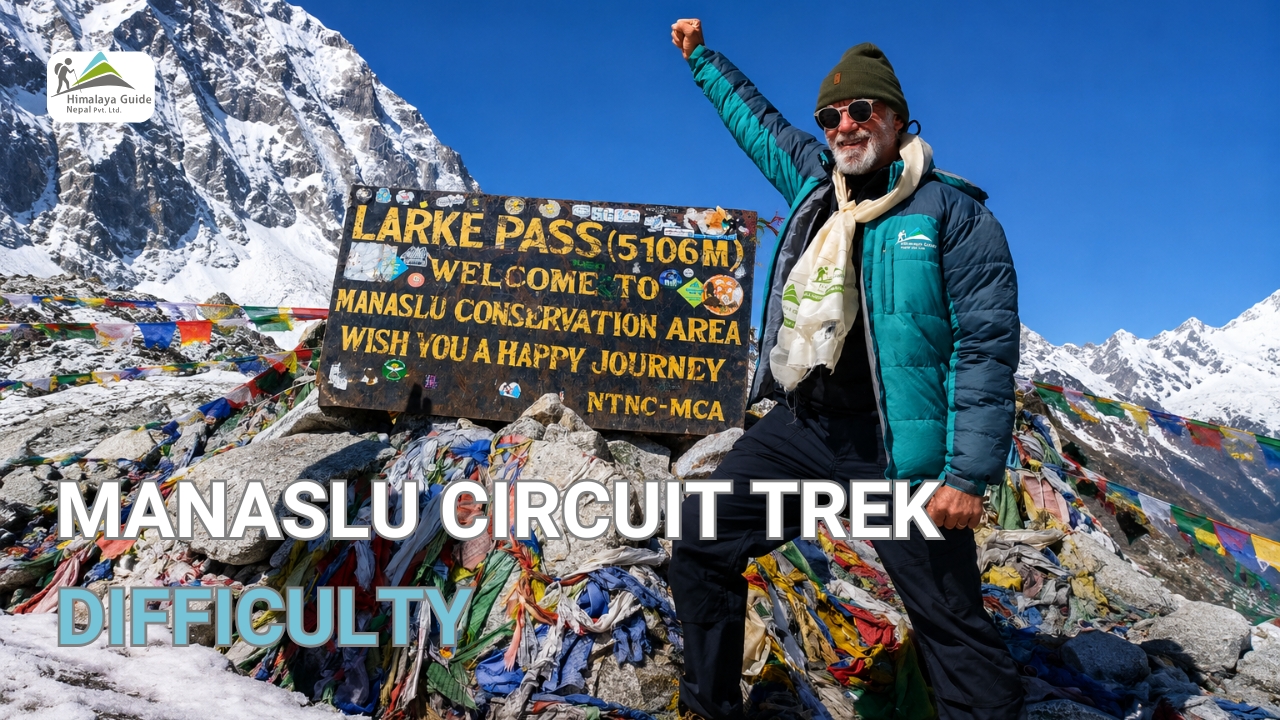
Manaslu Circuit trek difficulty is rated as moderate to strenuous, where you’ll walk 170 to 180 km total with 6-8 hrs of walking each day for 12-14 days. And then there’s the Larkya La crossing.
The trail begins right at Machha Khola village. It follows the Budhi Gandaki river upstream. You’ll pass through Jagat and then Deng. The path climbs steadily through Namrung and Lho. Samagaon comes next, sitting below the mountain. From there the route continues to Samdo. Dharamsala is the final stop before the pass.
This guide covers the Manaslu circuit trek difficulty specifically. Not the technical Manaslu summit expedition. People genuinely confuse the two often. Reaching the actual summit demands serious mountaineering skill. Climbers use fixed ropes and crampons there. Bottled oxygen becomes necessary above certain altitudes.
But the Manaslu Circuit Trek is different. You’ll walk a clearly marked trail instead. It loops gently around the mountain’s base. You’ll see the Gurung villages appear along the lower route. Tibetan-influenced settlements show up higher up. Teahouses offer shelter and meals most nights. Suspension bridges cross the Budhi Gandaki repeatedly. Prayer flags mark nearly every crossing point.
Manaslu itself comes into view often. Himalchuli appears at several points too. And Ganesh Himal joins the skyline eventually. Your highest point sits at Larkya La (5,160 m). The trail then descends toward Bimthang village. It finally exits near Dharapani town.
What Makes Manaslu Circuit Trek Difficulty Different From Other Treks
Restricted Area Remoteness
Manaslu falls inside a restricted zone, meaning a licensed guide isn’t optional, it’s a legal requirement. Lodges thin out and get more basic the further you go, and the stretch between Samagaon and the pass sees only a sliver of the traffic Everest’s Khumbu corridor gets. Should anything go sideways out here, assistance sits further off and takes longer to reach you, which puts extra weight on sensible pacing and a guide who genuinely knows the terrain.
Daily Distance and Terrain
Most days run 6 to 8 hours on foot, somewhere between 10 and 18 kilometres depending on the stretch, crossing a mix of river valley path, woodland, and progressively rockier ground the higher you climb. The early legs between Machha Khola and Deng stretch longer but stay flatter, while the days circling Samagaon and Samdo turn steeper and slower going, increasing Manaslu Circuit Trek difficulty. None of it calls for climbing ability, yet the sheer accumulation over a fortnight sneaks up on trekkers who haven’t trained for it by around day five or six.
Altitude and the Larkya La Pass
The route climbs close to 4,300 metres net across under two weeks, rising from roughly 700 metres at the start to somewhere between 5,106 and 5,160 metres at the pass. Past 3,500 metres, the air thins noticeably, and beyond the physical toll, there’s a mental weight to the pass day too, a long, cold, high-altitude slog that wears on you as much psychologically as it does physically.
Weather and Trail Conditions
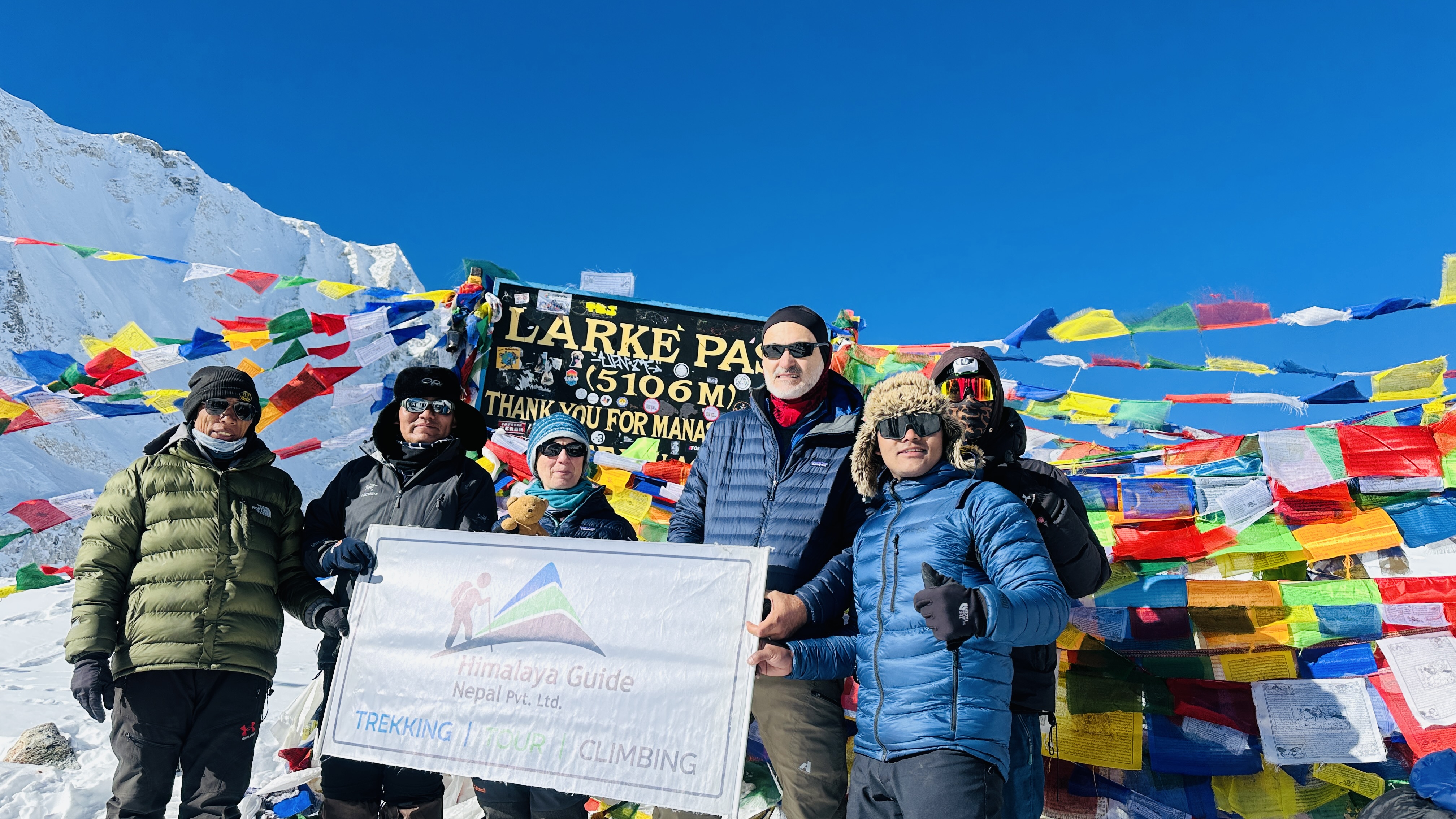
Conditions turn quickly once you’re above Dharamsala, and the crossing at Larkya La sits exposed to wind and cold with barely any cover along the way. Both winter and monsoon add genuine difficulty here, snow swallowing the trail in the colder months, landslide risk building in the lower gorge once the rains hit, which is exactly why most operators point trekkers toward autumn and spring windows instead.
How Hard Is the Larkya La Pass Crossing?
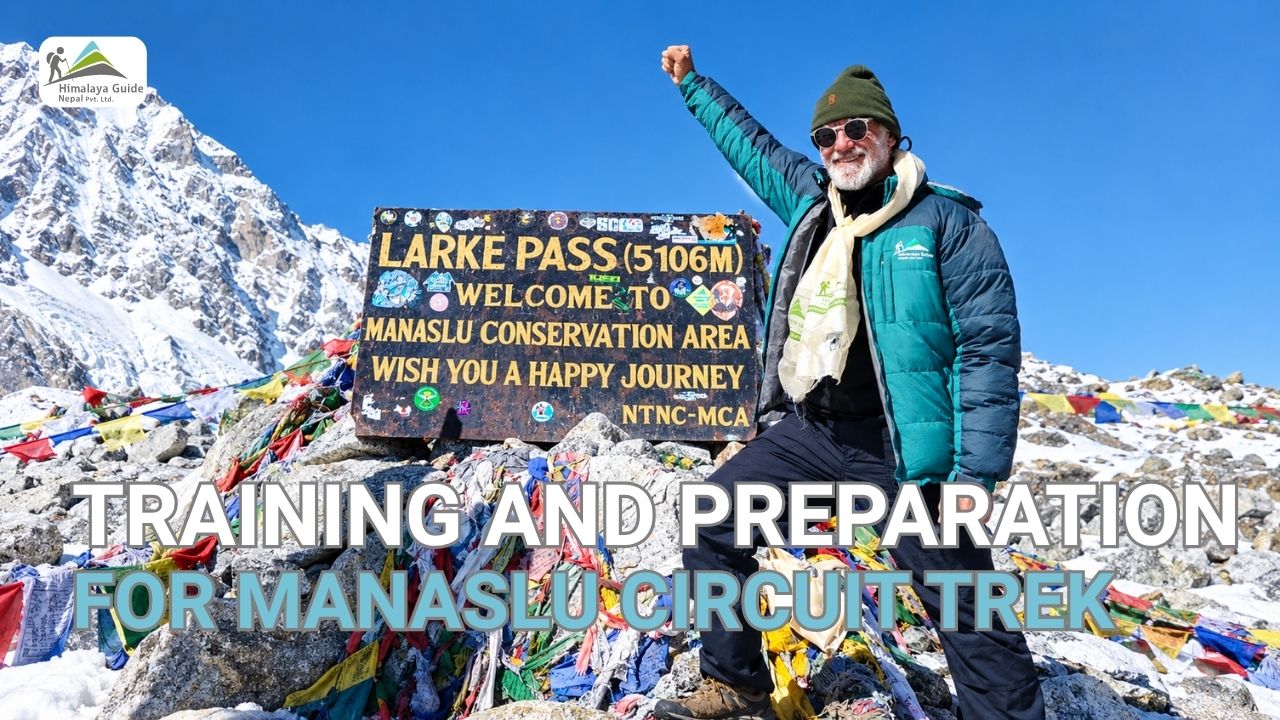
This stands as the toughest single day on the whole circuit, and it deserves to be considered on its own rather than folded into the general difficulty of the trek. Trekkers set off from Dharamsala well before sunrise, often around 4am, aiming to clear the pass and drop down to Bimthang ahead of the afternoon wind and cloud buildup. The day itself stretches on, running considerably longer than a normal trekking day, crossing glacier moraine and loose scree at altitude before a steep, joint-punishing descent on the other side.
Under solid autumn conditions, the crossing is hard work but doable for a fit, properly acclimatized trekker. Hit it in early spring or during a heavy snow year, though, and the same crossing can turn icy in patches with a much slower going. This is the day when a guide’s call on whether to push on or wait out bad weather counts most, and it’s a big part of why the law requires a licensed guide on this route in the first place. This clearly shows Manaslu Circuit Trek difficulty impacted by how Larkya La Pass crosing goes.
Altitude Sickness on the Manaslu Circuit
Acute Mountain Sickness is the biggest health concern on this trek. Headache, nausea, restless sleep, and unexplained tiredness are the usual early warnings, and they can hit a seasoned runner just as readily as someone on their first trek.
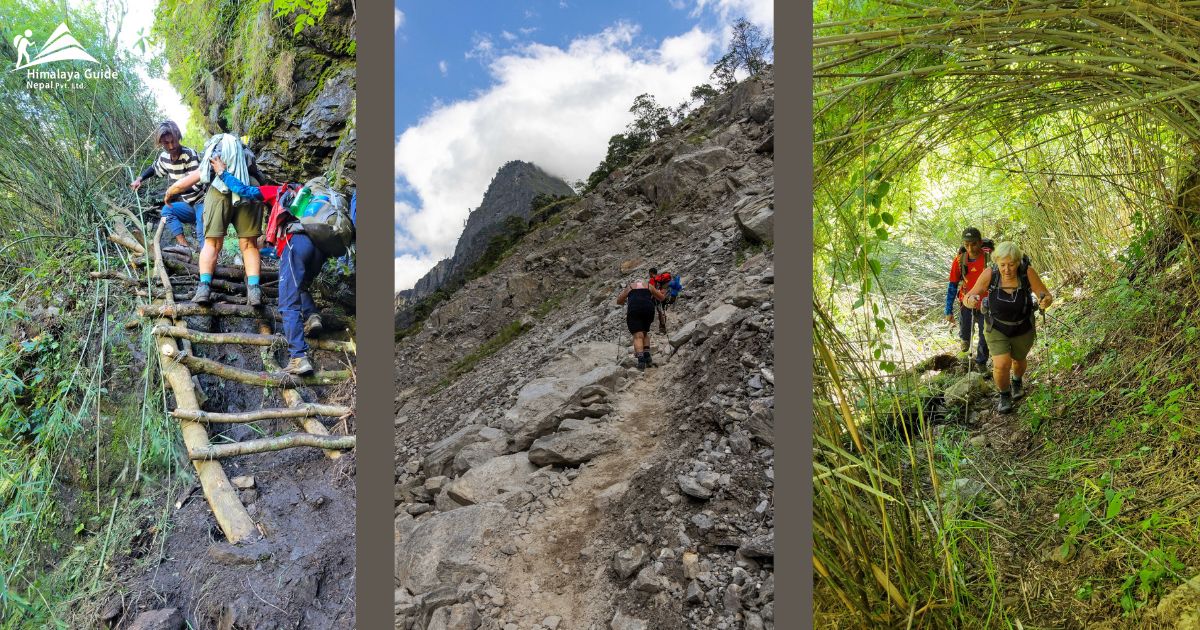
Gradual ascent remains the best defense against it. A sensibly paced itinerary caps how much altitude you gain per day once you cross 2,500 metres, and builds in time to adjust before the final push toward Larkya La. Drinking enough water, steering clear of alcohol once you’re up high, and flagging symptoms to your guide right away rather than waiting to see if they fade, all carry more weight here than they might on a lower route. Some trekkers use Diamox to ease acclimatization, which is worth discussing with a doctor before departure rather than deciding on the trail.
Do You Need Prior Trekking Experience for Manaslu Circuit Trek?
Not strictly, though this route rewards some hiking background more than a first multi-day trek like Everest Base Camp does. The Manaslu Circuit trek is difficult for someone who assumes general gym fitness alone will carry them through, when trail-specific conditioning matters just as much.
The six weeks of preparation before the trek makes a real difference on difficulties that you’ll actually feel once you’re on the ground. Cardio three times a week, running, cycling, or swimming, builds the stamina for consecutive long days. Hill walking or stair climbing with a loaded daypack prepares your legs specifically for the terrain, not just your lungs for the distance. A porter can be arranged for around $20 a day if you’d rather not carry your own full pack, which is worth considering on this route given how much the daily distance adds up.
Manaslu Circuit Trek Day to Day Difficulty Breakdown
| Zone | Altitude Range | What Changes |
|---|---|---|
| Lower (Machha Khola to Deng) | 700m to 1,800m | Long, warm days along the Budhi Gandaki gorge, near-normal oxygen, some steep gorge sections |
| Mid (Namrung to Samagaon) | 2,600m to 3,530m | Air noticeably thinner, terrain opens up, this is where pacing starts to matter |
| High (Samagaon to Dharamsala) | 3,530m to 4,460m | Cold, rocky, oxygen dropping fast, acclimatization becomes the priority |
| Pass (Larkya La to Bimthang) | 5,106m to 5,160m | The trek’s hardest single day, long hours, exposed terrain, steep descent |
A typical day starts early, with breakfast around 6:30 to 7 am, then 6 to 8 hours of walking with a lunch stop along the way. The stretch from Samagaon toward Samdo and Dharamsala is where most trekkers notice Manaslu Circuit trek difficulty for the first time, even on a day with a modest distance, since the body is working harder for the same effort. Evenings follow a familiar pattern once the walking is done: a warm dining hall, an early dinner, and lights out well before 9 pm, since most groups are up again before sunrise the next morning.
Manaslu Circuit Trek Difficulty Vs Everest Base Camp Difficulty
Trekkers researching manaslu circuit trek difficulty often have Everest Base Camp as a reference point, so it’s worth a direct comparison.
| Factor | Manaslu Circuit | Everest Base Camp |
|---|---|---|
| Guide requirement | Mandatory by law, restricted area | Not legally required, though strongly recommended |
| Highest point | Larkya La Pass, 5,106m to 5,160m | Kala Patthar viewpoint, roughly 5,545m |
| Total distance | Roughly 170 to 180km | Roughly 120 to 130km |
| Trail traffic | Quiet, especially above Samagaon | Busy, especially in peak season |
| Teahouse density | Fewer, more basic at altitude | More frequent, better developed |
Manaslu Circuit Trek Difficulty FAQs
Q: How hard is the Manaslu Circuit Trek compared to other treks in Nepal?
A: Rated strenuous overall, and generally seen as a notch harder than Everest Base Camp thanks to the compulsory guide rule, the greater isolation, and the longer daily stretches, even though its high point sits a touch lower.
Q: Do I need prior trekking experience?
A: Not really, though a bit of hiking background carries more weight here than it would on a beginner-friendly route like Everest Base Camp. A decent fitness baseline and six to eight weeks of prep count for more than any past multi-day trekking history.
Q: How many hours do you walk each day?
A: Typically 6 to 8 hours, covering 10 to 18 kilometres depending on the section, with the Larkya La Pass day stretching well beyond that.
Q: Is a guide required for the Manaslu Circuit Trek?
A: Yes, and it’s one of the clearest contributors to manaslu circuit trek difficulty compared with routes that leave it optional. Since Manaslu lies within a restricted zone, a licensed guide from a registered agency isn’t a suggestion, it’s the law, unlike Everest Base Camp where hiring one is advised but not compulsory.
Q: What is the hardest day of the Manaslu Circuit Trek?
A: The push over Larkya La, from Dharamsala down to Bimthang, is the single biggest driver of manaslu difficulty on the whole route. It pairs the route’s highest elevation with its longest day on foot, kicking off before dawn and crossing exposed glacier moraine ahead of a steep drop on the far side.
Q: How cold does it get at Larkya La Pass?
A: Daytime readings at the pass generally sit somewhere between -2°C and 5°C during the main trekking windows, dropping well below freezing after dark. Winter turns considerably colder still, and a heavy snowfall can shut the pass entirely.