Manaslu Tsum Valley Trek in October 2026
1 Jul 2026 Chandra Gurung
October is the best month for the Manaslu Tsum Valley Trek. The monsoon is gone, the skies clear up, and the trails dry out. You get sharp views of Manaslu and Ganesh Himal, plus Dashain and Tihar in the villages. Nights are cold up high, so pack for frost. Permits and a licensed guide are required, and both are handled by your agency.
Pick the wrong month and this Manaslu Tsum Valley trek turns hard. Rain, cloud, closed passes, empty teahouses. The Manaslu Tsum Valley Trek in October flips all of that. This is the sweet spot of the whole year, when the weather settles and the hidden valley opens up.
We run this route every autumn, so this guide comes from the trail, not a brochure. Want your dates and permits for the Tsum Valley Trek sorted before you fly? Talk to our team, and we will build the itinerary around you.
Is October the Best Time for Tsum Valley?
Yes, October is the best time for the Tsum Valley Trek. The monsoon packs up by late September. What it leaves behind is gold. Dry trails, clean air, and the driest walking of the year. The dust haze of spring is gone, so the mountains stand out crisp and close. On a clear October morning, you can trace the full line of Ganesh Himal from the Tsum trail.
October also gives you the safest timeframe for the high pass. Larkya La sits at 5,106 metres, and it needs stable weather to cross well. Autumn delivers that stability better than any other season. That single fact is why the best time to trek Tsum Valley and the circuit together lands squarely in October.
The month of October is Nepal’s busiest trekking month. But here is the thing most people miss. The Manaslu region still sees a fraction of the crowds you get on Everest or Annapurna. And Tsum Valley itself? Barely touched. You could walk a full morning in the upper valley and meet only yaks and a passing monk.
Weather and Trail Conditions in October
The walk starts warm and ends cold. That is the short version of Manaslu weather in October.
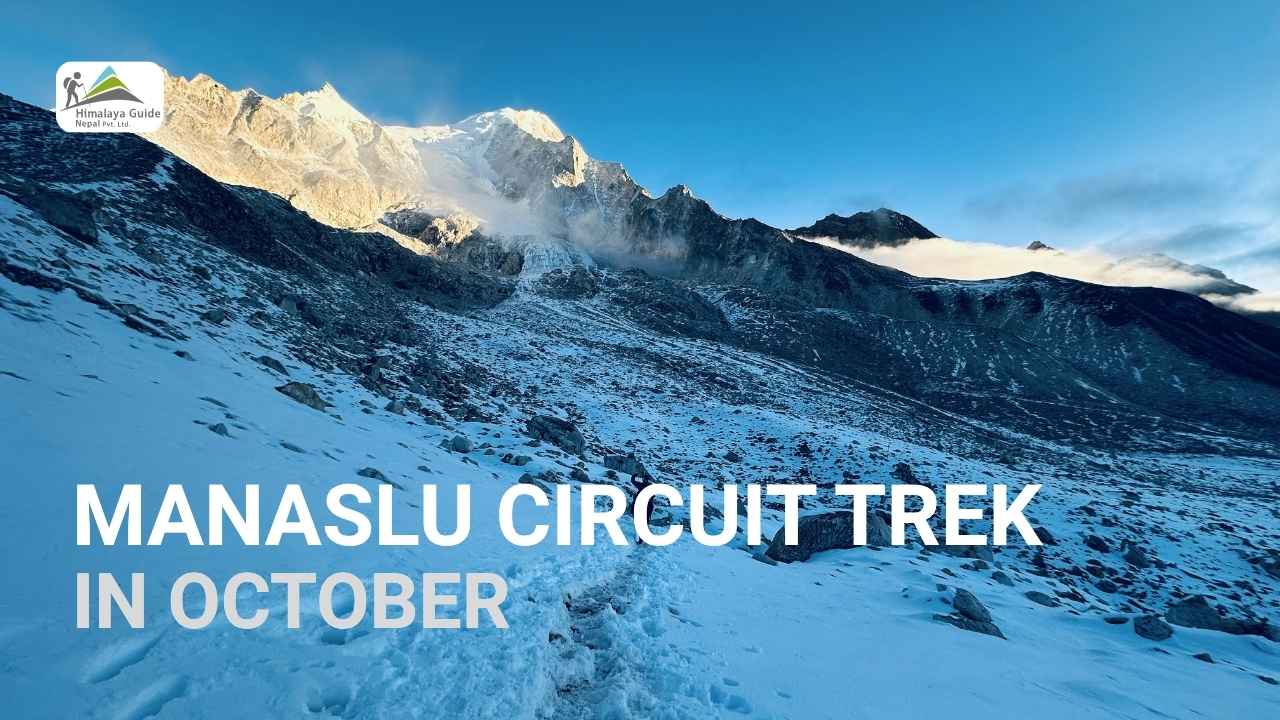
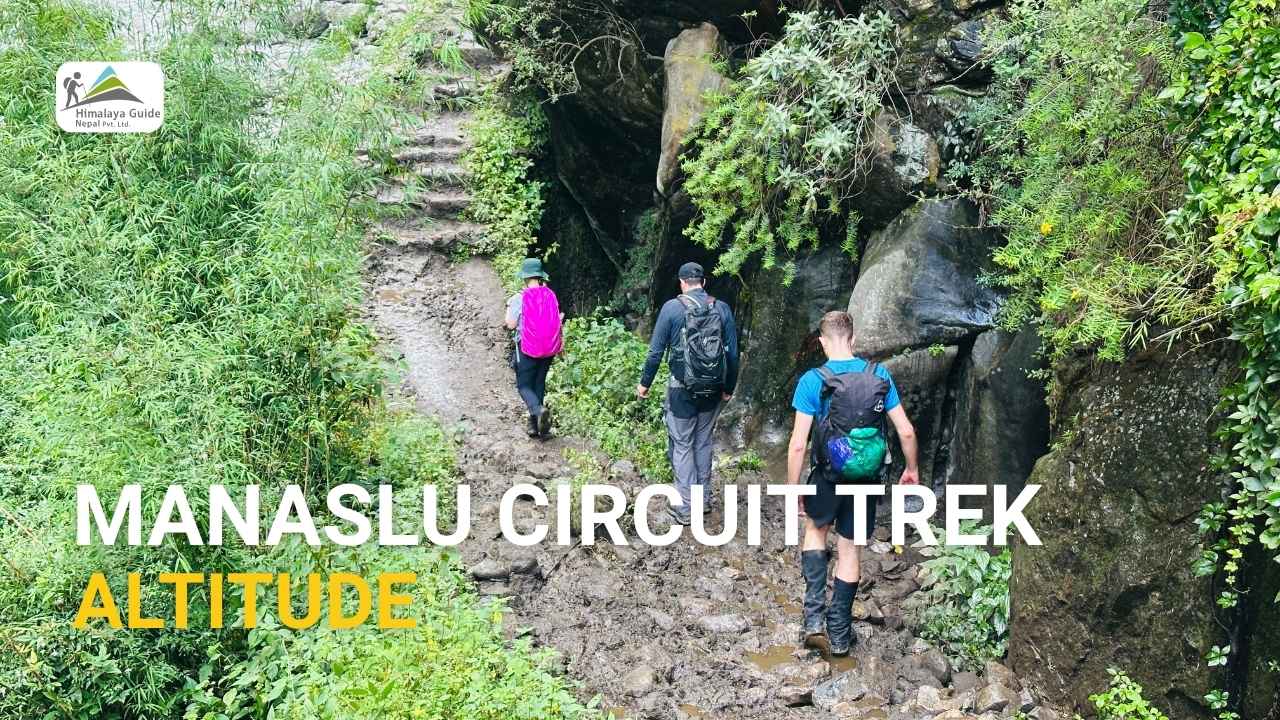
Down low, along the Budhi Gandaki gorge, days feel mild and green. You cross suspension bridges, pass harvested rice terraces, and climb through forest. As you push toward the Tsum plateau, the air turns dry and thin. The terrain up there is arid and dusty, shaped by its rain-shadow position behind the big peaks.
Mornings are the payoff. Clear, sharp, and still. Clouds tend to build in the afternoon and burn off again by night. So you learn to start early and get your views before lunch. Frost shows up on the ground at the higher camps, a small sign that winter is not far behind.
Other Month Vs October For Manaslu Tsum Valley Trek
| Season | Trail feel | Crowds | Views |
|---|---|---|---|
| September | Green, tail-end monsoon showers | Light | Good, some cloud |
| October | Dry, stable, festive | Peak on circuit, quiet in Tsum | Sharpest of the year |
| November | Colder nights, dry | Busy early, thins late | Clear, fall colour |
| Spring (Mar to May) | Rhododendron bloom, warmer | Moderate | Good, some haze |
| Winter (Dec to Feb) | Snow on Larkya, lodges shut | Very few | Clear but frigid |
| Monsoon (Jun to Aug) | Leeches, landslides | Almost none | Often blocked |
Spring runs a close second, thanks to the rhododendron colour. But for dry trails and a safe pass, autumn is the clear pick. Winter locks the upper villages behind snow, and monsoon brings mud and leeches. Tsum’s rain-shadow does soften the monsoon a little, yet the Larkya side still gets hit.
Early vs. Late October for Manaslu Tsum Valley Trek
Early October still carries a whisper of the monsoon. Slightly warmer, a touch greener, and the odd late shower. This is also festival time. In 2026, Dashain runs from October 11, with the main Tika day on October 21. Villages along the lower trail come alive with it. You might share a teahouse kitchen with a family mid-celebration.
There is a small trade-off. During Dashain, some teahouse staff head home for the festival. So a few kitchens run thin for a week. Late October fixes that. The crowds ease off, the air gets drier, and the nights get colder. By then, frost greets you most mornings at Mu Gompa. Tihar follows soon after, spilling into early November with its oil lamps and marigolds.
Temperature and Altitude Expectations during October Manaslu Tsum Valley Trek
In the lower valleys, expect pleasant days around 12 to 20 degrees. Climb higher and daytime drops to 5 to 13 degrees. Nights at altitude fall between minus 6 and plus 5. At the Larkya La pass before dawn, it can bite down to minus 12. That is the coldest moment of the whole trek.
Tsum has its own chill. The valley is narrow, so it holds cold longer than the open circuit. Nights at Mu Gompa (3,700m) get sharp fast. Here is how the altitude climbs across the route:
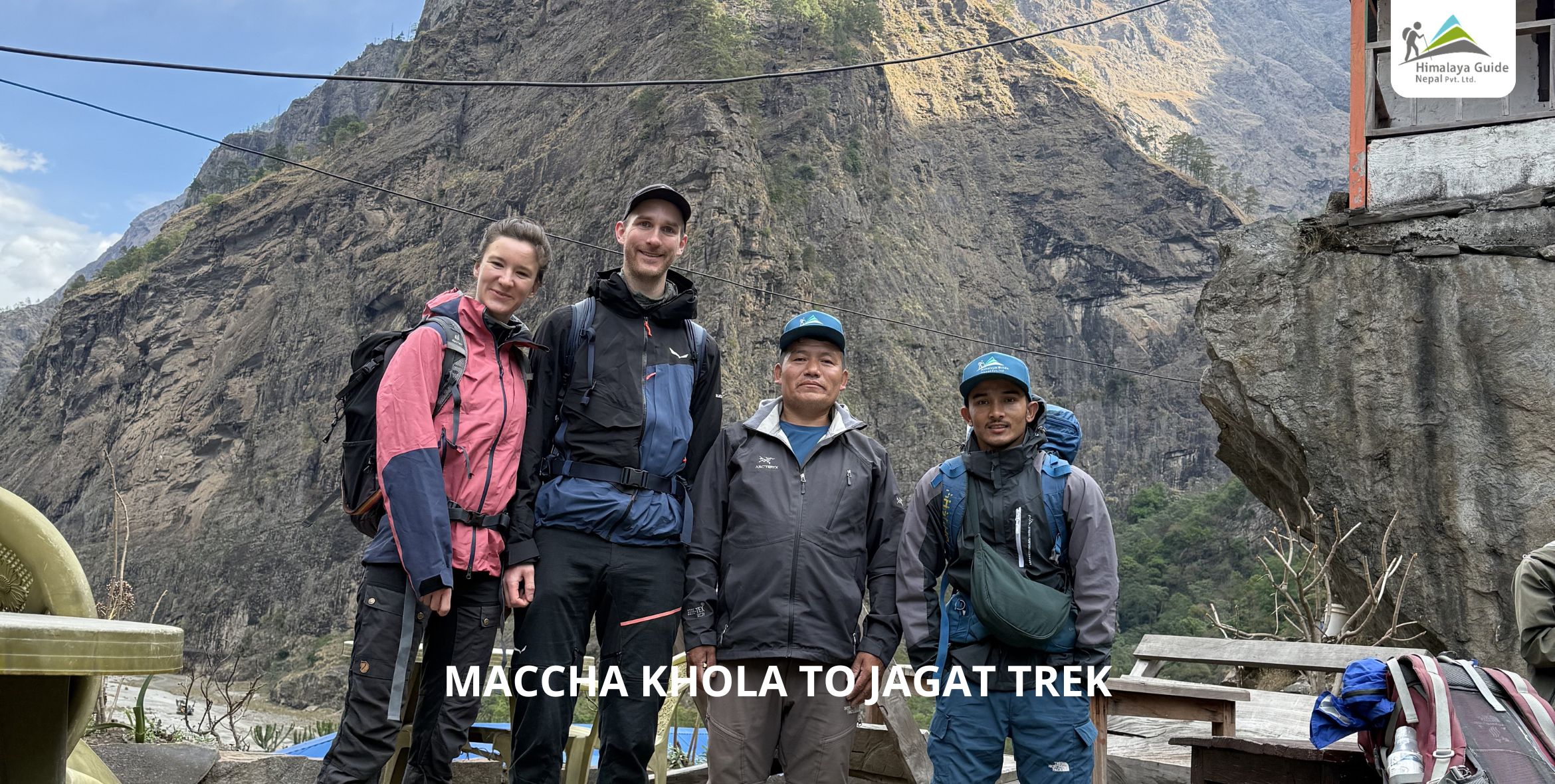
- Machha Khola 930m, Jagat 1,340m, Lokpa 2,240m
- Chumling 2,386m, Chhokangparo 3,010m, Nile 3,361m, Mu Gompa 3,700m
- Samagaun 3,530m, Samdo 3,860m, Dharamsala 4,460m
- Larkya La 5,106m, then down to Bimtang 3,720m
A sleeping bag rated to minus 10 is not optional here. Rooms are never heated. We provide a good bag on our trips, so you are not hauling gear you only need for a few nights.
Cultural Immersion: Dashain and Tihar
Dashain is Nepal’s biggest celebration. It marks the win of good over evil, with tika, jamara, and long family reunions. Then comes Tihar, the festival of lights, with Laxmi Puja, Kukur Tihar for the dogs, and Bhai Tika between siblings. Walking through this season, you see a side of Nepal that summer trekkers never catch.
But Tsum Valley offers something deeper still. This is old Tibetan Buddhist country. The people here are the Tsumba, with their own dialect and their own quiet way of life. You will pass long mani walls, spinning prayer wheels, and chortens worn smooth by wind.
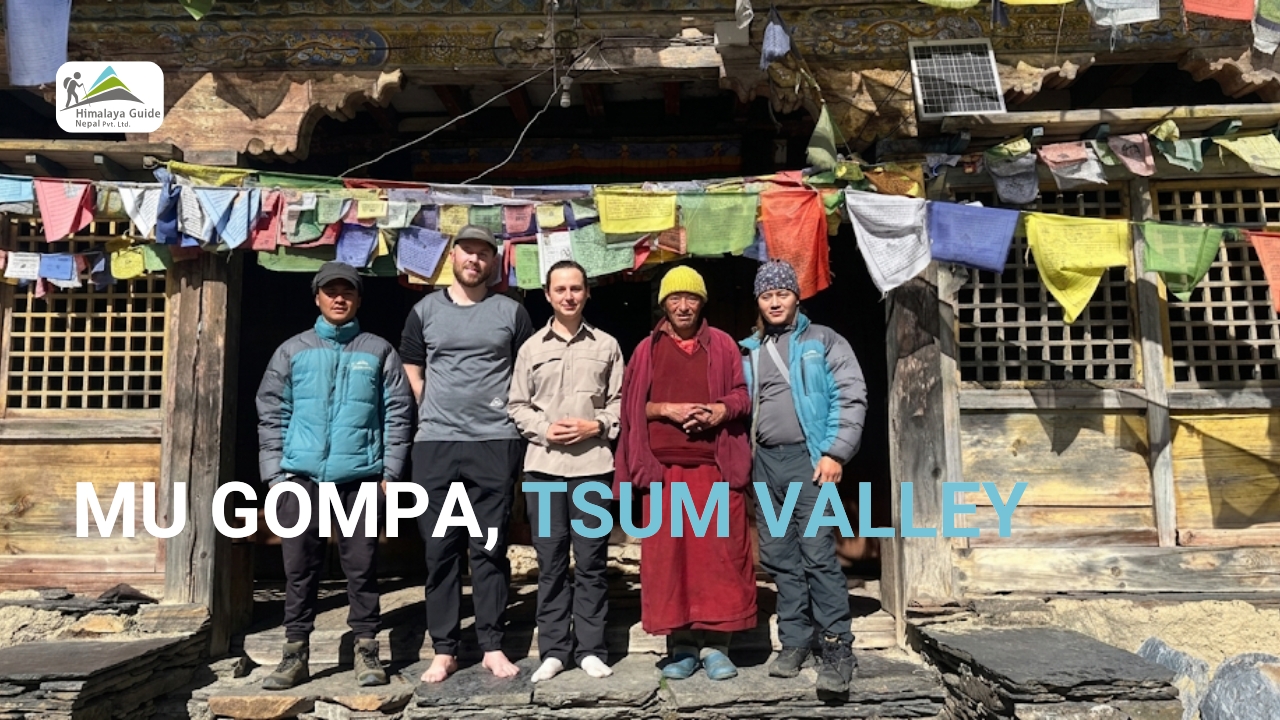
The valley holds real spiritual weight. Mu Gompa, the highest and largest monastery in Tsum, sits near the Tibetan border. Rachen Gompa is a peaceful nunnery. And the Milarepa Piren Phu cave is where the poet-saint is said to have meditated. Tsum has been a non-violence zone since 1920, under a local vow that forbids harming animals. You feel that stillness the moment you arrive. For a fuller cultural picture, our complete Manaslu and Tsum Valley guide goes deeper into the traditions.
Integrating Tsum Valley into Your Manaslu Itinerary
The main Manaslu Circuit runs up the Budhi Gandaki toward Larkya La. The Tsum detour branches off near Lokpa. From there you climb through Chumling, Chhokangparo, and Nile up to Mu Gompa. Then you loop back past Rachen Gompa and rejoin the circuit to carry on toward Samagaun, Samdo, and the pass.
Adding Tsum costs you three to four extra days. Is it worth it? For most people, yes. And there is a hidden bonus. The Tsum days follow a natural climb-high, sleep-low rhythm. That extra time at altitude helps your body prep for Larkya La later. So the detour is not just cultural. It makes the pass safer too.
A standard combined trip runs around 18 to 20 days, start to finish. That covers the road-head at Machha Khola or Jagat, the Tsum loop, the circuit, and the exit at Dharapani. Our Tsum Valley trek page lays out the day-by-day if you want the detail. These Manaslu Circuit Tsum Valley itinerary choices are easy to adjust to your pace, and we tune them for every group.
Packing for October in Tsum Valley
October asks you to pack for two climates in one bag. Warm valley days and freezing high nights.
Layering is the whole game. A merino base layer to wick sweat, a fleece for the middle, and a down jacket for the cold. Add a waterproof shell in case the weather turns. Your sleeping bag should hit minus 10, since the rooms up high stay cold through the night. Good boots, broken in well before you land, will save your feet.
Do not forget the small stuff that matters most:
- Warm hat, gloves, buff, and UV sunglasses for the high sun
- Trekking poles, headlamp, sunscreen, and a water bottle with purification
- A big power bank, because charging is limited and often costs a fee up high
- Enough cash in Nepali rupees, since the last reliable ATM is back near Arughat
Frost mornings are normal at Mu Gompa and the high camps. So keep your warm layers where you can grab them fast. These small Manaslu region trekking tips are the difference between a cold, grumpy morning and a good one.
Frequently Asked Questions About Manaslu Tsum Valley Trek in October
Q: Is Tsum Valley trekking in October too crowded?
A: Not really. The main circuit gets busy in October, but Tsum Valley stays quiet all season. It is a restricted side valley, so numbers are naturally low. During Dashain, even the circuit thins out as local trekkers head home. Booking your lodges ahead still helps in peak weeks.
Q: What is the altitude at Mu Gompa?
A: Mu Gompa sits at 3,700 metres, about 12,139 feet. It is the highest and largest monastery in Tsum Valley, close to the Tibetan border. The altitude is high enough to feel, but far below the Larkya La pass. Good Mu Gompa altitude and trekking prep means taking the Tsum days slow to acclimatise.
Q: Do I need a separate guide for Tsum Valley?
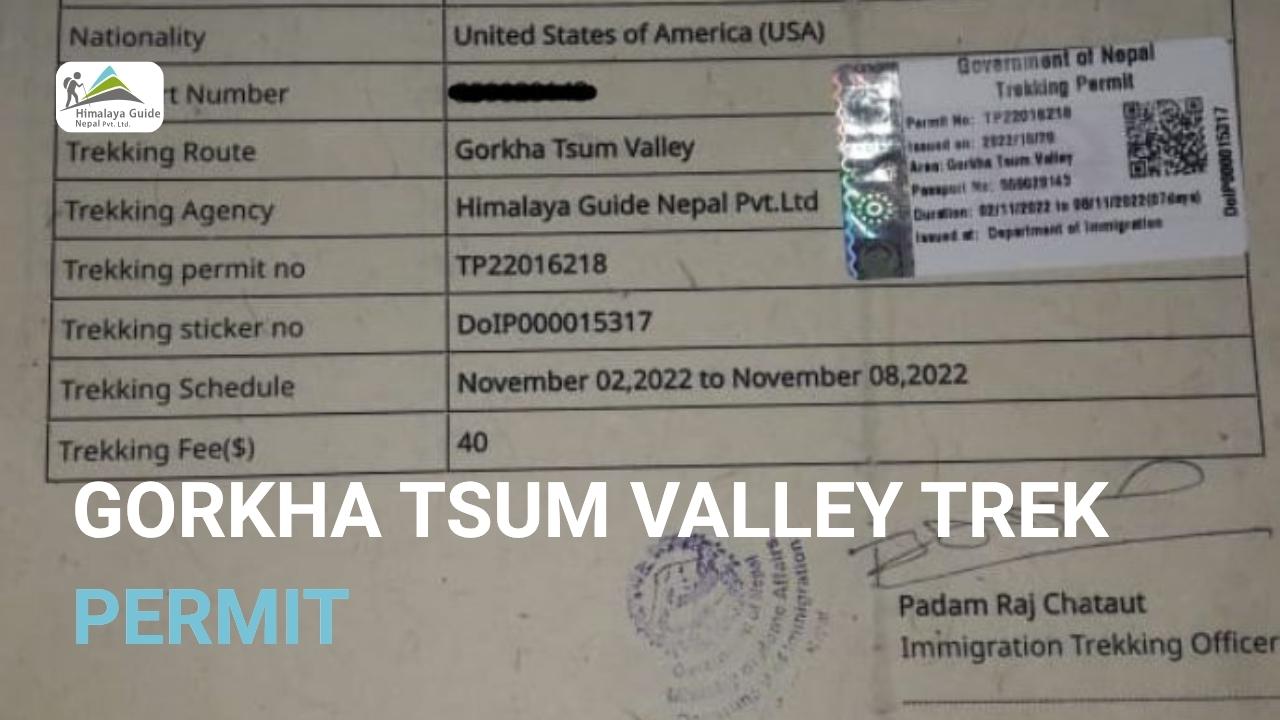
A: No, you do not need a second guide. The same licensed guide leads you through both the circuit and the Tsum detour. A guide is legally required across the entire restricted zone. Only guides from registered agencies can lead these treks, so freelancers are not allowed.
Q: How does the temperature in Tsum Valley compare to the Larkya La Pass area?
A: Tsum is milder by day but cold at night, since the narrow valley traps the chill. Nights at Mu Gompa drop below freezing in late October. The Larkya La area is far harsher, falling near minus 12 before dawn at the pass. So Tsum tests you gently, while Larkya is the real cold test.
Q: Is it possible to do the Tsum Valley trek as an independent traveler?
A: Not fully. Since March 2026, a single trekker can obtain the permit without a partner. But a licensed guide is still mandatory, and permits only come through a registered agency. So you can trek as a solo person, yet never without a guide. This keeps you safe and legal in a remote border zone.
Final Say About Manaslu Tsum Valley in October
October is the month this trek was made for. Stable Manaslu weather in October, dry trails, the sharpest views of the year, and the safest window to cross Larkya La. Add Dashain and Tihar in the villages, and you get culture stacked on top of scenery. This is trekking in Nepal during autumn at its finest.
The one thing not to leave late is planning. Dashain fills lodges, and restricted permits take time. So the Manaslu Tsum Valley Trek in October rewards trekkers who book early. Our guides have walked this route through many autumns, festival crowds and frosty passes alike. Ready to make it real? Talk to our team today and we will sort your permits, your guide, and every night on the trail.
Chandra Gurung