Food During the Manaslu Circuit Trek
27 Apr 2026 Chandra Gurung
Some trekkers get hungry all the time. Some lose it completely. But one thing is true for everyone: you need to eat, and you need to eat right. The wrong food at high altitude in the Manaslu Circuit Trek makes your stomach hard. The right food keeps you moving when your legs want to stop.
I have been guiding on this trail for over ten years. I have eaten at every stop from Soti Khola to Dharapani, in peak season and off-season, in good weather and in snowfall. I know which teahouses have a proper cook in November and which ones are running on skeleton staff in January. This guide covers all of it.
If you want your full Manaslu trek planned with meals sorted at each stop, talk to our team today and we will build the itinerary around you.
What Kind of Food to Expect on the Trail
Manaslu Circuit is not a camping trek, so you eat from a teahouse menu every day. No professional cook follows you with your preferred spices. No meal planning. You sit down, you read what is on the board, anxd you order what is available.
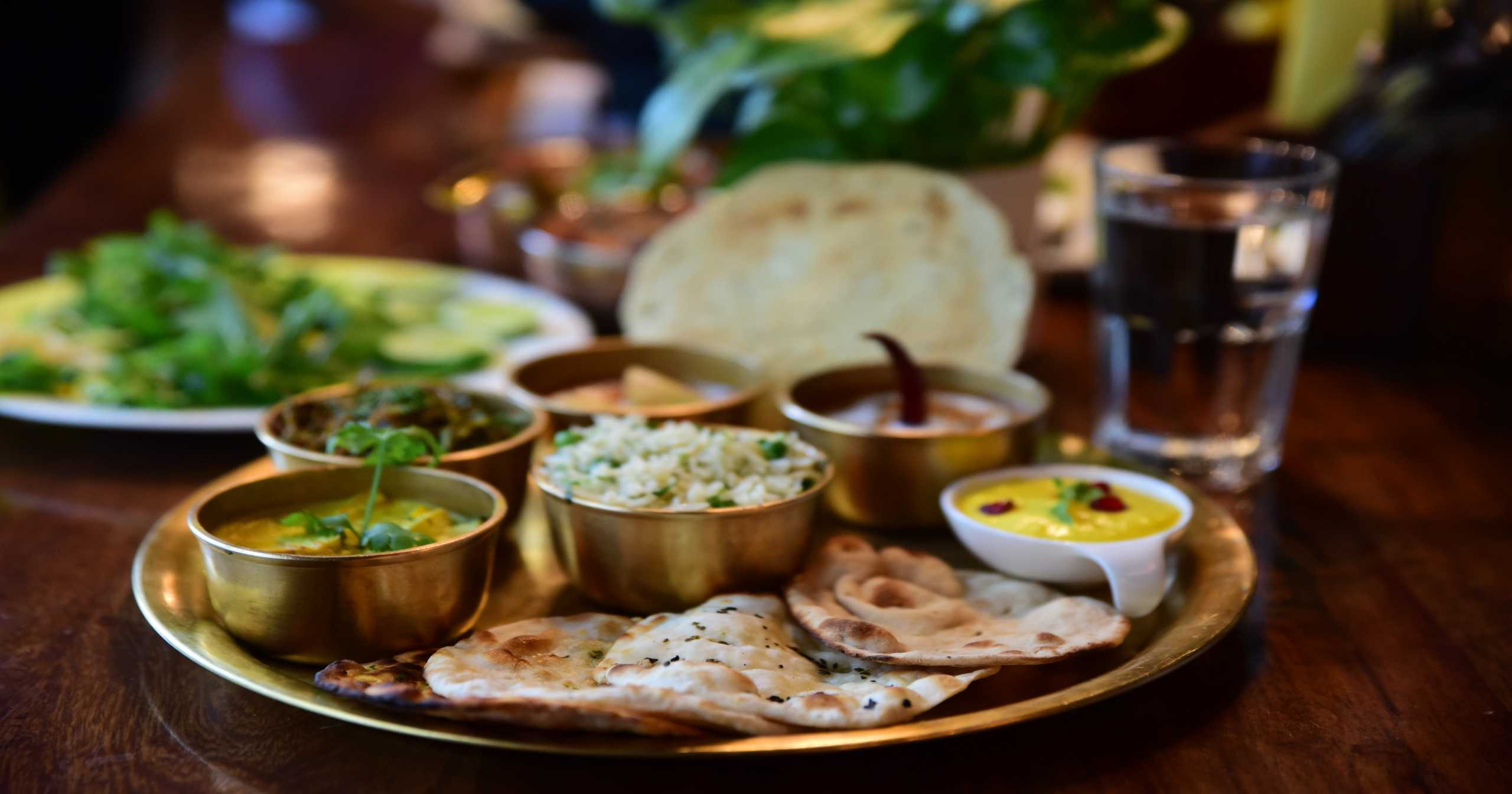
And here is the thing most first-timers do not expect: the food is genuinely good. Not restaurant good. Teahouse good. Freshly cooked every time because there is no cold storage above Jagat. The ingredients are local. The portions are generous. And dal bhat comes with unlimited refills because the teahouse owner knows you have another eight hours of walking ahead of you tomorrow.
One thing I always say to clients before they leave Kathmandu: expect a lot of carbohydrates and not much variety above Samagaun. But what you do find, especially in the middle section of the trail, will surprise you.
Dal Bhat: The Dish That Runs This Trail
If you only remember one thing from this guide, make it this. Dal bhat is not just a meal. It is the engine that keeps trekkers moving on the Manaslu Circuit Trail.
Rice, lentil soup, vegetable curry, a small salad, and pickle on the side. It comes on a metal plate. It costs $5 to $7. And it comes with unlimited refills. Every teahouse on this trail serves it. From Soti Khola to Dharapani, at every altitude, dal bhat is on the menu.
There is a saying every guide uses: “Dal bhat power, 24 hour.” I have said it to hundreds of clients over ten years. It sounds like a joke but it is true. The combination of slow-burning carbohydrates from rice, protein from lentils, and micronutrients from the curry gives you sustained energy across a full trekking day.
Here is the specific reason I push it over pasta or fried rice at altitude: your gut works differently above 3,500 meters. Digestion slows. Heavy or oily food sits badly. Dal bhat is light, warm, and familiar to your stomach in a way that macaroni just is not.
By day three, you will stop thinking of it as a foreign dish and start thinking of it as the best thing on the menu. And by day eight, when you come off the trail at Samdo with cold legs and a tired mind, the smell of dal bhat cooking in the back kitchen is genuinely the best thing you have smelled in days.
Tibetan Dishes You Will Find on the Upper Trail
The Manaslu Circuit Trek is the only major trek in Nepal where the food culture changes so completely mid-route. Below Namrung, you are eating Nepali food in Gurung and Magar villages. Above it, you are in Tibetan Buddhist territory and the food reflects it.
Thukpa and Thenthuk
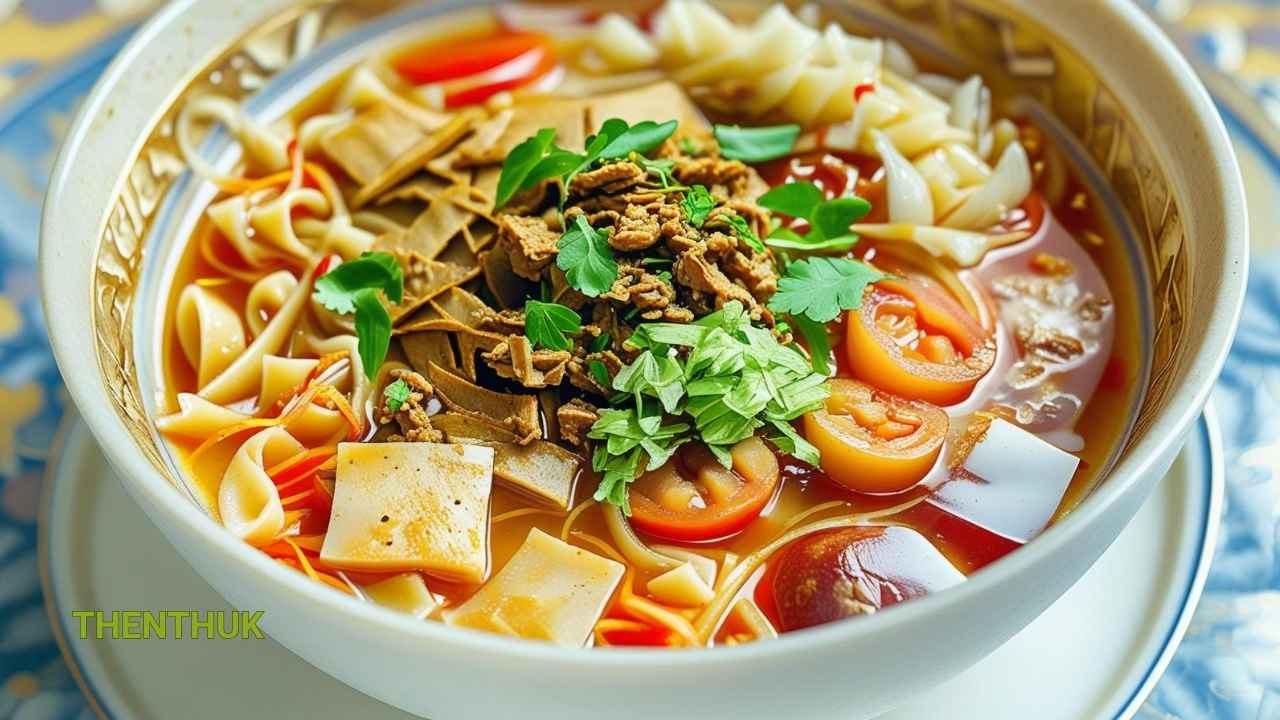
These are the two noodle soups you will find on every upper trail menu. Thukpa uses regular noodles in a vegetable or egg broth. Thenthuk uses flat, hand-pulled noodles torn by hand directly into the pot. Thenthuk is thicker and more filling. Both warm you up fast on cold evenings and the broth helps with hydration at altitude.
Dhido
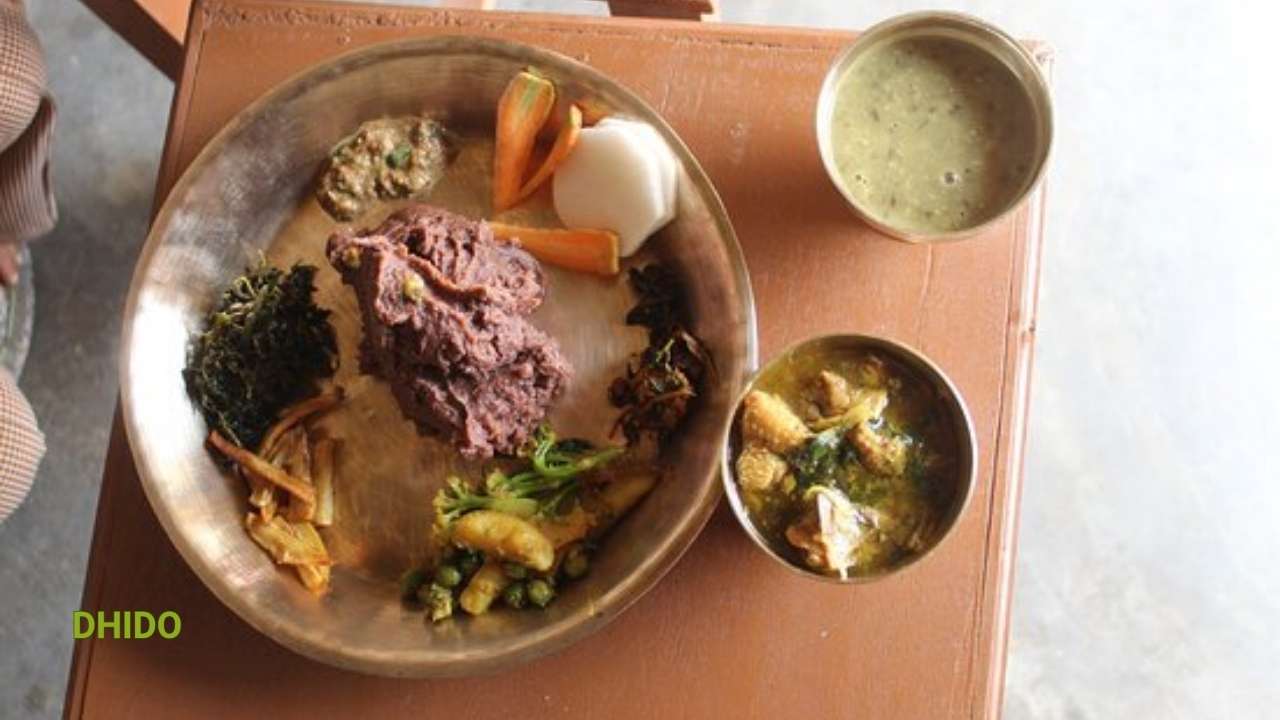
Buckwheat or millet porridge cooked thick and served warm. It is dense, filling, and very high in slow-burning carbohydrates. Some trekkers find the texture strange at first. But the Gurung and Tibetan communities who live on this trail have eaten it through generations of hard physical work at altitude. That should tell you something about how well it fuels a long day.
Tsampa
Roasted barley flour mixed with water or yak butter tea into a thick paste. It is a Tibetan staple that you may not find at every teahouse but it appears in the higher villages. It is dense, calorie-rich, and very filling in small amounts. Try it if you see it on the menu.
Garlic Soup
Order this every evening above 3,000 meters. Garlic contains compounds that help blood vessels dilate and improve oxygen circulation. At altitude, where your blood oxygen is already lower than normal, this matters. It will not prevent altitude sickness on its own, but combined with proper acclimatization and good hydration, it is a real tool, not a placebo.
Most teahouses in Namrung, Lho, and Samagaun serve it. It is a thin soup, mildly spiced, with whole or crushed garlic in the broth. It costs NPR 200 to 350. Worth every rupee.
Yak Butter Tea and Chhurpi
Yak butter tea is made from tea leaves, yak butter, and salt. It is thick, salty, and oily. It is nothing like the tea you know at home. But it is extremely high in calories and fat, which is exactly what your body burns to stay warm at 3,500 meters at night.
Chhurpi is a hard yak cheese that lasts for weeks without refrigeration. You can carry it in your pocket and chew on it during the walk. In Samagaun, some teahouses sell small pieces. Buy some. It is the best trail snack you will find on the entire route.
Breakfast Options on the Manaslu Circuit Trek
Breakfast is the most important meal of the day on this trail. You eat it before a 6 to 8 hour walk, usually starting at 7 or 8am. What you eat in the morning determines how you feel by noon.
In the lower villages from Soti Khola to Jagat, you have real options. Porridge with milk and honey. Eggs boiled, fried, or as an omelette. Tibetan bread with jam or peanut butter. Pancakes with apple or banana. Toast. Chapati with egg. Muesli if the teahouse stocks it.
Above Deng, the breakfast menu shortens. Porridge is almost always available. Tibetan bread stays on the menu all the way to Dharmasala. But pancakes and toast disappear by Namrung. By Samdo, your breakfast will likely be porridge, Tibetan bread, and tea.
Do not skip breakfast on this trail, even if you are not hungry. Cold and altitude kill your appetite. Eat anyway. Breakfast costs NPR 400 to 700 across most of the trail, rising to NPR 600 to 800 in the upper section.
Food Cost on the Manaslu Circuit Trek
Here are the real numbers from ten years of eating on this trail.
| Meal | Lower Trail | Mid Trail | Upper Trail | After Pass |
|---|---|---|---|---|
| Breakfast | NPR 400 to 600 | NPR 500 to 700 | NPR 600 to 800 | NPR 500 to 700 |
| Lunch or Dinner | NPR 500 to 700 | NPR 650 to 900 | NPR 750 to 1,000 | NPR 600 to 800 |
| Hot drink | NPR 150 to 200 | NPR 200 to 300 | NPR 250 to 350 | NPR 200 to 280 |
| Daily total | NPR 1,500 to 2,000 | NPR 1,800 to 2,500 | NPR 2,000 to 3,000 | NPR 1,700 to 2,300 |
These numbers go up in peak season because demand is high and teahouses know it. In off-season, you can sometimes get slightly lower prices but do not count on it.
The teahouse prices your room low because they expect you to eat all your meals there. This is the unwritten rule of the trail. If you eat at a different teahouse, the host notices. Always eat where you sleep.
Hot drinks add up fast. Two teas and a hot lemon per day is NPR 450 to 600 extra. Budget for it from the start.
Drinking Water on the Manaslu Circuit Trek
Hydration is more important than food during manaslu circuit trek. Your body loses water faster than normal because of the cold air, the physical output, and the reduced humidity at height. Most trekkers at 4,000 meters are mildly dehydrated without realizing it. And mild dehydration at altitude feels exactly like the early stages of altitude sickness.
The rule is simple: three to four litres per day above 3,000 meters. More than you think you need.
Boiled water from the teahouse is the safest choice. It costs NPR 100 to 300 per litre depending on altitude. Water purification tablets are what I tell every client to buy before leaving Kathmandu. A full packet costs NPR 400 to 500 in Thamel and lasts the whole trek. Fill your bottle, drop in a tablet, wait 30 minutes, and drink.
A SteriPen or LifeStraw filter is the most reusable option. One-time cost, no ongoing expense on the trail. Bottled water is available in lower villages but disappears above Deng, costs up to NPR 500 per bottle at altitude, and creates plastic waste in a place with no waste management. Skip it where you can.
Never drink untreated stream water. Not on this trail, not anywhere in Nepal. The streams look clean. They are not.
Hot drinks count as hydration. Ginger tea, hot lemon water, and black tea all contribute to your fluid intake and warm you from the inside on cold days. Order them often.
Dietary Needs on the Manaslu Circuit Trek
| Diet Type | Trail Reality | Key Tips |
|---|---|---|
| Vegetarian | Fully supported. Upper trail is vegetarian by default above Jagat. | No special arrangement needed. Dal bhat is always available. |
| Vegan | Mostly manageable with awareness. | Skip yak butter tea and ghee-based soups. Tell your guide before the trek. |
| Gluten-Free | Harder. Most breads and noodles contain gluten. | Rely on dal bhat and boiled potatoes. Bring own snacks from Kathmandu. |
| Meat Eaters | Freely available lower trail. Stop at Jagat. | No cold storage above Jagat. Eggs are your protein source from Deng onwards. |
If you have specific dietary restrictions, tell your guide before the trek starts. We communicate with each teahouse ahead of your arrival for every client with special needs. This is part of how we run trips on this route.
What Snacks to Carry for the Manaslu Circuit Trek
You will eat three teahouse meals a day. But during Larkya La Pass, there is nothing between stops, and it is a full day with no teahouse until Bhimthang. So on that day you must pack the Snacks with you.
Buy everything in Kathmandu. After Deng, the same items cost two to three times as much in teahouses, if they stock them at all. Budget NPR 2,000 to 3,000 for a full snack kit in Thamel before you leave.
Energy bars and glucose biscuits for the Larkya La crossing day. Pack at least five per person for that day alone. Nuts and dried fruit for daily trail snacks between stops: high in calories, light to carry, and they do not freeze solid like chocolate sometimes does at 4,000 meters.
Electrolyte sachets. Mix one into your water bottle every morning above 3,000 meters. Sweat, altitude, and reduced appetite strip your electrolytes faster than you realize.
Chhurpi from Samagaun if you can find it. Hard yak cheese, keeps for days, full of fat and protein. Carry instant coffee sachets if you need morning caffeine. The teahouses have it but your preferred strength may not match theirs.
Food Tips From 10 Years on This Trail
These are the things I tell every client in the week before departure. They sound small. They make a real difference on the trail.
- Order garlic soup every evening from Namrung onwards. Do not wait until you have a headache to start. Make it part of your evening routine from the first night above 3,000 meters. It works best as prevention, not cure.
- Choose dal bhat over pasta above Deng. Your gut processes it better at altitude. The unlimited refills mean you cannot undereat. And at the prices above Samagaun, the value per calorie is not close.
- Order dinner as soon as you arrive at the teahouse. In peak season with ten orders coming in at once, the kitchen is slow. Arrive at 3pm, order by 3:30pm, eat at 5pm while it is still hot. Wait until 5pm to order and you are eating in the cold at 7pm.
- In off-season, ask whether the teahouse has a cook before you sit down. Some teahouses between December and February run with just the family and no trained cook. The food is still edible but your options will be narrow. Knowing this saves you a surprise.
- The night before Larkya La, eat the biggest meal you can manage. Dal bhat with extra servings. Garlic soup. Ginger tea before bed. You start at 4am with nothing running in the kitchen. That meal is your fuel for the hardest day of the trek.
- After the pass, let your appetite return. Bhimthang and Dharapani are good eating stops. Use them to recover and give your body the nutrients it spent crossing 5,160 meters.
Food During Manaslu Circuit Trek by Altitude: How the Menu Changes
This is the part no other guide tells you properly. The food changes significantly as you climb. Not just in price, but in what is actually available and what your body actually wants.
Lower Trail: Soti Khola to Jagat (700m to 1,400m)
This is where you have the most options on the whole trek. The teahouses here are closer to the road, supplies come in regularly, and the kitchens are well stocked.

You can order fried rice, pasta, macaroni, momos, vegetable curry, dal bhat, chapati, eggs any way you want, pancakes, and some simple continental breakfasts. Meat is available here too, mostly chicken and eggs. Prices are the lowest on the trail: NPR 400 to 600 for breakfast, NPR 500 to 700 for lunch or dinner.
Eat well in this section. Your body is adjusting to the rhythm of trekking and you need the fuel.
Mid Trail: Deng to Samagaun (1,800m to 3,530m)
This is where the food story gets interesting. As you climb past Deng and head toward Namrung, the culture starts to shift from Gurung and Magar toward Tibetan Buddhist. And the food shifts with it.
Thukpa and thenthuk appear on the menu from around Namrung. Dhido also shows up here: a thick porridge from buckwheat or millet flour, heavy, filling, served with vegetable curry or fermented greens called gundruk. It is not for everyone but try it at least once.
Garlic soup appears in this section too. And this is the one I always push my clients to order every evening above 3,000 meters. Garlic increases blood circulation and helps your body move oxygen more efficiently at altitude. It is not a cure for altitude sickness but it is a real, practical tool for acclimatization. Order it every night from Namrung onwards.
One important rule from this section upward: avoid meat. Above Jagat, there is no cold storage at any teahouse. Meat sitting in a warm kitchen at 2,500 meters is a stomach problem waiting to happen. Stick to eggs, dal bhat, and vegetarian dishes. Your guide will tell you the same thing.
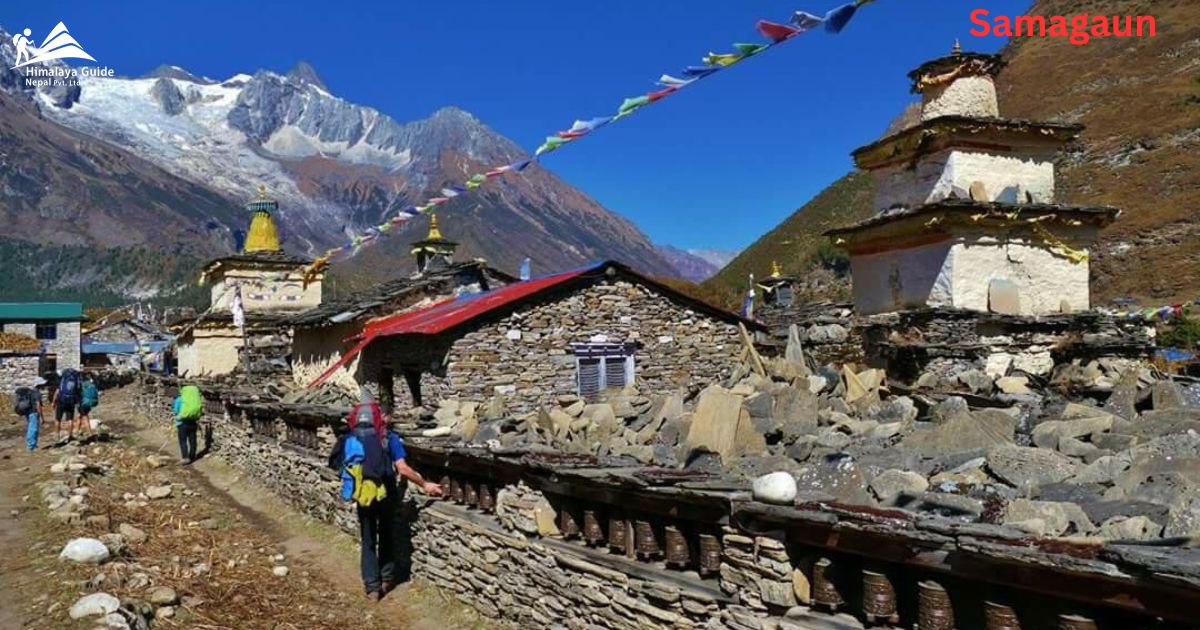
Samagaun is the most developed village in this section and has the best teahouse food on the upper trail. Some guesthouses here serve yak cheese on the side and local Chhurpi, a hard, dense mountain cheese that lasts all day in your pocket and works as a brilliant trail snack.
Upper Trail: Samdo and Dharmasala (3,860m to 4,460m)
The menu is very limited here. Dal bhat, thukpa, potatoes in different forms, boiled or fried eggs if available, Tibetan bread, and soup. That is mostly it.
Your appetite may also drop in this section. Altitude does that. You feel full after a few bites. But you must eat. Your body burns more calories at altitude just to stay warm, and Larkya La at 5,160 meters is ahead of you.
Dharmasala is the last stop before the pass. The night before the crossing, eat the heaviest meal you can manage. Dal bhat with extra rice. Garlic soup and ginger tea with it. Sleep early. You will start walking at 4am and the kitchen will not be running when you leave.
After the Pass: Bhimthang to Dharapani
Once you cross Larkya La and drop down to Bhimthang, the food improves again. Hot showers are back, teahouses are better stocked, and your appetite returns fast now that the altitude is dropping.
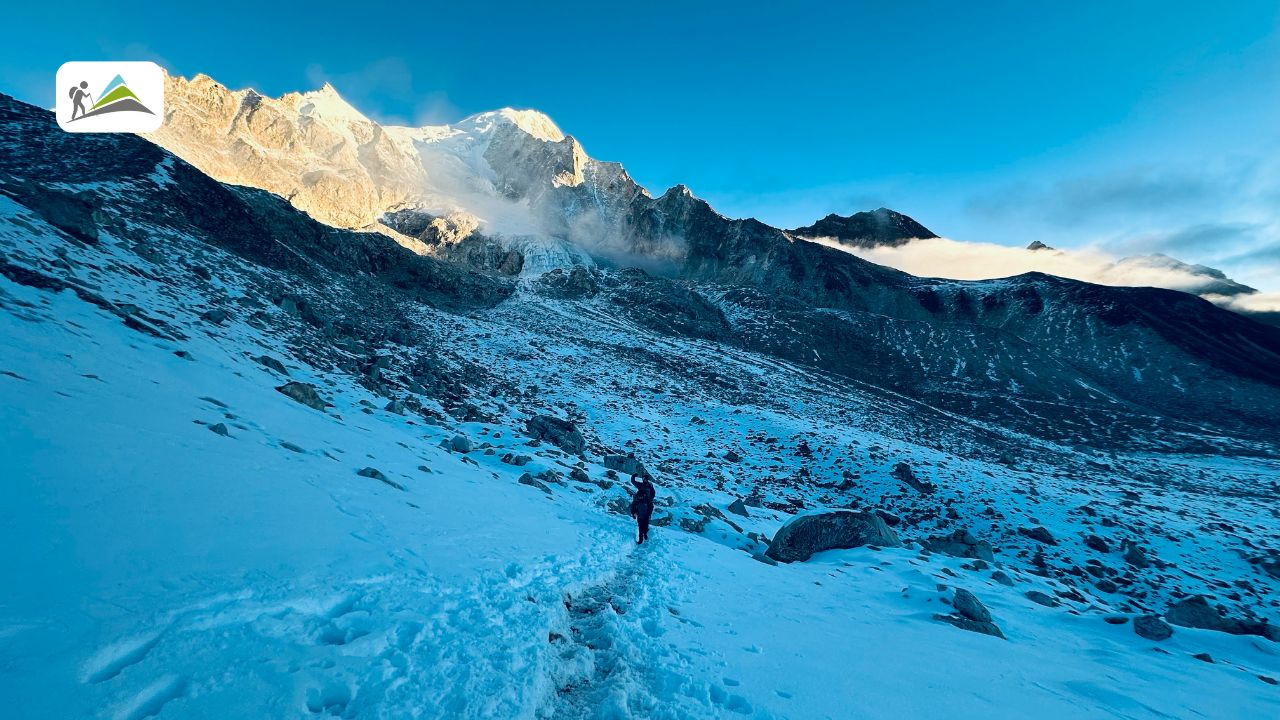
Dharapani at the end of the trek has the most variety since Jagat. Take a proper meal here before the drive back. Fried rice, momos, a good noodle dish. After 13 days on a restricted menu, the choice feels like a lot.
Here is how food availability compares across the four sections of the trail:
| Trail Section | Altitude | What Is Available | What Disappears | Avg Meal Cost (NPR) |
|---|---|---|---|---|
| Lower Trail (Soti Khola to Jagat) | 700m to 1,400m | Full menu, meat, eggs, continental, pasta, momos | Nothing yet | 400 to 700 |
| Mid Trail (Deng to Samagaun) | 1,800m to 3,530m | Nepali + Tibetan dishes, thukpa, dhido, garlic soup | Fresh meat, variety drops | 600 to 900 |
| Upper Trail (Samdo to Dharmasala) | 3,860m to 4,460m | Dal bhat, thukpa, potatoes, Tibetan bread, soup | Most extras gone | 700 to 1,000 |
| After Pass (Bhimthang to Dharapani) | 3,720m to 1,860m | Variety returns, full menu | Nothing much | 500 to 800 |
What Travellers Ask about Manaslu Circuit Trek Food
What is the best food to eat on the Manaslu Circuit Trek?
Dal bhat is the best choice at any altitude. It is the most filling, most nutritious, and best value meal on the trail. Above 3,000 meters, add garlic soup to your order every evening. Thukpa and thenthuk are the best warming options on cold nights in the upper section. Eggs are your best protein source above Jagat where fresh meat is not safe.
Is the food safe to eat on the Manaslu Circuit Trek?
Yes, if you choose correctly. All teahouse food is cooked fresh because there is no cold storage above Jagat. Vegetarian and egg dishes are safe throughout. Avoid meat above Jagat. Drink only boiled water, treated water, or hot drinks. Never drink untreated stream water. These three rules cover the majority of food safety concerns on this trail.
Can vegetarians and vegans eat well on the Manaslu Circuit Trek?
Vegetarians have no problem at all. The entire upper trail is effectively vegetarian by default. Vegans need to be aware of yak butter in some teas and ghee in certain dishes. Communicate your diet to your guide before the trek and they will handle it at each teahouse. Gluten-free trekkers will need to bring their own snacks and rely on rice-based dishes.
How much does food cost per day on the Manaslu Circuit Trek?
In lower villages, daily food runs NPR 1,500 to 2,000 for three meals plus drinks. In mid-trail villages like Samagaun, budget NPR 1,800 to 2,500. In upper villages at Samdo and Dharmasala, food costs NPR 2,000 to 3,000 per day. These costs are included in our standard trek packages so you do not need to budget for them separately.
What snacks should I bring for the Manaslu Circuit Trek?
Energy bars, nuts, dried fruit, electrolyte sachets, glucose biscuits, and instant coffee if needed. Buy all of it in Kathmandu before departure. After Deng, these items cost two to three times more in teahouses and availability drops above Namrung. Budget NPR 2,000 to 3,000 for a full snack supply for 13 days.