Manaslu Circuit Trek in July: Monsoon Manaslu

1 Apr 2026 Chandra Gurung
Quick Answer:
| The Manaslu Circuit Trek in July is possible, but it will give you two different experiences in one. The lower trail from Soti Khola to Namrung is wet, leech-heavy, and also slippery. After 3,000m altitude, the Nubri Valley sits in a rain shadow, and the trail dries out. With a licensed guide, the right monsoon gear, and a flexible schedule, you can cross the Larkya La pass and complete the Manaslu Circuit Trek. |
The Manaslu Circuit Trek in July comes right in the peak monsoon season in Nepal. Some sections of this trail are genuinely hard in July. Others are actually fine. The difference between a miserable trip and a memorable one comes down to knowing and preparing mentally for the trip before you land in Kathmandu.
We’ve guided trekkers through this region since 2015, including groups in July. This guide covers what those trips actually look like: the temperatures, the real risks, what July gives you that no other month does, and which package to pack.
Talk to our team today and get a free July itinerary. Visit manasluguide.com
July Temperature on the Manaslu Circuit Trek: Day and Night
Very few pack for the temperature, of both rainfall and cold weather. The temperature in manaslu july goes around 25°C in the lower gorge to below 0°C at the Larkya La pass. On the same trek, on the same week, you need both a t-shirt and a down jacket.
Rain doesn’t fall above Namrung; the Tibetan plateau blocks the monsoon clouds. The upper valley gets afternoon rainfall, but the kind you can walk through, not the kind that pins you inside a teahouse for six hours.
| Location | Elevation | Day Temp (°C) | Evening / Night (°C) | Rainfall |
| Soti Khola / Machha Khola | 900m | 23 to 27°C | 16 to 20°C | Heavy. Daily afternoon downpours. |
| Jagat / Philim | 1,400m | 20 to 25°C | 14 to 18°C | Heavy. Trail wet and muddy. |
| Namrung | 2,630m | 15 to 20°C | 10 to 13°C | Moderate. Leeches thinning out. |
| Lho / Shyala | 3,180m | 12 to 17°C | 6 to 9°C | Light to moderate. |
| Samagaun | 3,520m | 10 to 15°C | 4 to 7°C | Light. Rain shadow begins. |
| Samdo | 3,875m | 8 to 13°C | 2 to 5°C | Very light. Often clear mornings. |
| Dharamsala / Larkya Phedi | 4,460m | 5 to 10°C | -2 to 2°C | Minimal. Cold nights. |
| Larkya La Pass | 5,106m | 0 to 5°C (midday) | -5 to -2°C (pre-dawn) | Possible afternoon storms. Cross by 9am. |
| Bhimtang (descent) | 3,720m | 10 to 14°C | 4 to 7°C | Light rain. Easier trail. |
Mornings are almost always clear, even in July. Rainfall starts from around 1 pm or 2 pm. It will be a good option to start trekking at 6 am. You can cover 5 to 6 hours before the rain arrives.
The accommodation at Samagaun and above has no heating. Nights at 3,500m in July feel colder than the thermometer suggests because humidity stays high even in the rain shadow. Bring a sleeping bag rated to at least -5°C, not the 0°C bag. We can eve help you with renting the sleeping bag if necessary.
The Lower Gorge with Rainfall (below Namrung)
The day one out of Machha Khola, the trail runs along the Budhi Gandaki river through a narrow gorge. The river is high and loud in July. The trail is cut into the cliffside in places. It smells of wet earth and forest. Ferns grow out of every crack in the rock. The whole gorge is dripping.
Leeches appear within the first two hours. They are not in one place. They are on the grass that brushes your legs, on leaves at face height, on the trail surface after rain. You will feel one on your ankle before you see it. This is not a reason to cancel the trip. But have you ever tried pulling a leech off your neck in the rain with wet gloves? Pack leech socks. Pack gaiters. And check your arms at every rest stop.
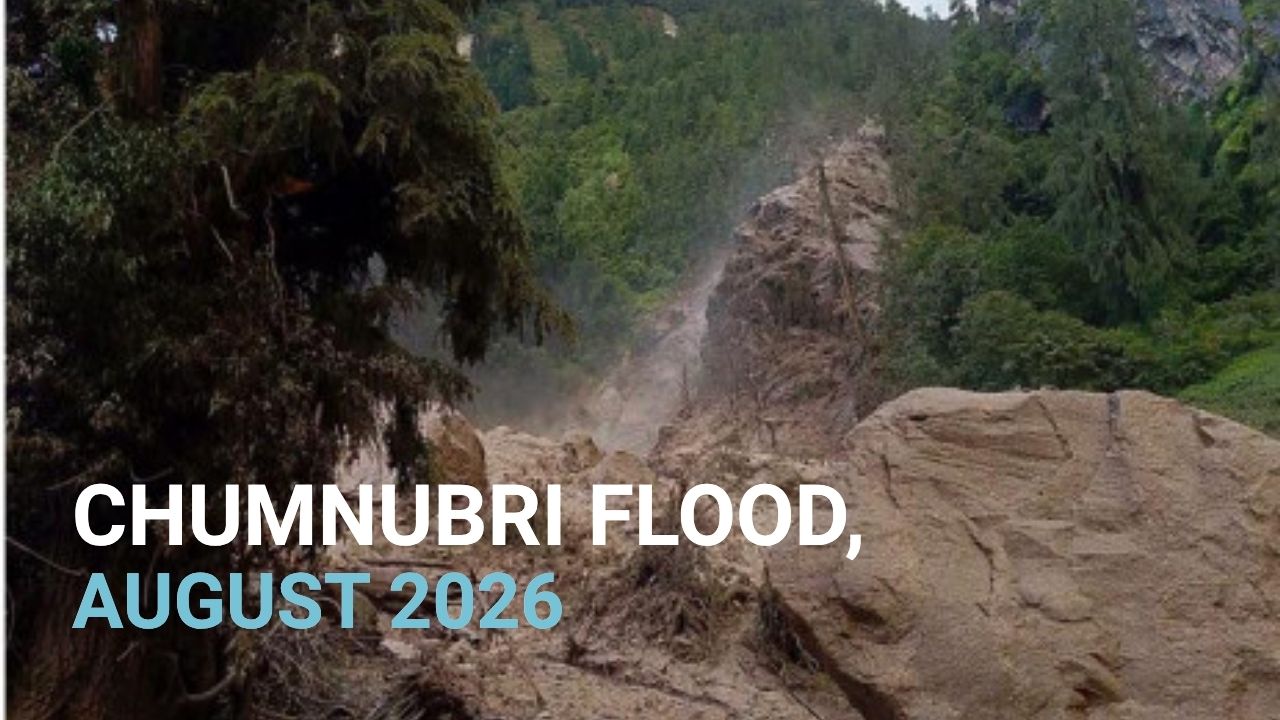
The road above the trail has landslide risk if there is heavy overnight rain. Not every day. But real enough that your guide checks conditions before moving certain sections. We’ve rerouted groups twice in the last three years on this stretch. It has never been a serious incident. But the guide’s local knowledge here is useful.
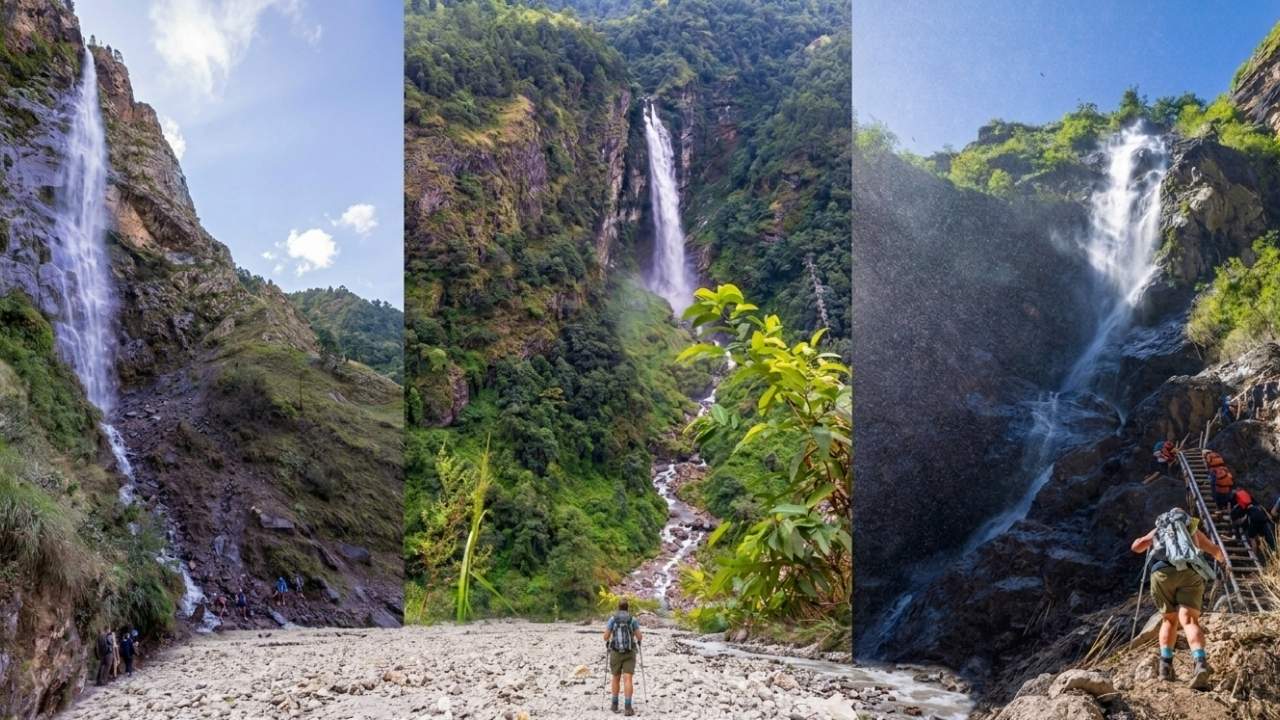
The gorge part goes till Namrung from Machha Khola, which is 4 trail days. Once you clear Namrung and begin ascending toward Lho, the trail starts to feel fresh, air cools, which will make you realize the dynamics of the trek have completely changed now.
After those four lower days, reaching Lho feels like an achievement. The village sits on a ridge at 3,180m with a monastery on the hill above it. The rain is lighter. The air has a different weight. And the cook at the teahouse makes a lemon ginger tea that, after the gorge, tastes like the best thing you have ever had.
Above Namrung in July: Where This Trek Changes Completely
This is what most articles do not explain. The Manaslu Circuit is not one climate. It is two. And the reason to go in July is entirely in the upper half.
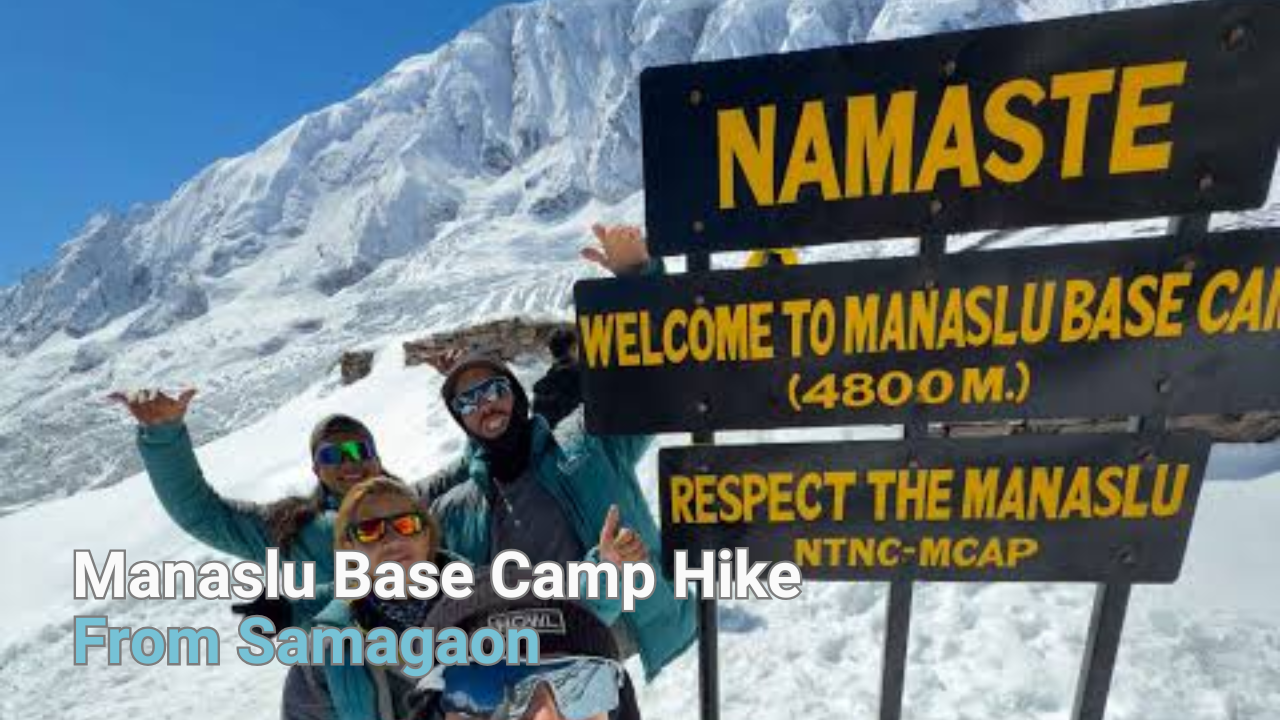
As mentioned in the lower gorge section above, the rain shadow starts doing its work around Namrung. By Samagaun at 3,520m, daily rainfall drops to occasional afternoon showers of an hour or two. Mornings are often cloud-free. You get views of Manaslu’s north face that simply do not exist under October’s haze.
Samagaun itself is the cultural and geographic heart of the trek. The Nubri people here speak a Tibetan dialect. Their homes are built from stone, prayer flags hang from every rooftop, and yak trains still move goods up from the valley. In July, with no other trekkers around, this village feels like it belongs to you. You can sit at the gompa above the village in the early morning and watch the cloud burn off the glacier below Manaslu. No one is competing for that view.
From Samagaun, the acclimatisation day hike to Birendra Lake is easier in July than October. The trail is quiet. The meadows around the lake are full of alpine wildflowers, yellow and purple, in full bloom. Glacier-fed streams are running fast and clear. The mist comes and goes on the south face of Manaslu above. It is the kind of morning that makes the lower gorge feel worth every leech.
Samdo, the last village before the pass at 3,875m, sits near the old Tibet trade route. Yaks still graze the high meadows in July. In the evening, with the temperature dropping to 3°C or 4°C, the teahouse kitchen smells of butter tea and wood smoke. It is simple and good. That is all you need the night before Larkya La.
Crossing the Larkya La Pass in July
The pass sits at 5,106m. Snow-free by July. The challenge is not the surface but the time frame when you work and start passing.
You leave Dharamsala at 4 am. It is cold. Between -3°C and 0°C, pitch black, headlamp on. The trail climbs gradually across rocky moraine for the first two hours. Your guide is moving at a steady pace. Do not rush. The altitude slows your breathing even on flat ground.
By 6am the sky starts to lighten. The glacier below the pass catches the first light. If the morning is clear, and in July many are, you are looking at one of the finest sights on this entire route. Manaslu, Ngadi Chuli, and Himalchuli all lit up before anyone else in the world is awake.
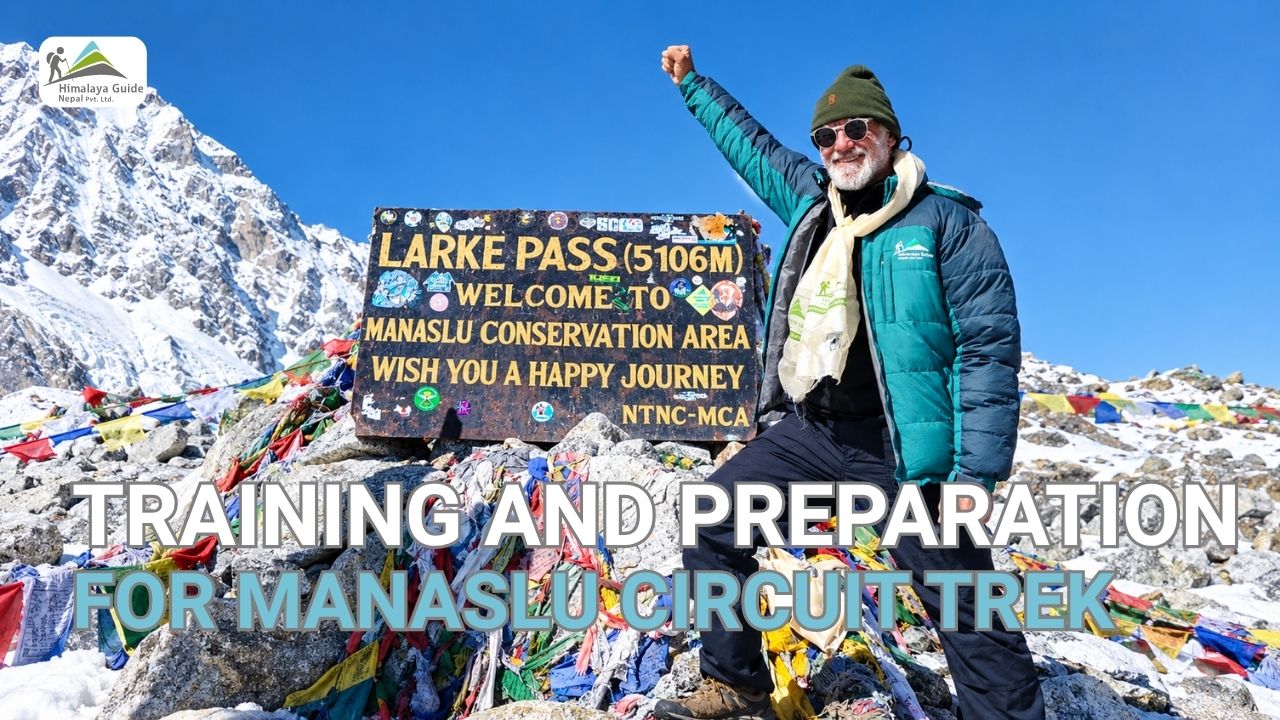
The lakya la pass comes around 7 am to 8 am. You will see the prayer flags & also witness the cold wind at the top of the circuit trek. Your guide takes a photo. Then you move. The descent to Bhimtang is steep and long. You need poles on this section. Your knees will know it. But Bhimtang at 3,720m, a wide alpine valley surrounded by peaks and hanging glaciers, is a proper reward.
The rule is simple: be over the pass before noon. In July, afternoon storms can build fast above 4,500m. Our guides make this call on the morning based on cloud patterns. There have been July days when we held groups at Dharamsala for an extra night. That decision is not cautious and also comes from experience.
What July Gives You That October Never Will
October is the safe answer. And the crowded one. The Larkya La pass in October has queues. Teahouses in Samagaun are full by 3 pm. You book in advance and still share a room.
In July, you might not see another foreign trekker for two full days between Namrung and Samagaun. The teahouse owner at Lho has time to sit and talk with you. Your guide stops to explain things on the trail instead of keeping the group moving. The whole pace is different.
Where else can you spend an acclimatisation day at Birendra Lake with the meadows entirely to yourself, wildflowers in full bloom, and a glacier stream you can actually hear because there is no one else around? That is July. That is what the monsoon trades you for the wet lower trail.
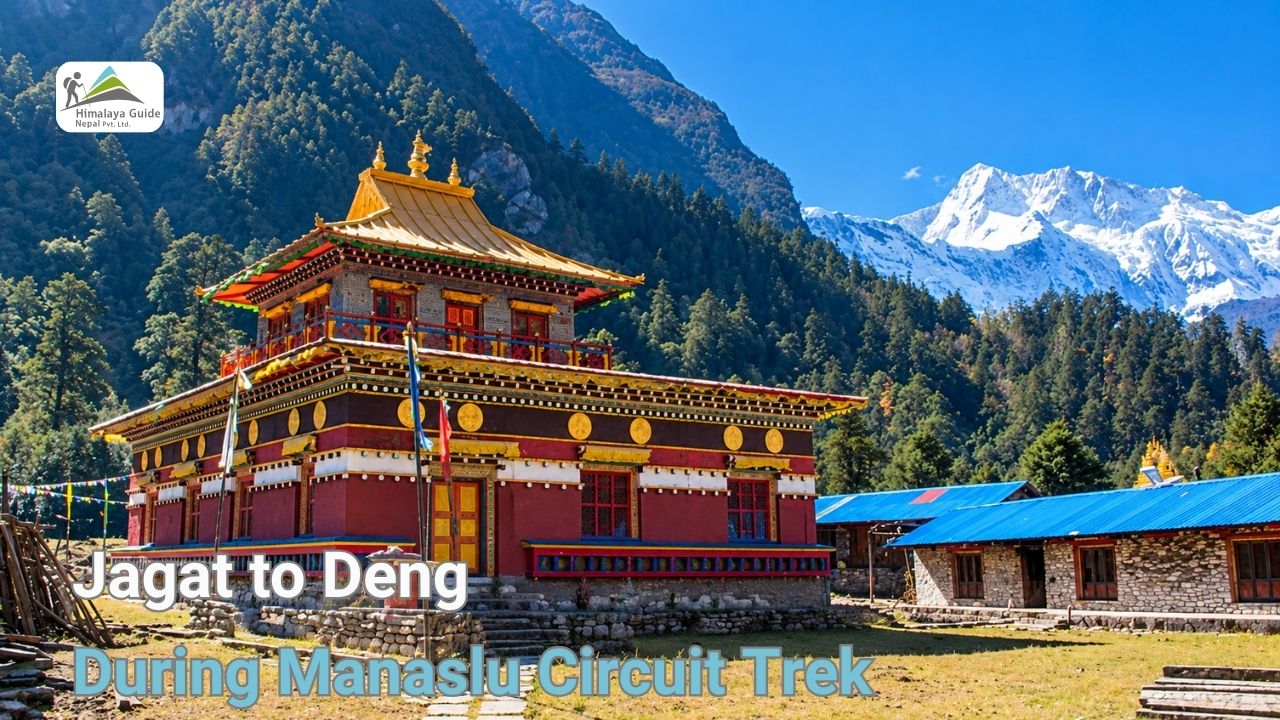
The landscape colour is different too. October is brown and gold. July is every shade of green you know, plus some you have never seen. Waterfalls pour off cliff faces above Jagat that are completely dry in autumn. The forest below Namrung smells of rain and earth and something almost tropical. It is a different mountain.
Permit costs are identical. But package prices from licensed agencies drop 15 to 20 percent in July vs October.
Which Manaslu Trek Package to Choose in July
The key variable to choose the best Manaslu package is based on how much time you spend on the lower gorge vs the upper valley. The more buffer days you have above 3,000m, the better your July experience.
Standard Manaslu Circuit Trek
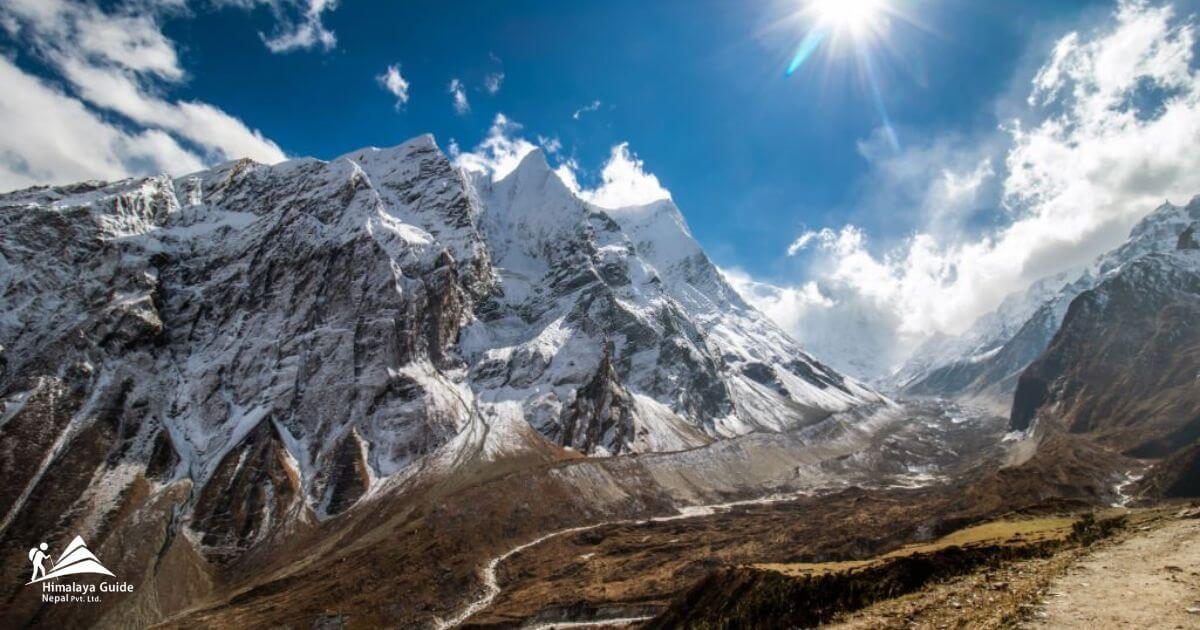
The Manaslu Circuit Trek (14 days) is the core route and the right call for most July groups. It gives you enough acclimatisation time at Samagaun without stretching the trip unnecessarily. You cross Larkya La, descend through Bhimtang, and exit via Dharapani on the Annapurna side.
Manaslu Deluxe Trek: Comfort & Buffer Days


The Manaslu Circuit Deluxe Trek adds extra nights and better teahouse quality where available. In July, the extra days are not a luxury. They are insurance. A weather hold at Dharamsala costs you a day. The deluxe itinerary absorbs that without pushing your flight dates. We have two rest days in this package at day 7 & day 11 at Samagaun & Bhimthang, respectively.
Manaslu with Tsum Valley
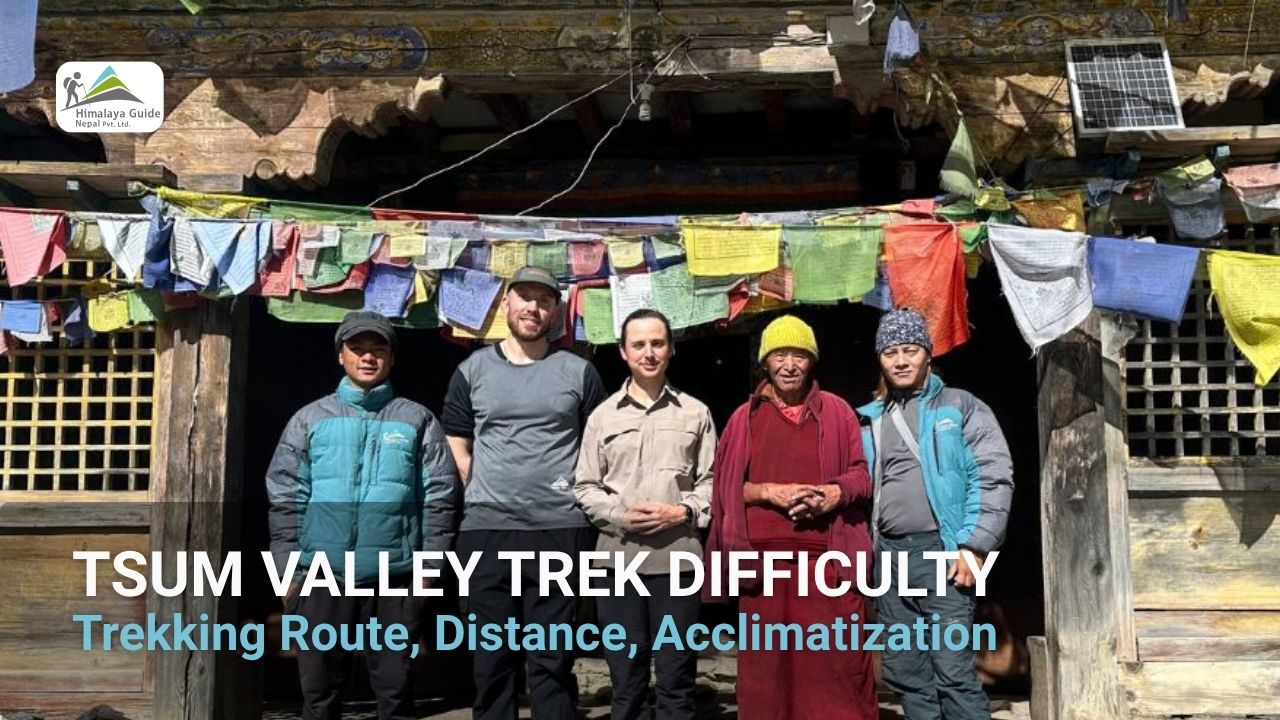
The Tsum Valley sits north of the main Himalayan barrier in a genuine rain shadow. It gets significantly less monsoon rain than the lower circuit. The Manaslu Tsum Valley Trek takes you 7 days additional with a circuit trek and takes you into one of Nepal’s most restricted and culturally rich valleys. In July, this is one of the strongest itinerary choices on the entire Manaslu menu.
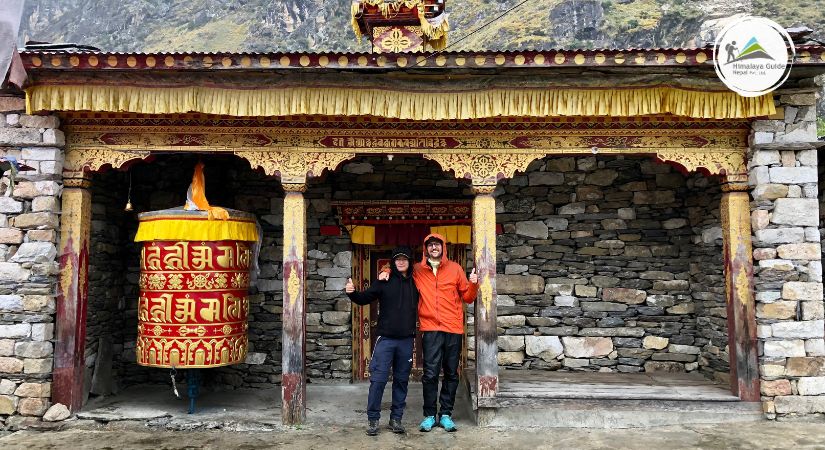
If you have three weeks and July is your only window, seriously consider Tsum Valley. It is the version of this region that rewards the off-season trekker most.
Not Recommended Package for the Manaslu Region in July
The Manaslu Two Passes Trek and the Rupina La Pass Trek both involve additional high pass crossings. In July, more passes mean more weather risk. Similarly, Larkya Peak Climbing is not recommended during the monsoon. Summit attempts need stable multi-day weather windows that July cannot reliably provide.
Permits, Rules for July
The Manaslu Circuit requires three permits year-round: the Manaslu Restricted Area Permit (MRAP), the Manaslu Conservation Area Project permit (MCAP), and the Annapurna Conservation Area Project permit (ACAP) if you exit via Dharapani. Permit costs are fixed and do not drop in July.
One rule that does not change by season: you must trek with a registered agency and a licensed guide. This is not optional and not negotiable. Solo trekking is illegal on the Manaslu Circuit. In July, this rule also makes practical sense. Your guide knows which sections of the lower road to move through fast and which days to hold back.
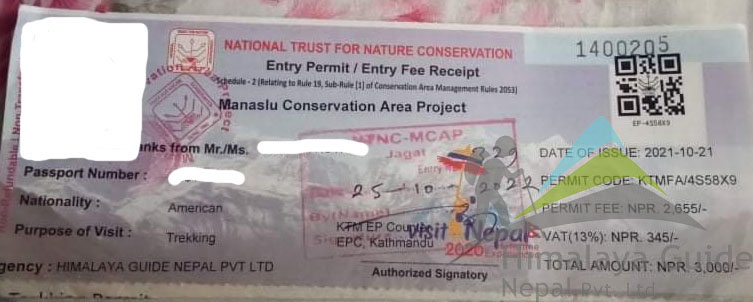
Full permit costs and application details are on our Manaslu trek permit information page. Get permits sorted before you leave Kathmandu. If you trek with our agency, we will make sure everything is aligned for you.
What to Pack Specifically for July on the Manaslu Circuit
You are covering hot, humid gorge, high altitude cold nights, and rain that can last 6 hours at a stretch. Here is what is actually needed to pack during manalsu circuit trek in July.
| Item | Specific Notes for July |
| Waterproof trekking boots | Not water-resistant. Waterproof. Gore-Tex or equivalent. Your feet will be in wet conditions for days 1 to 4. |
| Leech socks and gaiters | Non-negotiable below 2,500m. Leech socks go inside your trekking socks. Gaiters go on top. |
| Full rain jacket and rain pants | Both. Not just a jacket. Below Namrung, rain comes sideways on the gorge trail. |
| Trekking poles | Essential on wet descents. Also useful for sweeping leeches off vegetation before you walk into it. |
| Down jacket (rated -5°C) | Needed every night from Samagaun upward. The humidity makes 5°C feel colder than it reads. |
| Sleeping bag (-5°C comfort rating) | Teahouses above 3,500m have no heating in July. A thin summer bag is not enough. |
| Dry bags (multiple) | Phone, camera, passport, cash. Each in its own dry bag inside your main pack. |
| Altitude medication (Diamox) | Discuss with your doctor before the trip. Altitude does not care what month it is. |
| Antiseptic and leech aftercare | Leech bites bleed for longer than you expect. Small antiseptic wipes and a plaster for each one. |
If you need to buy or rent any of this in Kathmandu before the trek, our Kathmandu trekking gear shopping guide covers which streets to go to, what things cost, and what brands are reliable vs what is clearly fake.
Food and Teahouses in Manaslu in July
Teahouses are open, and they are operating all year round. You’ll not have to juggle for the search teahouse as well, because mostly you’ll get fewer travellers in the teahouse, but it is also best, because you’ll get to experience and get more time engaging with the teahouse owner, your guide, which is barely someone get during peak season.
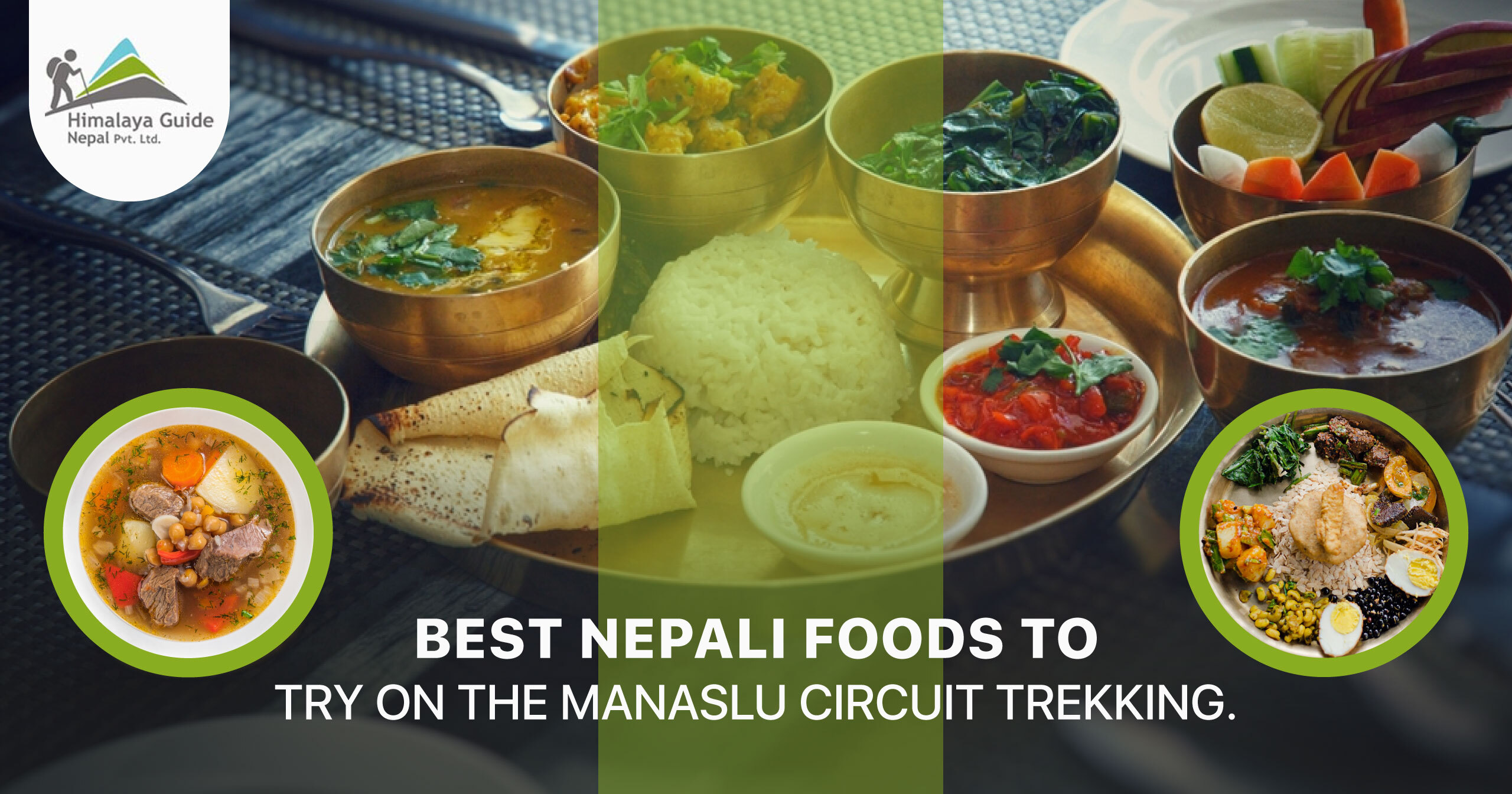
Dal bhat is available everywhere and is the right call every evening. It is cooked fresh, and exactly something you’ll require after a long monsoon day; it settles your body better than pasta or noodles. Lentil soup, rice, greens, and a small pickle on the side.
Above Samdo, menus get shorter. You can expect eggs, noodles, dal bhat, and not much else. But if you have specific dietary needs, tell us & your guide before the trip in Kathmandu. We will make sure you’ll get everything according to your dietary needs.
How different is July from June on manaslu trail?
June is early monsoon, and July is peak monsoon. The lower trail is wetter in July, landslide risk is slightly higher, and leeches are more active. But the upper valley rain shadow difference is minimal between the two months. Our Manaslu Circuit Trek in June guide covers the pros and cons of June if you are weighing the two months.

| Book your Manaslu Circuit Trek in July now at manasluguide.com. Talk to our team and get your itinerary sorted today. |

Chandra Gurung is a trip organizer and founder of Himalaya Guide Nepal Pvt. Ltd. This company is a government-registered trekking company in the Ministry of Culture, Tourism and Civil Aviation Government...