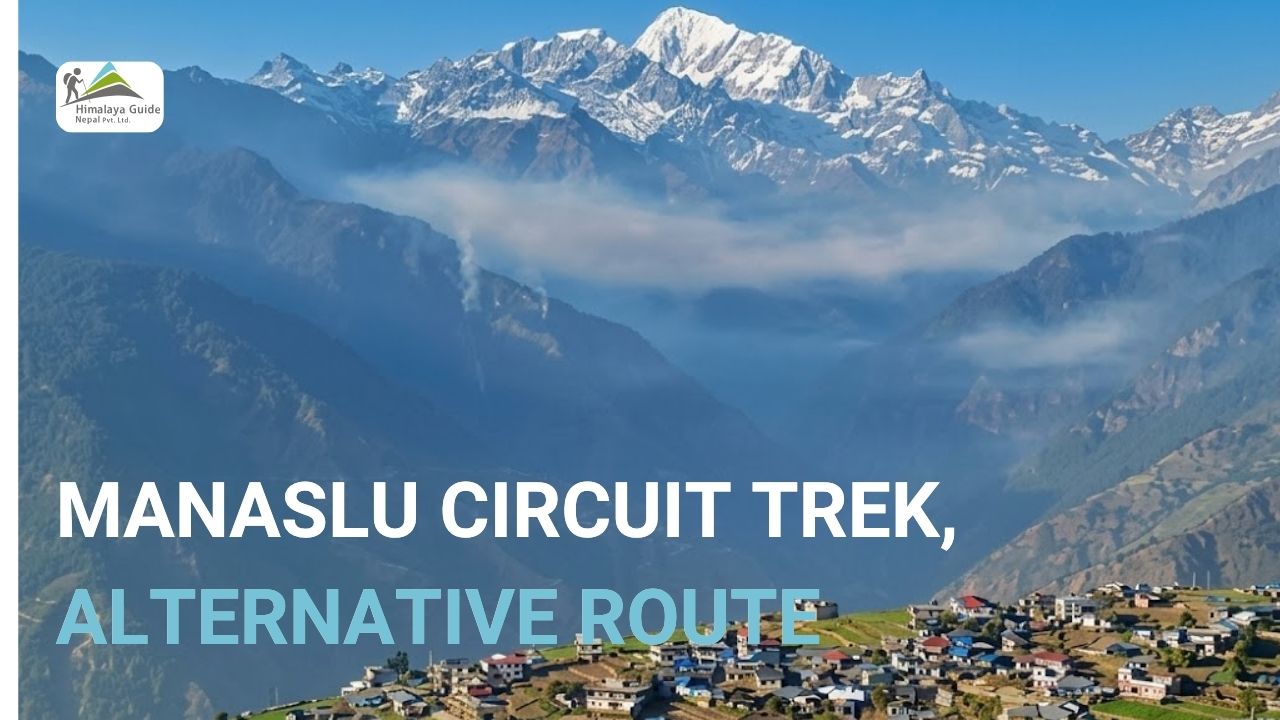
Manaslu Circuit Trek Alternative Route
23 Jul 2026 Mr. Pratap Singh Tamang
The Manaslu Circuit Trek alternative route starts from Barpak and Laprak instead of Soti Khola. It adds roughly two extra trekking days, but you get two Gurung villages, better mountain views early on, and a story about the 2015 earthquake that most trekkers never hear. The trail rejoins the classic Manaslu Circuit further along, so you still finish at Larkya La and Dharapani.
Getting there is not one fixed path. Most guidebooks send you straight to Soti Khola and up the Budhi Gandaki river. But there is another way in, through Barpak and Laprak, as said already.
This guide breaks down the Manaslu Circuit Trek alternative route in plain terms. Where it goes, why some trekkers pick it over the classic start and what it actually costs you in extra days.
The Barpak to Laprak Route
The alternative Manaslu circuit trek route begins with a drive from Kathmandu to Barpak instead of Soti Khola. From there, you walk to Laprak, then continue through smaller villages before meeting the main Manaslu trail.
Barpak sits at around 1920 meters. It is a Gurung and Ghale village, built from stone with narrow alleys between the houses. Laprak sits a bit higher, close to 2100 meters, known for its wooden roofs and its own Gurung community. Manaslu circuit trek alternative route via Barpak skips dusty Soti khola route, ensures proper acclimatization with 2 extra days & Gurung village view.
Why Barpak to Laprak Route is Recommended Than Classic Manaslu Circuit Trek Route?
The classic start from Soti Khola or Machha Khola now runs close to a motorable road for part of the first two days. That road keeps getting extended further up the valley every year.
Walking next to jeeps and dust is not what most people picture when they imagine their first days in the Manaslu region. The Barpak to Laprak route skips those road entirely.
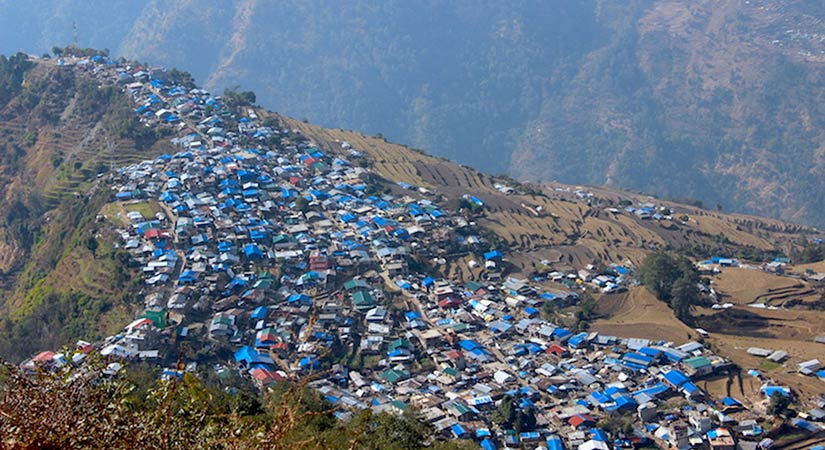
Instead, you get two days of proper trail walking through Gurung hill villages, past terraced fields, with early views of Ganesh Himal and Buddha Himal. You reach the same restricted area checkpoint, just without the road noise on day one.
There is a second reason too. Acclimatization. Barpak sits close to 1920 meters and Laprak near 2100 meters, so you gain altitude more gradually than trekkers who jump straight onto the Budhi Gandaki trail. Your body gets a gentler introduction before the real climbing starts.
Does Alternative Route Follow Completely Different Trail?
No. This is the question every trekker asks first. The alternative route rejoins the main Manaslu Circuit path further along, at Jagat, the official checkpoint for the Manaslu Conservation Area.
From Jagat onward, you walk the exact same trail as everyone else. Same villages. Same Larkya La crossing. Same finish at Dharapani.
So you are not missing the real Manaslu trek by choosing Barpak and Laprak. You are just choosing a different, quieter front door before you walk through the same house.
Major Location Highlights During Manaslu Circuit Trek Using Alternative Route
When you’re climbing toward Dharche Danda, above 3000 meters, you get a wide view that includes Ganesh Himal and Buddha Himal on a clear morning. Few trekkers on the classic route see these peaks this early in the trip.
Barpak itself is worth slowing down for. The stone houses with their sloped roofs were built to survive heavy snow and monsoon rain, and walking through the narrow lanes feels like stepping into a different century.
In Laprak, keep an eye out for the wooden roof houses, a style you do not see much further up the valley. Locals here still follow Gurung customs that go back generations.
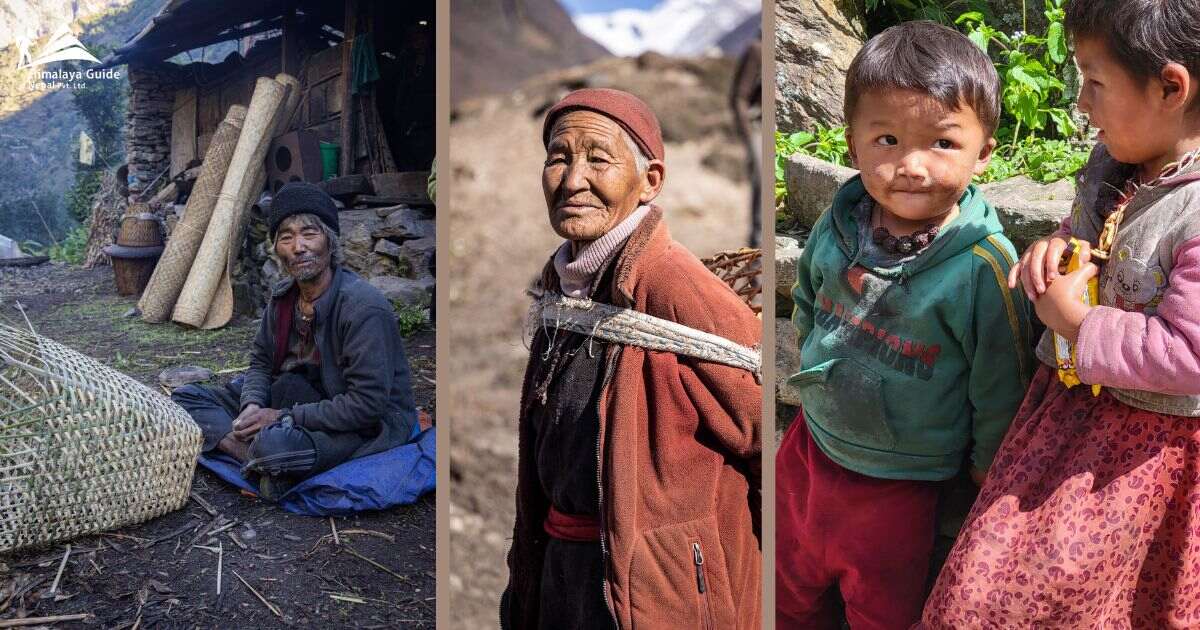
One detail that surprises most trekkers. Near Nambe Kharka, a high pasture area on this route, locals ask visitors to stick to a vegetarian diet. The belief is that slaughtering animals here brings illness to trekkers passing through. It is a small thing, but it tells you a lot about how seriously this community holds its traditions.
The forest sections between these villages change the mood too. You walk through rhododendron and pine, then step out onto open ridgeline with no warning, and the mountains are suddenly right there in front of you. That kind of reveal does not happen much on the road-heavy start.
Food along this stretch is simple and honest. Expect dal bhat, potatoes grown right there in the terraces, and milk tea poured the moment you sit down at a homestay table. After six hours of climbing, a hot plate and a warm room matter more than any view.
Where else can you walk two days through villages like this and still join the exact same trail everyone talks about online? That is the real pitch for this section of the route.
Barpak and Laprak Villages Condition After the 2015 Earthquake
You cannot walk through Barpak without thinking about April 2015. This village sat close to the epicenter of the earthquake that struck Nepal that year, and the damage here was severe.
Laprak, just a short walk away, suffered too. Many homes came down, and the community had to rebuild almost from scratch.
What you see today is different. Both villages have been rebuilt over the years, and walking through them now, you notice stronger structures alongside the older stone buildings that survived. The community pride is hard to miss.
This is not a museum piece. Real families live here, run homestays here, and will happily talk with you about what those years were like if you ask with respect. Trekking through Barpak and Laprak means walking through a genuine recovery story, not a staged one.
Our guides have walked this route for years and have seen the changes firsthand. If you want to hear more about what the village elders remember, ask your guide on the trail. They usually have a story worth hearing.
You will notice the rebuilding style changes as you walk further from Barpak center. Some homes went up fast with government support right after 2015. Others took longer, rebuilt slowly with whatever materials families could afford at the time.
Neither version is worse than the other. Both tell you something honest about what recovery actually looks like on the ground, away from any news report. This is the kind of detail that turns a walk through a village into something you actually remember years later.
How Many Extra Days Should You Plan If You Choose Manaslu Circuit Trek Alternative Route
Plan for roughly two extra trekking days compared to the classic Soti Khola start. The Barpak to Laprak stretch is not a faster path. It replaces a short road transfer with two full walking days.
So if your classic Manaslu Circuit runs 14 days, expect something closer to 16 days with the alternative start. If you are booking an 18 day version of the classic route, expect around 20 days.
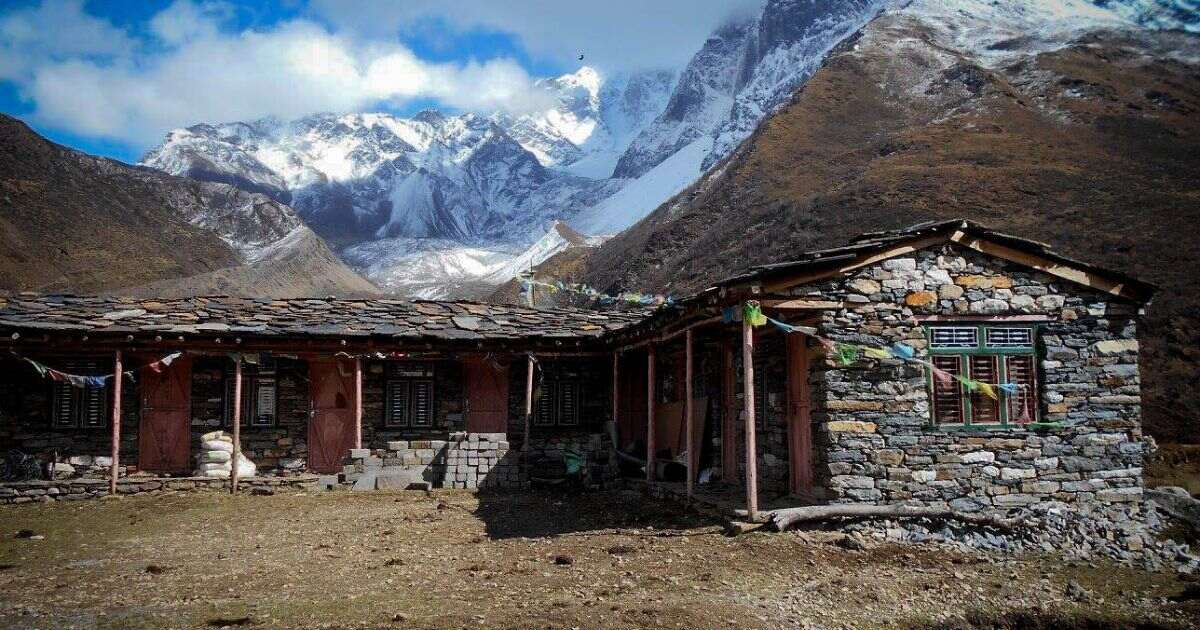
These numbers depend on your pace and your exact itinerary, so confirm your day count with our team before you book. We will give you the real breakdown for your dates, not a rough guess pulled from somewhere else.
What Other Trek Can You Combine With Manaslu Circuit Trek?
Once trekkers understand the Barpak alternative, the next question is almost always the same. Can I combine this with something bigger? The answer is yes, and you have real options.
Manaslu Circuit Trek with Tsum Valley Combination
Tsum Valley is the most common pairing with the Manaslu Circuit, and for good reason. The trail splits off near Jagat and heads toward Chumling and Chhokangparo, deep into a valley that locals call the Hidden Valley of Happiness.
Here you find centuries old monasteries like Mu Gompa and Rachen Gompa, and a Tibetan Buddhist culture that feels older and quieter than the main Manaslu trail. Our 19 day Manaslu Tsum Valley Trek package covers this combination properly, with time built in for both regions instead of rushing through one to fit the other.
Why choose Manaslu with Tsum Valley trek over the classic circuit alone? Because Tsum Valley gives you the cultural depth that the Larkya La crossing alone cannot. You get mountains and monasteries in one trip.
Manaslu Circuit Trek with Nar Phu Valley Combination
If Tsum Valley is about culture, Nar Phu Valley is about remoteness. This combination suits trekkers who want more wild terrain, not more villages.
The route connects near Dharapani, where the classic Manaslu Circuit finishes, then branches north into Nar and Phu, two ancient villages that opened to foreigners only in the early 2000s. You cross Kang La Pass at over 5300 meters, even higher than Larkya La.
Our Nar Phu Trek package builds this into a full itinerary with proper acclimatization days. This is a serious trek for trekkers who already have some altitude experience and want a genuinely off the beaten path finish to their trip.
Extending Onto the Annapurna Circuit from Dharapani
Here is something a lot of independent trekkers do not realize. When you cross Larkya La and walk down into Dharapani, you are standing right on the Annapurna Circuit trail.
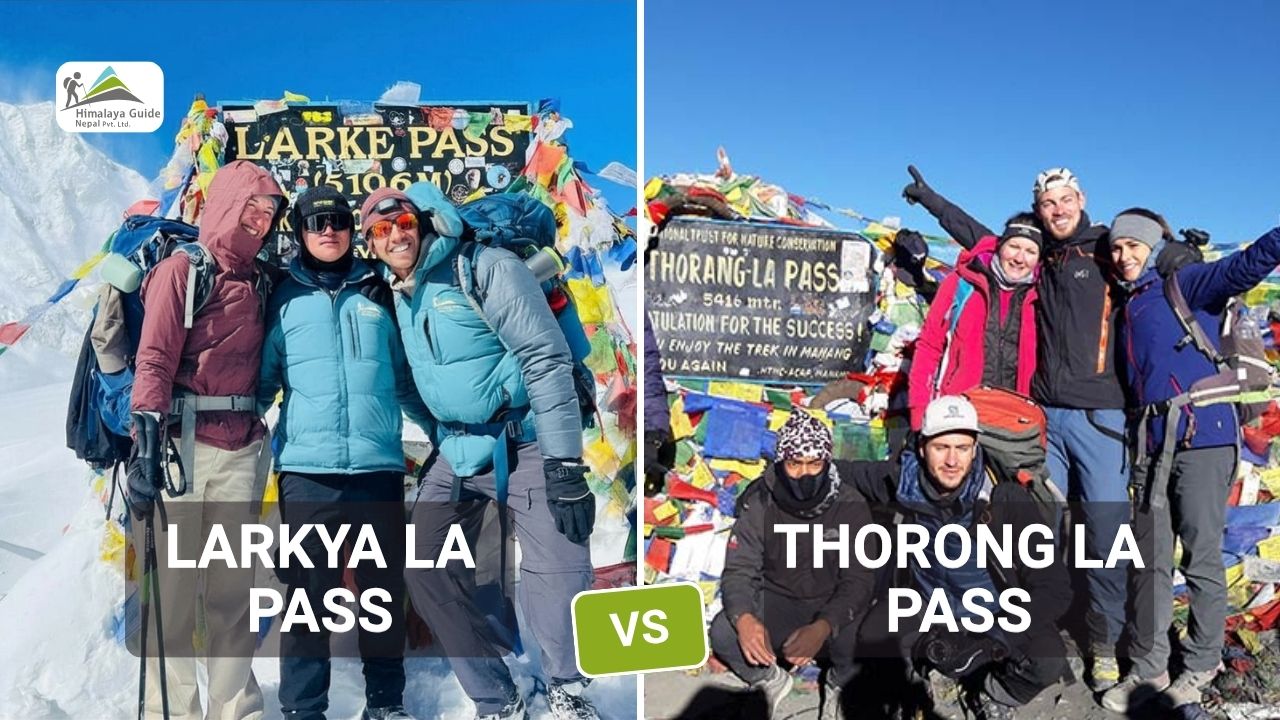
There is no transport needed and no backtracking. You simply keep walking. The trail from Dharapani continues through Chame, Manang, and up toward Thorong La, one of the most famous passes in Nepal.
This is not a fixed package we sell, it is guidance for trekkers planning their own extended trip. But there is one practical point worth knowing. The Annapurna Conservation Area Permit you already needed to finish the Manaslu Circuit covers this stretch too. You do not need a separate permit to keep walking.
If you are the kind of trekker who wants to link two of Nepal’s best circuits into one long journey, talk to our team. We can help you plan the logistics even if this part of the trip is not a set package.
Comparing Different Route & Trek Combination Option For Manaslu Circuit Trek
| Route | Approx Days | Extra Permits Needed | Best For |
|---|---|---|---|
| Classic Manaslu Circuit, Soti Khola start | 14 to 18 days | MRAP, MCAP, ACAP | First timers who want the standard Larkya La trek |
| Manaslu Circuit via Barpak-Laprak alternative start | 16 to 20 days | Same as classic | Trekkers who want Gurung villages and the earthquake story |
| Manaslu Tsum Valley Trek | 19 days | Adds Tsum Nupri Rural Municipality Permit | Trekkers who want deep culture alongside the mountains |
| Manaslu Circuit with Nar Phu Valley | 20 to 25 days | Adds Nar Phu restricted area permit | Experienced trekkers chasing remote terrain |
| Manaslu Circuit extending to Annapurna Circuit | 21 to 23 days | None extra, ACAP already covers it | Independent trekkers wanting two circuits in one trip |
| Ultimate Manaslu Trek, all combined | 30 to 31 days | All permits above combined | Long holiday trekkers who want everything at once |
Numbers here are approximate. Confirm your exact itinerary and day count with our team before booking, since your pace and rest days will shift the total.
Are Extra Permits Required for Alternative and Combined Manaslu Circuit Trek Routes?
For the standard Manaslu Circuit, including the Barpak-Laprak alternative start, you need three permits. The Manaslu Restricted Area Permit, the Manaslu Conservation Area Permit, and the Annapurna Conservation Area Permit, since the trek finishes in Annapurna territory at Dharapani.
If you add Tsum Valley, you need one more. The Tsum Nupri Rural Municipality Permit covers that side trip and is not included in the standard three.
If you add Nar Phu Valley, you need a separate Nar Phu restricted area permit on top of your existing ACAP, since ACAP does not automatically cover that valley.
Extending onto the Annapurna Circuit from Dharapani needs nothing extra. Your ACAP already covers that stretch of trail.
One more thing worth knowing. Solo trekking is not allowed in any of these restricted areas. You need a minimum of two trekkers and a licensed guide, no exceptions. We handle all of this paperwork for every trekker who books with us, so you show up with everything sorted and nothing to worry about at the checkpoint.
Manaslu Circuit Trek Alternative Route FAQs
Q: Does the Barpak-Laprak route cost more than the classic start?
A: It can cost a little more, mainly because of the extra two days of guide fees, meals, and lodging. Ask our team for a direct comparison based on your dates.
Q: Can beginners do the Barpak-Laprak alternative route?
A: Yes. The difficulty is similar to the classic start. The extra days are gentler walking through villages, not harder climbing.
Q: Is Rupina La Pass part of this alternative route?
A: No. Rupina La is a separate, much more extreme route that some operators mention alongside Barpak. Do not confuse the two, since Rupina La involves several days without any village or teahouse.
Q: Do I need a different permit for the alternative start?
A: No. You need the same Manaslu Restricted Area Permit, Manaslu Conservation Area Permit, and Annapurna Conservation Area Permit as the classic route.
Q: Can I combine Tsum Valley, Nar Phu, and the Barpak start all in one trip?
A: Yes. This is exactly what our 30- to 31-day Ultimate Manaslu Trek covers, taking in Tsum Valley, the full circuit, and a section of Nar Phu Valley in one long journey.

Pratap Singh Tamang is an energetic trekking guide who is working with us. He has fluent English and can explain very well about guest interest things. Pratap has been most...