Samagaon Acclimatization During Manaslu Circuit Trek
13 Jul 2026 Bashudev Gurung
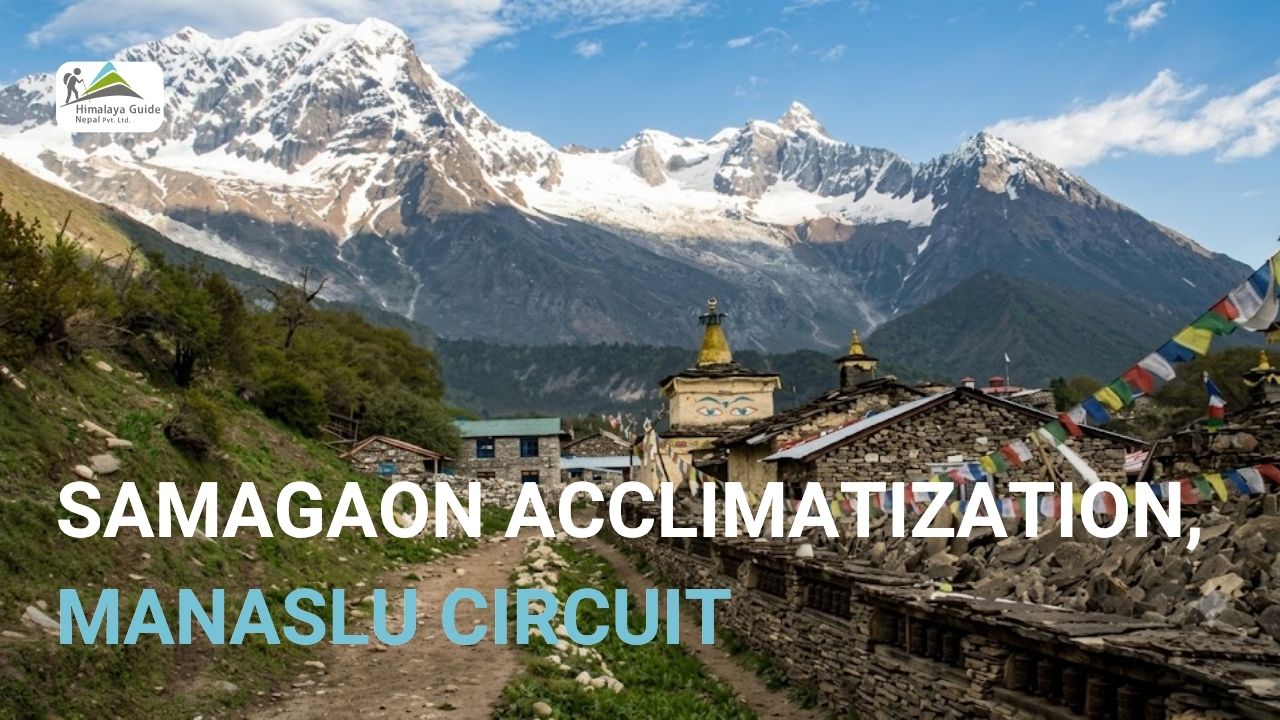
Seven days of climbing bring you to Samagaon, a small village of stone houses at 3,525 metres, the last village before the Manaslu region gets high and quiet. The Yaks graze on the slopes above the rooftops. Prayer flags pull hard in the wind coming off the glacier nearby. Every day so far has pushed you higher for the past 7 days, so today you will rest and acclimate properly.
After a week of steady climbing, a full stop can feel like wasted time. In my experience, it rarely is. This one rest day tends to decide how the rest of the Manaslu Circuit Trek plays out, since the body often needs it more than the itinerary lets on.
Some trekkers rush through Samagaon, or treat it as a lazy day and not much else. I’ve seen Larkya La Pass make people realize that later on. Given the day, it’s proper space instead, and the body gets a real chance to build the extra red blood cells it will need before the higher altitude begins.
The same holds true for anyone planning a Manaslu Tsum Valley Trek too. It’s a different side valley, but the thin air asks the same patience of you, no matter how fit you felt lower down.
What Is Samagaon Altitude and Why It is Perfect Acclimatization Spot?
Samagaon sits roughly 11,581 feet above sea level. The body tends to notice that number the moment you stop walking, since the heart keeps working a little harder than it should for something as simple as standing still.
That height sits in a useful middle zone, from what I’ve seen guiding here over the years. High enough for the body to start noticing the change, but not so high that basic movement leaves you gasping. This balance is part of what makes Samagaon such a good place to pause.
Here’s what’s actually happening at this height, in simple terms. Air at 3,525 metres carries roughly 35 percent less oxygen than air at sea level. The lungs pull in the same volume of air, but get less out of every breath. That’s often why something as ordinary as climbing stairs to your teahouse room can leave you a little short of breath.
Samagaon compares gently to Mu Gompa further along the Tsum Valley side, which sits closer to 3,700 metres. Samagaon works almost like the gentler cousin, the last real village with solid infrastructure before things thin out on both routes.
Teahouses here have proper rooms, hot food, and enough people nearby that nobody feels too isolated if something starts to feel off. That matters more than it sounds, since altitude sickness tends to catch people fastest when nobody’s watching for the early signs.
The geography itself works quietly in your favor too. The valley opens up around Samagaon, so a trekker can hike a little higher during the day and come back down to sleep at night. Climb high, sleep low; that’s the rhythm most doctors recommend for acclimatization, and Samagaon happens to be built for it almost naturally.
Is the Samagaon Acclimatization Day Necessary Or Can You Skip It?
I’d gently say yes. Here’s why it matters more than it might seem at first.
The body needs new red blood cells to carry oxygen well at height, and that process runs on its own time, not on willpower. Research on altitude illness suggests mild AMS above 3,500 metres affects somewhere between 20 and 40 percent of trekkers who climb too fast. A single rest day at Samagaon tends to lower that risk quite a bit, since the body isn’t asked to jump straight into the harder zone without warning.
The manaslu circuit trek trail gains height quickly after this point:
| Stop | Altitude | Distance from Samagaon | Why it matters |
|---|---|---|---|
| Samagaon | 3,525 m | Rest day base | Last village with full infrastructure |
| Samdo | 3,875 m | About 3 to 4 hours walk | First high-altitude test after the rest day |
| Dharamsala | 4,460 m | About 4 to 5 hours from Samdo | Final camp before the pass, thin and cold |
| Larkya La Pass | 5,160 m | 7 to 9 hours from Dharamsala | Highest point of the whole trek |
That’s over 1,600 metres of gain in three days after leaving Samagaon. Trekkers who push through without the rest day often feel fine at first, even confident about it. Then a headache shows up at Samdo, nausea follows at Dharamsala, and by the time they’re standing below the pass, they’re running more on adrenaline than oxygen.
A very fit trekker might manage to skip it without trouble, but it’s a fairly poor bet with no hospital within two days’ walk in either direction. Our guides carry oximeters and check oxygen levels every day on the trail, and those numbers tend to say more than how a person feels in the moment. Most bodies benefit from this rest day, and yours likely will too.
Key Acclimatization Hikes Around Samagaon
A rest day doesn’t have to mean lying in bed until noon. Short hikes at higher elevation tend to train the body faster than sitting still does, since brief exposure to thinner air followed by a return to lower ground is really what builds tolerance over time. Choose one below based on how you’re feeling that morning, and go easy on your knees if they’re already tired. All three hikes start right from Samagaon village and stay within your existing Manaslu Conservation Area permit, so there’s no extra paperwork to worry about.
Hike to Pungyen Gompa
- Time required: 5 to 6 hours round trip
- Distance: around 8 to 9 kilometres round trip
- Difficulty: Moderate with steady climbing
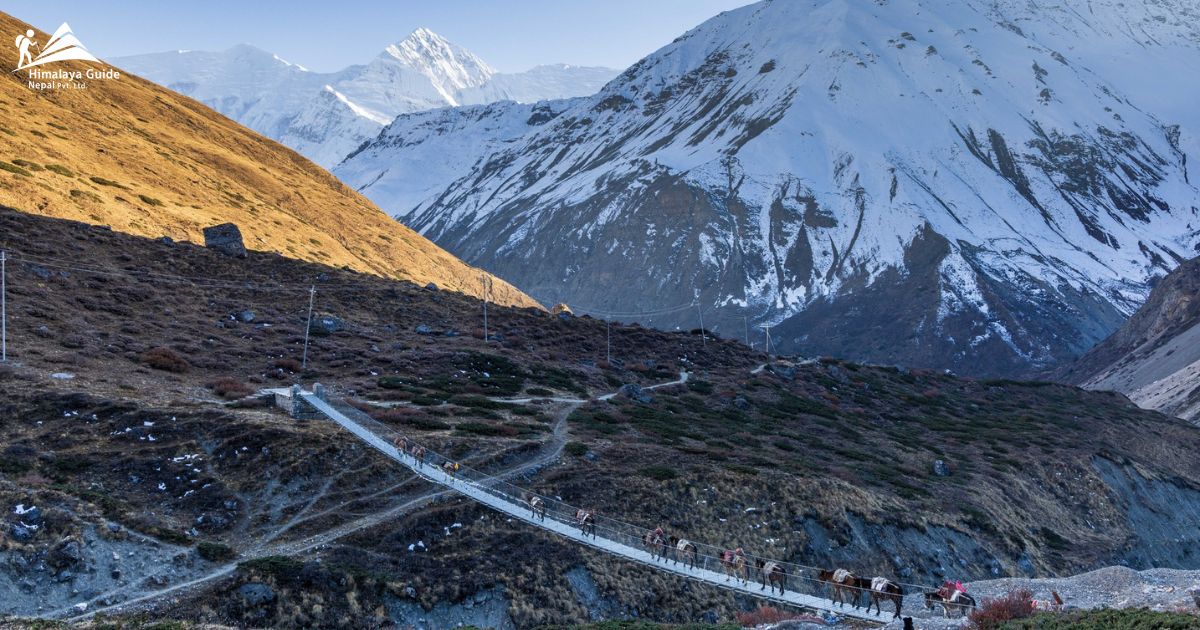
- What to see: an old Buddhist monastery tucked into the hillside, with hidden glimpses of the Manaslu glacier from certain turns in the trail
This is often our most recommended half-day option. The monastery was rebuilt after past earthquakes, and locals still walk up here for blessings before big journeys of their own. Starting by 8 am tends to give you the trail mostly to yourself, before other trekking groups head out.
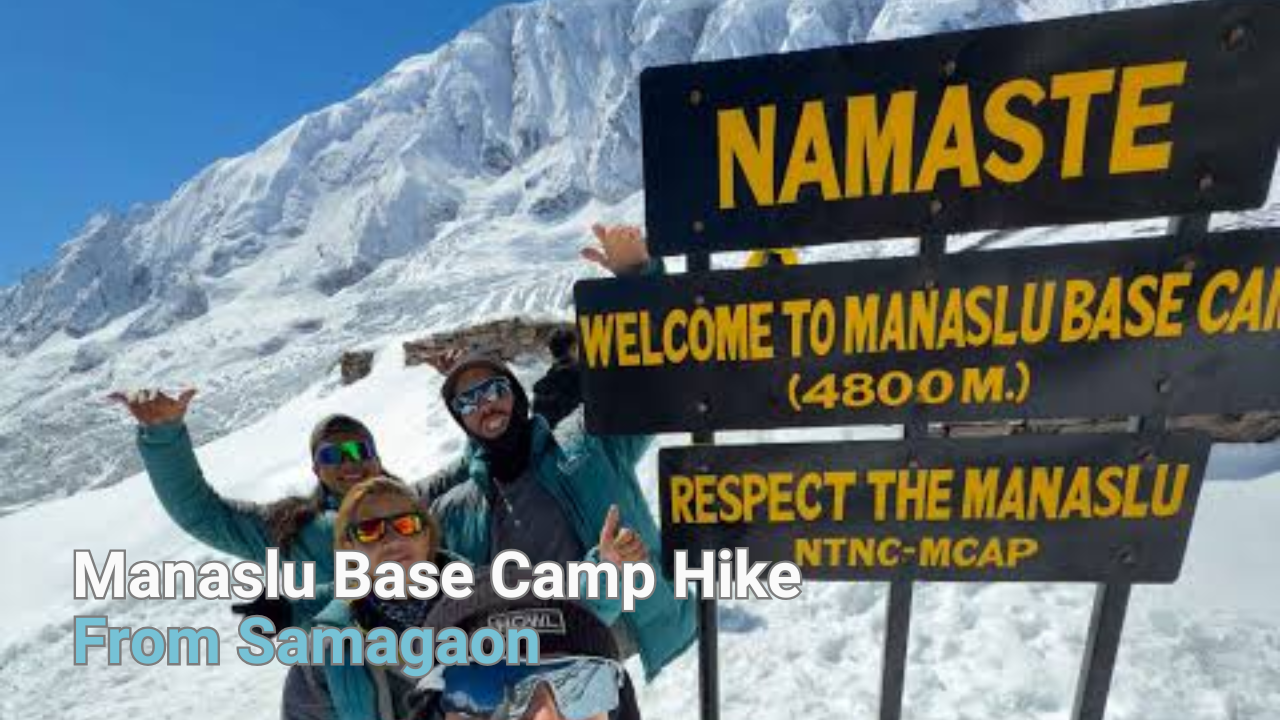
Hike to Manaslu Base Camp
- Time required: 7 to 8 hours round trip
- Distance: roughly 14 kilometres round trip
- Difficulty: Challenging, reaching 4,400 to 4,800 metres
- View highlights: close-up views of Manaslu peak itself, and during climbing season, expedition tents dotting the moraine below
It’s long, it’s high, and it climbs fast. A headlamp and extra layers help, since the last stretch crosses open moraine where the wind can pick up without much warning. But for someone already feeling strong on Day 8, this hike often does more for acclimatization than any other option here.
Hike to Birendra Lake
- Time required: 2 to 3 hours round trip
- Distance: around 4 to 5 kilometres round trip
- Difficulty: Easy to moderate, suitable for a shorter rest day
- Unique scenery: a turquoise glacial lake that mirrors the peaks around it on a still morning
If Day 7 left you a little worn out, this tends to be the gentler choice. Short enough to still count as movement, easy enough that it won’t ask more of your body than it can comfortably give. Going early morning helps too, before the wind picks up and ripples the surface of the water.
What to Expect in Samagaon Village?
Samagaon feels a little different from every village you’ve passed through so far. It’s home to around 1,500 people, mostly of Tibetan descent, and Buddhist culture runs deep here rather than being put on for visitors. You’ll pass mani walls, spinning chortens, and locals turning prayer wheels on the way to fetch water, much as they have for generations.
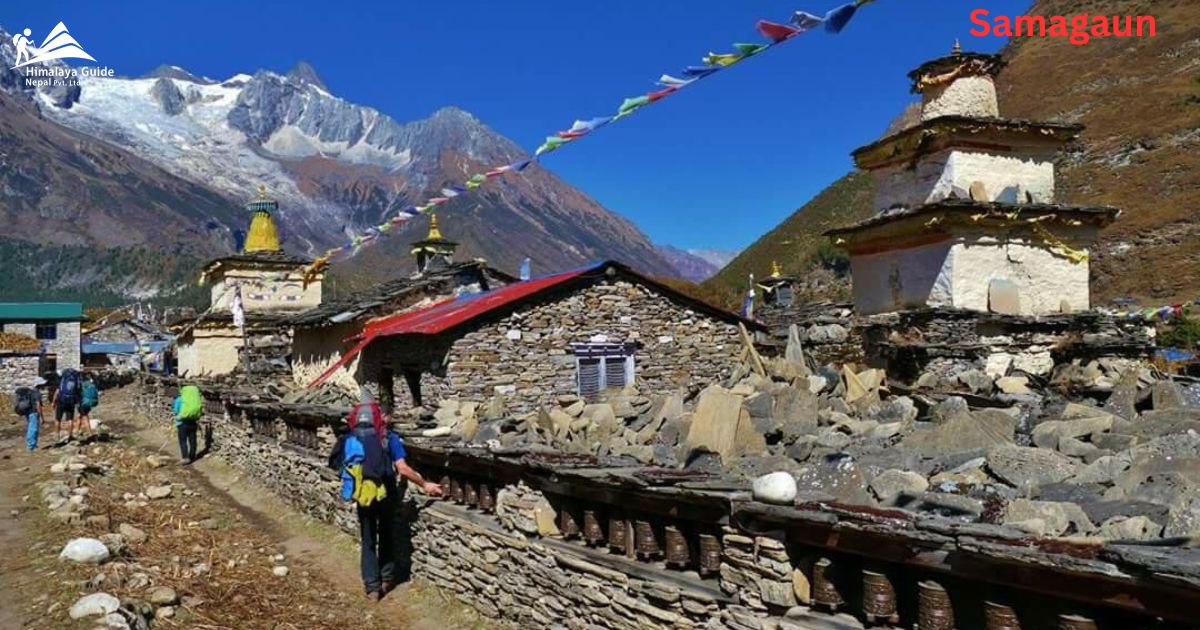
The food follows a similar rhythm. Dal bhat, thukpa, yak butter tea, and sometimes fresh Tibetan bread if the teahouse fired up its oven that morning. A hot meal here usually runs 400 to 700 Nepali rupees, a bit more than in lower villages, since everything arrives by mule or porter. Between you and me, the smell of that bread alone tends to make the two nights feel worthwhile.
This same cultural pulse runs even deeper into Tsum Valley, where monasteries and old Tibetan customs shape almost every part of daily life. Cultural trekking in Tsum Valley builds on exactly this kind of village life, and Samagaon offers a gentle, honest introduction to it.
Practical Tips for Acclimatization at Samagaon
A few habits tend to make the difference between a smooth rest day and a rough one, and most of them come down to small choices rather than big ones.
- Hydration: aim for 3 to 4 litres of water daily. The body needs that fluid to move oxygen through the blood properly at this height, since dehydration thickens the blood and makes the job harder than it needs to be
- Pacing: walking slowly on the acclimatization hikes helps more than it seems. This isn’t a race, and moving too fast raises the heart rate in a way that works against the whole point of the day
- Gear: layering up even on rest days is worth it. The weather here shifts quickly, sunny one hour and biting cold the next, especially once cloud moves in over the ridgeline
- Listening: mentioning any headache or nausea to your guide, even a small one, tends to help more than staying quiet about it. Guides catch problems early because they know what questions matter
None of this is complicated, though people skip it anyway because a rest day can feel like a day where nothing much is happening. It usually is happening, just quietly. Treating it with the same care as a trekking day tends to make the rest of the trip noticeably easier.
Altitude Sickness Prevention Tips In Samagaon
Alcohol on rest days & trail is worth avoiding, since it affects sleep quality and dehydrates you right when you need the opposite. Sleeping pills are worth skipping too, as they can mask the early symptoms of altitude sickness while you’re unconscious.
Eating a little, even without much appetite, matters more than it seems. Appetite loss is common at this height, but the body still needs those calories to keep producing red blood cells.
Doctors use a simple checklist called the Lake Louise score to catch AMS early, and it’s worth knowing what to watch for, together rather than in isolation:
- A headache that doesn’t ease with rest, water, or basic pain relief
- Nausea, loss of appetite, or vomiting
- Unusual fatigue or weakness beyond normal trekking tiredness
- Dizziness or a feeling of lightheadedness
- Trouble sleeping despite being exhausted
Frequently Asked Questions About Samagaon Acclimatization
Q: Why are there two nights in Samagaon?
A: Two nights give the body time to adjust to 3,525 metres before the trail climbs more than 1,600 metres further toward Samdo, Dharamsala, and Larkya La Pass. A day of rest, paired with a short high-altitude hike, tends to train the lungs and blood far better than pushing straight through would.
Q: Is there Wi-Fi and electricity in Samagaon?
A: Most teahouses offer basic Wi-Fi for a small fee, usually around 200 to 300 rupees per day, and mobile signal from Nepal Telecom often reaches 4G here now. Electricity comes from solar power, so charging is possible, though it can be slow during cloudy weather. A spare power bank is worth carrying, just in case.
Q: How cold does it get at night in Samagaon?
A: Temperatures tend to drop to around minus 5 to minus 10 degrees Celsius at night during peak trekking season. October brings some of the clearest skies of the year for Manaslu weather in October, which also means colder nights, since there’s less cloud cover to hold the heat in. A sleeping bag rated for at least minus 15 is a safe bet.

Mr. Bashudev Gurung is a government-registered mountain guide. His license is 12917. He has been working in the Himalaya Kingdom of Nepal since 2013 and works with Himalaya Guide Nepal....