Best Time for Manaslu Circuit Trek
28 Jul 2026 Chandra Gurung
For the short answer, autumn and spring are the best time for manaslu circuit trek, backing them with the data below in the blog. September to November gives the most stable weather and the safest Larkya La crossing. March to May brings milder days and rhododendron forests in full bloom. Winter still works below Samagaon but the pass is the problem, not the valley. Monsoon just isn’t worth it anywhere on this route.
Spring (March to May)
Spring is the trek’s second peak season for the manaslu circuit trek. Days warm up fast once winter breaks. Rhododendron forests bloom in thick bands between Deng and Lho, and the trail dries out enough for comfortable walking below 3,500 metres.
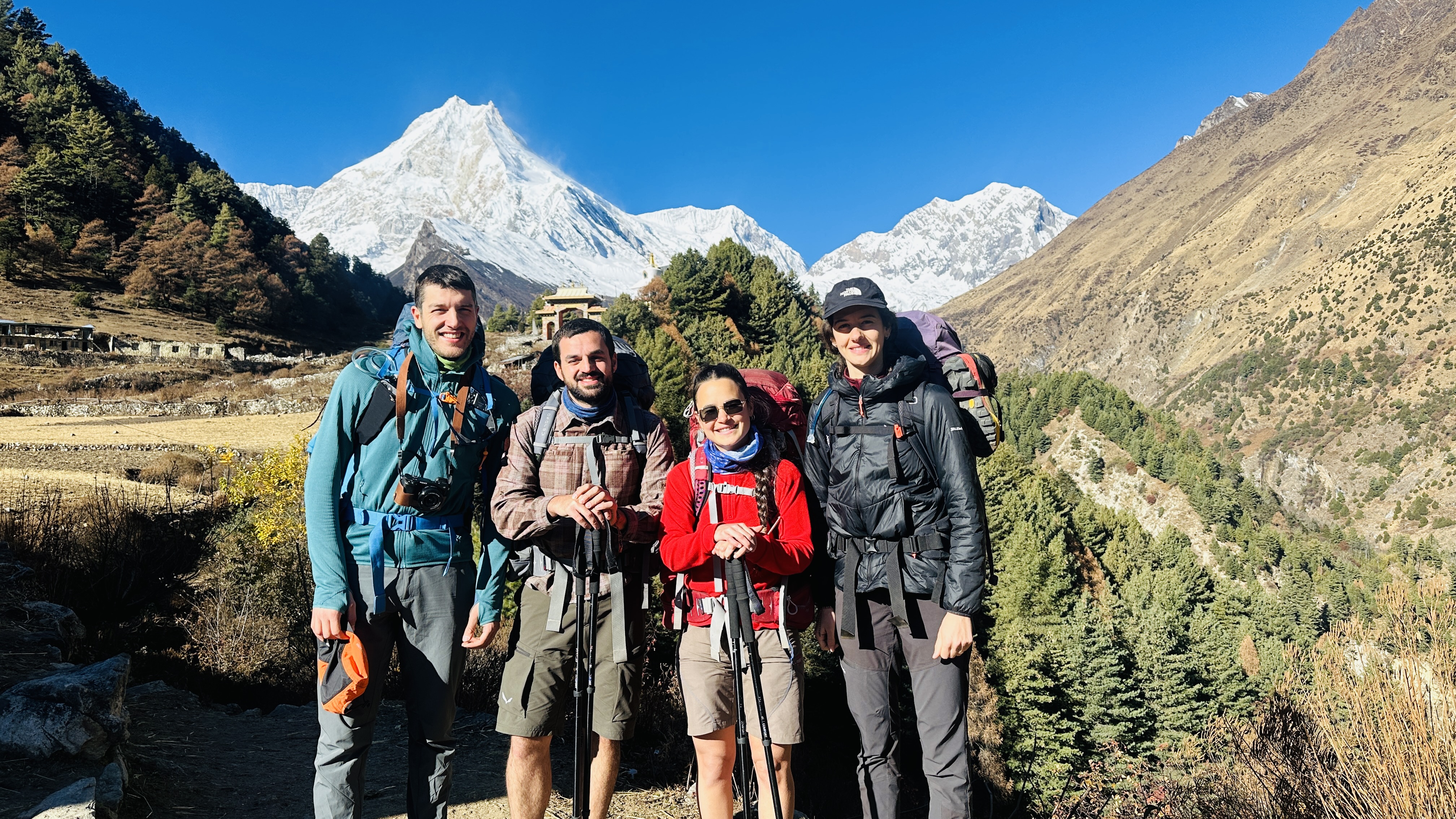
Early March still carries winter’s edge, though. Snow lingers on Larkya La Pass, and the crossing can involve icy patches even under clear skies. By April, the pass opens up and behaves far more predictably, and longer daylight hours give trekkers more room on big days like the Dharamsala to Bimthang stretch. May brings the warmest temperatures of the season. But it also brings the first pre-monsoon clouds, especially at lower elevations in the afternoon.
Spring overlaps with the Nepali New Year in mid-April too, when villages along the lower trail hold small local celebrations. Trekkers passing through often get pulled into the festivities without expecting it.
Monsoon (June to August)
Monsoon is the one season we don’t recommend, and every honest operator will tell you the same thing. Heavy rainfall turns the lower Budhi Gandaki gorge into a genuine hazard, with landslide risk on the narrow sections between Machha Khola and Jagat. Leeches show up in the forest sections. Visibility at altitude drops to near zero most days, which erases the main reason people come to Manaslu in the first place.
Above 4,000 metres, monsoon rain often falls as snow. That adds avalanche risk near Larkya La Pass without the stable snowpack winter months bring. A handful of experienced trekkers still attempt the lower sections for the lush, green scenery and empty trails. Still, this isn’t a season we build standard packages around.
Autumn (September to November)
Autumn is peak season here, and it earns that reputation honestly. The monsoon clears out by mid-September, leaving dry trails, stable weather, and some of the clearest mountain views of the year. October tends to deliver the most reliable stretch of clear days for the Larkya La Pass crossing.
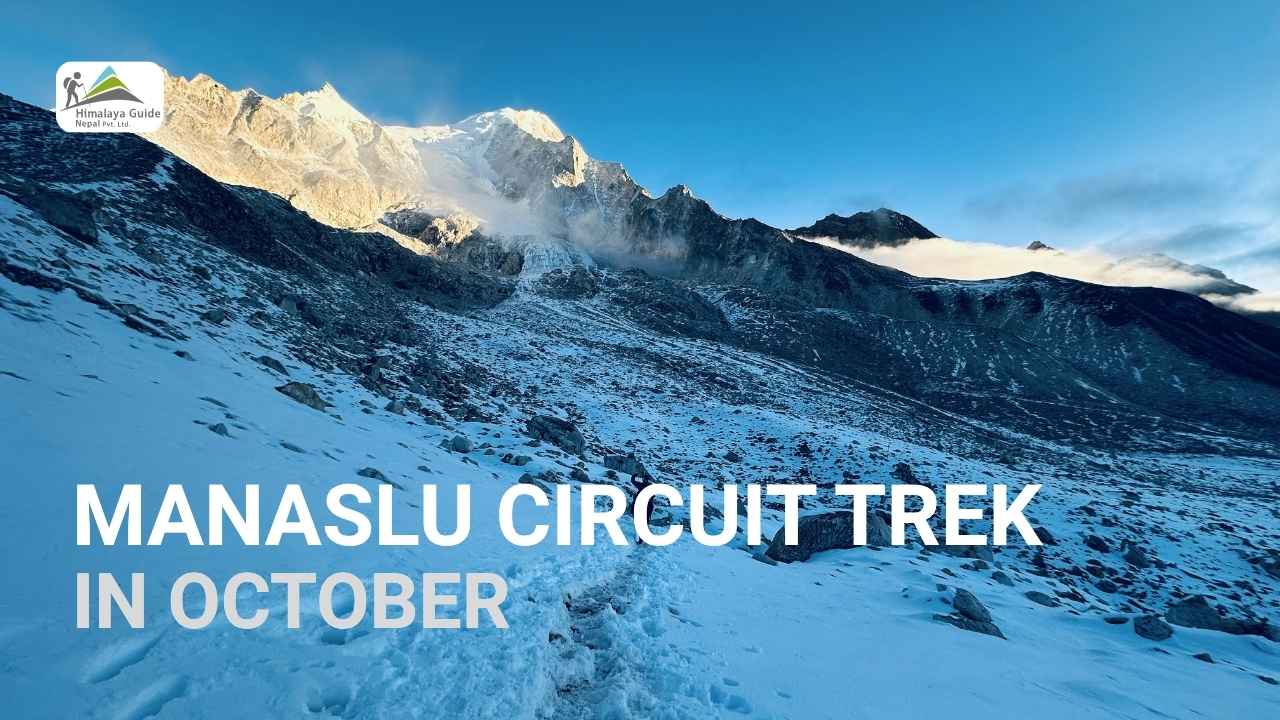
Our guide Salman, who has led Manaslu groups through several autumn seasons, describes late October as the point where the whole trail settles. Teahouses in Samagaon fill up but rarely overflow. Manaslu holds clear from Lho for days at a stretch. The descent from the pass to Bimthang runs on solid, dry ground rather than the icy patches that show up earlier in the season. Groups crossing in early September occasionally still catch the tail end of monsoon cloud, so late September through November is the more dependable window.
Autumn also lines up with Dashain and Tihar, Nepal’s two biggest festivals, falling between late September and early November depending on the lunar calendar. Villages along the route mark both. Trekkers passing through during the celebrations get a genuine look at Nepali culture that a quieter month simply wouldn’t offer. And since this is the season carrying the most search interest for anyone researching this trek, it’s worth the extra attention if you only read one section closely.
Winter (December to February)
Winter turns Manaslu into a different trek entirely. Below Samagaon, the trail stays walkable and offers genuinely quiet teahouses and clear, cold-air views that autumn crowds never get. December, especially the first half, still holds reasonable conditions at mid elevation.
Above 3,500 metres, conditions harden fast. Snow regularly buries the trail around Dharamsala. Temperatures at the pass drop well below freezing even at midday, and heavy snowfall can close Larkya La Pass entirely for days at a stretch. January is the coldest month of the year on this route where nighttime readings at altitude can reach -20°C or lower. Winter crossings are possible for well-prepared, experienced trekkers with the right gear and a flexible schedule. But this isn’t a season to build around a fixed departure date.
Temperature Chart For Manaslu Circuit Trek Based on Changing Elevation
The Elevation drives temperature during manaslu circuit trek than the months. The figures below reflect typical spring and autumn conditions. Winter readings run 10 to 15 degrees colder at every places, and the pass can close outright under heavy snow.
| Elevation | Villages | Typical Day Temp | Typical Night Temp |
|---|---|---|---|
| Lower zone (700–1,400m) | Machha Khola, Jagat | 15°C to 25°C | 5°C to 13°C |
| Mid zone (2,600–3,200m) | Namrung, Lho | 8°C to 18°C | -2°C to 5°C |
| High zone (3,500–4,460m) | Samagaon, Samdo, Dharamsala | 0°C to 10°C | -10°C to -5°C |
| Pass (5,106–5,160m) | Larkya La Pass | -2°C to 5°C | -10°C to -20°C |
Temperature drops roughly 6 to 7 degrees for every 1,000 metres gained. Nights lose heat faster than the daytime numbers suggest too, since thin air at altitude holds almost no warmth after sunset. The stretch between Samagaon, Dharamsala, and the pass shows the sharpest single-day swing on the whole route. That’s exactly why gear and timing both matter most on that section.
Why Timing Well is Important for Larkya La Passing
Larkya La Pass, at 5,160 metres, is the single hardest day on this circuit, and it’s also the day where season matters most. Trekkers leave Dharamsala around 4am to 5am, well before sunrise, to cross the pass and begin the descent to Bimthang before afternoon cloud and wind build up.

In autumn, this timing works reliably. The trail across the moraine stays dry and predictable. Wind picks up but rarely reaches dangerous levels, and most groups are down toward Bimthang before conditions shift. Spring crossings in March can still involve icy patches near the top, though, so an earlier and more cautious start matters more than it does in October.
Winter is where timing stops being optional. Heavy snowfall can bury the trail entirely above Dharamsala, and a storm at the wrong moment can close the pass for days. Trekkers planning a winter crossing need a flexible itinerary with buffer days built in. Forcing a crossing on a fixed schedule is exactly how avoidable incidents happen at altitude.
Best Time for Views, Wildlife, or Festivals
Different priorities point to different months. If clear mountain views matter most, October and November give the most reliable stretch of unbroken visibility across Manaslu, Himalchuli, and Ganesh Himal. If rhododendron forests and green landscapes matter more, late March through April delivers the strongest bloom, especially in the belt between Deng and Lho.
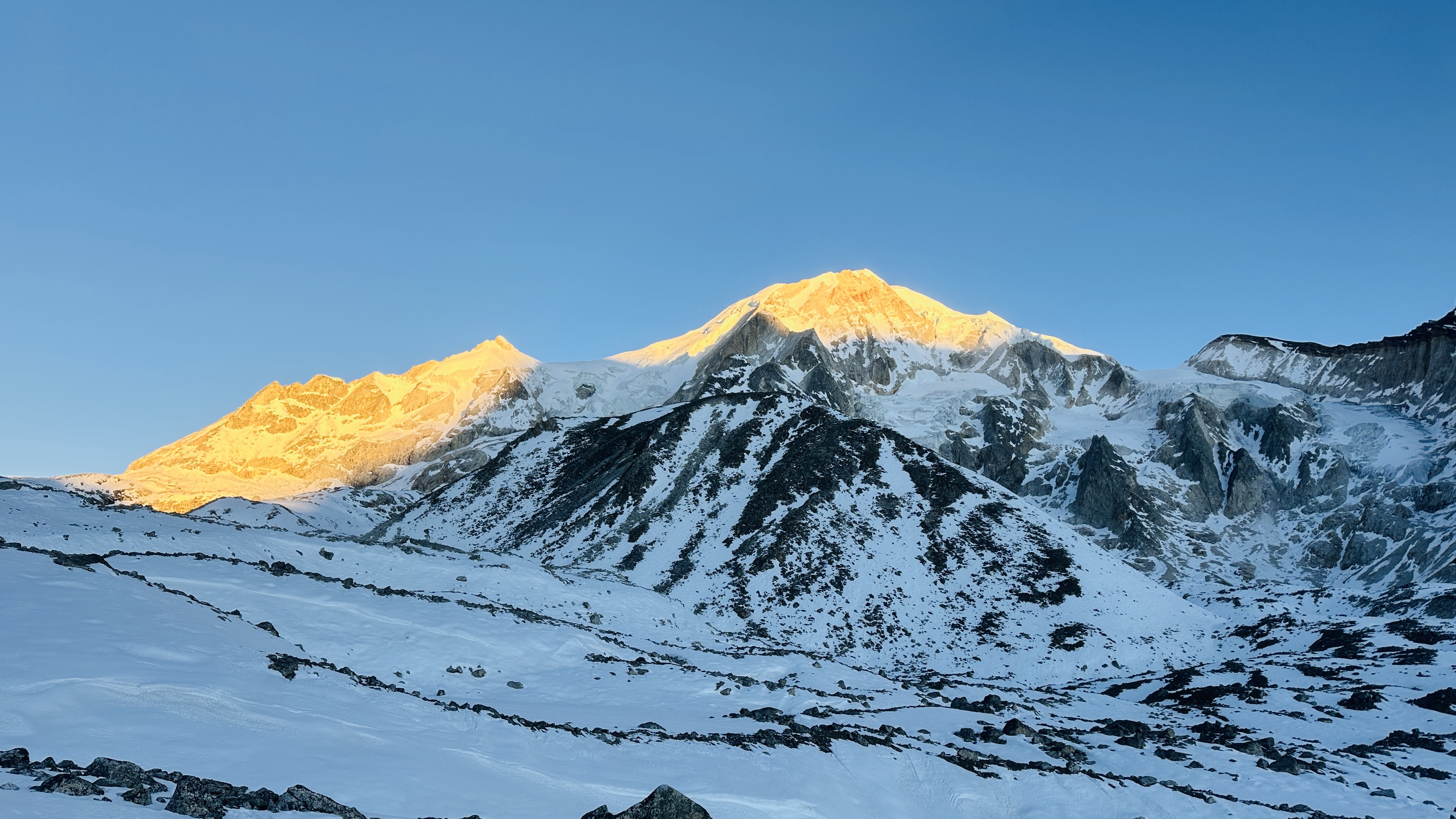
Wildlife sightings favour the warmer months. The Manaslu Conservation Area holds snow leopard, Himalayan tahr, musk deer, and over a hundred recorded bird species. Spring’s milder weather brings more activity at mid elevation, though snow leopard sightings specifically stay rare in any season. For festivals, autumn overlaps with Dashain and Tihar, Nepal’s largest celebrations, while spring trekkers passing through in mid-April catch the Nepali New Year in the lower villages.
Choosing between spring and autumn and can’t decide? Base it on your priority rather than the generic “both are good” answer. Photographers chasing the clearest peak shots should lean autumn. Trekkers who want colour, flowers, and a livelier trail should lean spring.
Manaslu Circuit Trail Condition Information to Know Before Planning Your Journey
Trail conditions shift as much as temperature does across the route. The lower gorge section between Machha Khola and Jagat runs along steep, narrow terrain above the Budhi Gandaki River, and this stretch takes the worst of the monsoon rain, with landslide risk rising sharply from June through August.
Mid-route, between Namrung and Samagaon, the trail stays well maintained and clearly marked in all trekking seasons, though early spring can still carry patches of old snow in shaded sections. Above Samagaon, conditions depend heavily on recent weather. The stretch from Samdo to Dharamsala and up to the pass is the most exposed part of the entire trek. You’ll find loose rock, glacier moraine, and, depending on season, everything from dry trail to knee-deep snow.
Suspension bridges cross the route at multiple points and stay well maintained, though they sway more noticeably in high wind, which picks up more often at higher elevation. Trekking with a licensed guide, mandatory in this restricted region regardless of season, means someone on the ground is checking these conditions daily and adjusting pace or rest days when needed.
Best Time for Manaslu Circuit Trek FAQs
Q: Is autumn or spring better for the Manaslu Circuit Trek?
A: Autumn generally offers more stable weather and the safest Larkya La Pass conditions, making it the better choice for first-time high-altitude trekkers. Spring offers milder temperatures and rhododendron blooms, and suits trekkers who prioritise scenery and a livelier trail over the most predictable weather window.
Q: Is winter trekking on Manaslu Circuit safe?
A: Winter trekking is possible below Samagaon with proper cold-weather gear, but Larkya La Pass frequently closes under heavy snow between December and February, and nighttime temperatures at altitude can drop to -20°C or lower. Winter crossings need an experienced guide and a flexible schedule rather than a fixed departure date.
Q: How cold does it get at Larkya La Pass?
A: Daytime temperatures at the pass typically range from -2°C to 5°C in spring and autumn, with nights dropping to -10°C or colder. In winter, nighttime readings can fall to -20°C or lower, and the pass may close entirely during heavy snowfall.